
Eastern Black Crested Gibbon
Nomascus nasutus
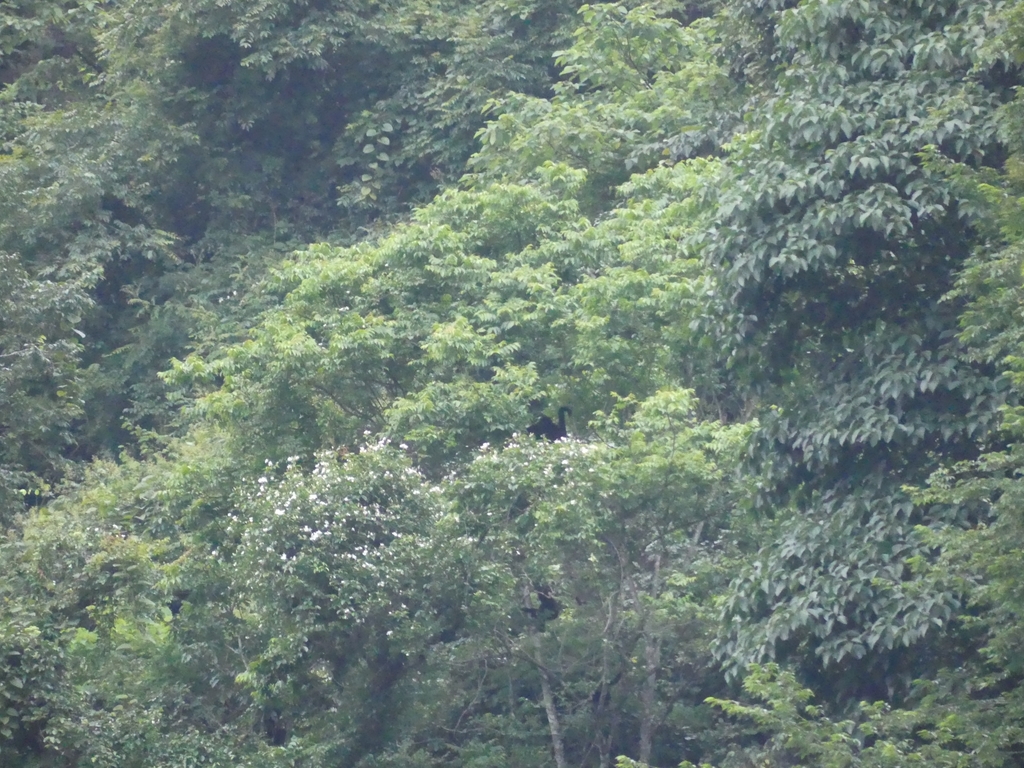
The eastern black crested gibbon (Nomascus nasutus), also called Cao-vit black crested gibbon or the Cao-vit crested gibbon, is a Critically Endangered species of gibbon from southeast China and northern Vietnam.
- Kingdom
- Animalia
- Phylum
- Chordata
- Class
- Mammalia
- Order
- Primates
- Family
- Hylobatidae
- Genus
- Nomascus
- Species
- Nomascus nasutus
Description
The eastern black crested gibbon (Nomascus nasutus), also called Cao-vit black crested gibbon or the Cao-vit crested gibbon, is a Critically Endangered species of gibbon from southeast China and northern Vietnam. The term "Cao-vit" originated from the sounds of their calls or songs that villagers of Ngoc Khe, Phong Nam and Ngoc Con communes of Trung Khanh District, Cao Bang Province of Vietnam use to name for them. This name was officially used by gibbon experts since the rediscovery. From the 1960s until the 2000s there had been no confirmed sightings of the eastern black-crested gibbon and it was thought to be possibly extinct. In 2002 a small population was rediscovered by two FFI biologists in a karst forest of Trùng Khánh District, Cao Bằng Province, in northeast Vietnam. The species was endemic to Vietnam until 2006 when they were also found in a small forest in Guangxi Province of China, which is adjacent to Trung Khanh forests. In 2005 it was estimated that this population in Vietnam side was about 35–37 individuals. The eastern black crested gibbon is one of the rarest and most critically endangered primates in the world. This status has resulted from deforestation of its habitat, encroachment, and poaching. The eastern black crested gibbon is classified as separate from other crested gibbons based on molecular data, fur coloration, and differences in vocal communication. Previously it had been considered conspecific with the Hainan black crested gibbon or as a subspecies of the black crested gibbon. Until the sequencing of the mitochondrial cytochrome b gene the Hainan black crested gibbon was thought to be Nomascus nasutus hainanus, a subspecies of eastern black crested gibbon. The researchers proposed that the genetic separation showed it was a distinct species.
Gallery
Ajouter des photos
Partagez vos photos de cette espèce (jusqu'à 20 à la fois) : elles sont vérifiées automatiquement, puis publiées.
Répartition
Occurrences observées (données GBIF). Les zones hors aire d'origine peuvent indiquer une présence introduite ou invasive.
Sources et crédits
Informations provenant de plusieurs sources vérifiées. Dernière mise à jour : .
Crédits photos (3)
- Photo : @arikkershenbaum · CC BY-NC 4.0 · via iNaturalist
- Photo : huangmingpan (@huangmp) · CC BY-NC 4.0 · via iNaturalist
- Photo : huangmingpan (@huangmp) · CC BY-NC 4.0 · via iNaturalist
Mentions de licence
Texte disponible sous licence CC BY-SA 4.0. Il adapte notamment Gibbon de Cao-Vit, Wikipedia (CC BY-SA) : Eastern black crested gibbon (Wikipédia, auteurs dans l’historique de l’article).
- Taxonomie : GBIF Backbone Taxonomy (CC BY 4.0)
- Carte : occurrences GBIF, fond © contributeurs OpenStreetMap (ODbL)
- Statut de conservation : Liste rouge de l'UICN, via Wikidata (CC0)
Détail : Sources et licences.
Discussion (0)
Aucun message pour l’instant. Lancez la discussion sur cette fiche (sources, précisions, débats éditoriaux).
Connectez-vous pour participer à la discussion.