
Fennec fox
Vulpes zerda
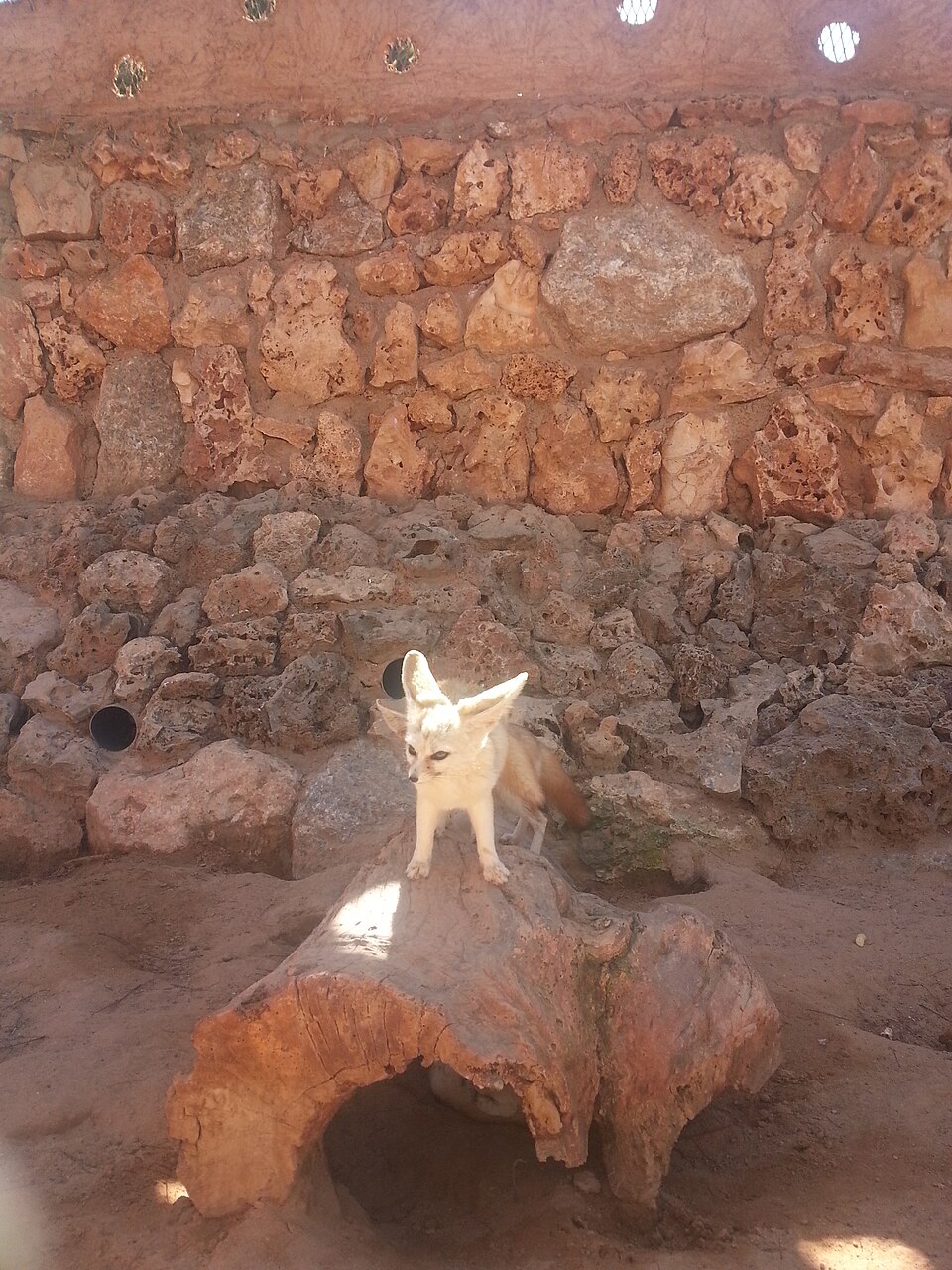
The fennec fox (Vulpes zerda) is a small fox native to the deserts of North Africa, ranging from Western Sahara and Mauritania to the Sinai Peninsula.
- Kingdom
- Animalia
- Phylum
- Chordata
- Class
- Mammalia
- Order
- Carnivora
- Family
- Canidae
- Genus
- Vulpes
- Species
- Vulpes zerda
Description
The fennec fox (Vulpes zerda) is a small fox native to the deserts of North Africa, ranging from Western Sahara and Mauritania to the Sinai Peninsula. Its most distinctive feature is its unusually large ears, which serve to dissipate heat and listen for underground prey. The fennec is the smallest fox species. Its coat, ears, and kidney functions have adapted to the desert environment with high temperatures and little water. The fennec fox mainly eats insects, small mammals and birds. It has a life span of up to 14 years in captivity and about 10 years in the wild. Pups are preyed upon by the Pharaoh eagle-owl; both adults and pups may fall prey to jackals and striped hyenas. Fennec families dig out burrows in the sand for habitation and protection, which can be as large as 120 m2 (1,300 sq ft) and adjoin the burrows of other families. Precise population figures are not known but are estimated from the frequency of sightings; these indicate that the fennec fox is currently not threatened by extinction. Knowledge of social interactions is limited to information gathered from captive animals. The fennec fox is commonly trapped for exhibition or sale in North Africa, and it is considered an exotic pet in some parts of the world.
Gallery
Ajouter des photos
Partagez vos photos de cette espèce (jusqu'à 20 à la fois) : elles sont vérifiées automatiquement, puis publiées.
Répartition
Occurrences observées (données GBIF). Les zones hors aire d'origine peuvent indiquer une présence introduite ou invasive.
Sources et crédits
Informations provenant de plusieurs sources vérifiées. Dernière mise à jour : .
Crédits photos (6)
- Photo : Bachounda · CC BY-SA 3.0
- Photo : Bachounda · CC BY-SA 3.0
- Photo : @zoebl · CC BY-NC 4.0 · via iNaturalist
- Photo : Olivier Lawless (@oli_lawless) · CC BY-NC 4.0 · via iNaturalist
- Photo : Valentin Moser (@vmoser) · CC BY 4.0 · via iNaturalist
- Photo : @kwara-n-ba · CC BY-NC 4.0 · via iNaturalist
Mentions de licence
Texte disponible sous licence CC BY-SA 4.0. Il adapte notamment Wikipedia (CC BY-SA) : Fennec fox (Wikipédia, auteurs dans l’historique de l’article).
- Taxonomie : GBIF Backbone Taxonomy (CC BY 4.0)
- Carte : occurrences GBIF, fond © contributeurs OpenStreetMap (ODbL)
- Statut de conservation : Liste rouge de l'UICN, via Wikidata (CC0)
Détail : Sources et licences.
Discussion (0)
Aucun message pour l’instant. Lancez la discussion sur cette fiche (sources, précisions, débats éditoriaux).
Connectez-vous pour participer à la discussion.