
Richardson's Collared Lemming
Dicrostonyx richardsoni
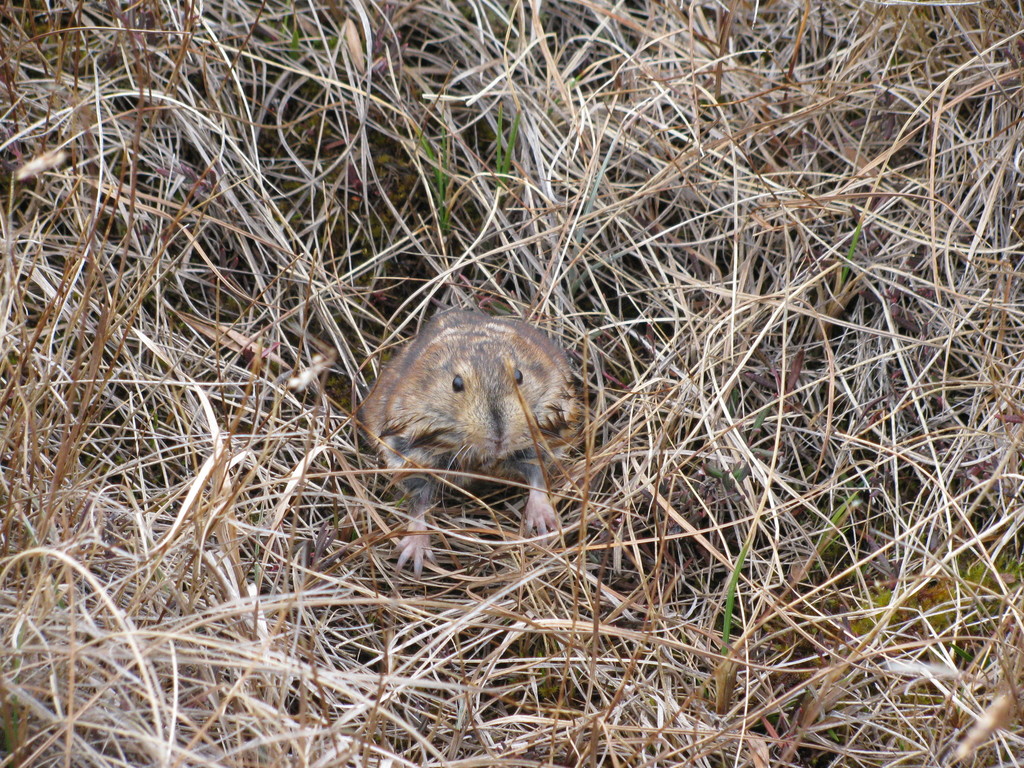
The Richardson's collared lemming (Dicrostonyx richardsoni) is a small North American lemming.
- Kingdom
- Animalia
- Phylum
- Chordata
- Class
- Mammalia
- Order
- Rodentia
- Family
- Cricetidae
- Genus
- Dicrostonyx
- Species
- Dicrostonyx richardsoni
Description
The Richardson's collared lemming (Dicrostonyx richardsoni) is a small North American lemming. At one time, they were considered to be a subspecies of the Arctic lemming, Dicrostonyx torquatus. Some sources believe they are a subspecies of the northern collared lemming, Dicrostonyx groenlandicus. This species has a short, chunky body covered with grizzled brown fur, which varies from red-brown to grey-brown, with a thin dark stripe along its back and a reddish-grey belly. It has small ears, short legs and a very short tail, and a reddish collar across its chest. In winter, it is covered with white fur, and develops enlarged digging claws on its front feet. It is about 13 cm (5.1 in) long with a 1 cm (0.39 in) tail, and weighs about 60 g (2.1 oz). These animals are found in the tundra west of Hudson Bay in north-central Canada. They feed on grasses, sedges and other green vegetation in summer and twigs of willow, aspen and birches in winter. Predators include snowy owls, mustelids, and Arctic foxes. Females have two or three litters of four to eight young in a year. The young are born in a nest in a burrow or concealed in vegetation. They are active year-round, day and night. They make runways through the surface vegetation and also dig burrows above the permafrost. They burrow under the snow in winter. Lemming populations go through a three- or four-year cycle of boom and bust. When their population peaks, lemmings disperse from overcrowded areas.
Gallery
Ajouter des photos
Partagez vos photos de cette espèce (jusqu'à 20 à la fois) : elles sont vérifiées automatiquement, puis publiées.
Répartition
Occurrences observées (données GBIF). Les zones hors aire d'origine peuvent indiquer une présence introduite ou invasive.
Sources et crédits
Informations provenant de plusieurs sources vérifiées. Dernière mise à jour : .
Crédits photos (5)
- Photo : Shawn Billerman (@sbillerman) · CC BY-NC 4.0 · via iNaturalist
- Photo : @justinbenjamin · CC BY-NC 4.0 · via iNaturalist
- Photo : John D Reynolds (@johndreynolds) · CC BY-NC 4.0 · via iNaturalist
- Photo : Amanda (@corbie77) · CC BY-NC 4.0 · via iNaturalist
- Photo : @justinbenjamin · CC BY-NC 4.0 · via iNaturalist
Mentions de licence
Texte disponible sous licence CC BY-SA 4.0. Il adapte notamment Wikipedia (CC BY-SA) : Richardson's collared lemming (Wikipédia, auteurs dans l’historique de l’article).
- Taxonomie : GBIF Backbone Taxonomy (CC BY 4.0)
- Carte : occurrences GBIF, fond © contributeurs OpenStreetMap (ODbL)
- Statut de conservation : Liste rouge de l'UICN, via Wikidata (CC0)
Détail : Sources et licences.
Discussion (0)
Aucun message pour l’instant. Lancez la discussion sur cette fiche (sources, précisions, débats éditoriaux).
Connectez-vous pour participer à la discussion.