
Star-nosed Mole
Condylura cristata
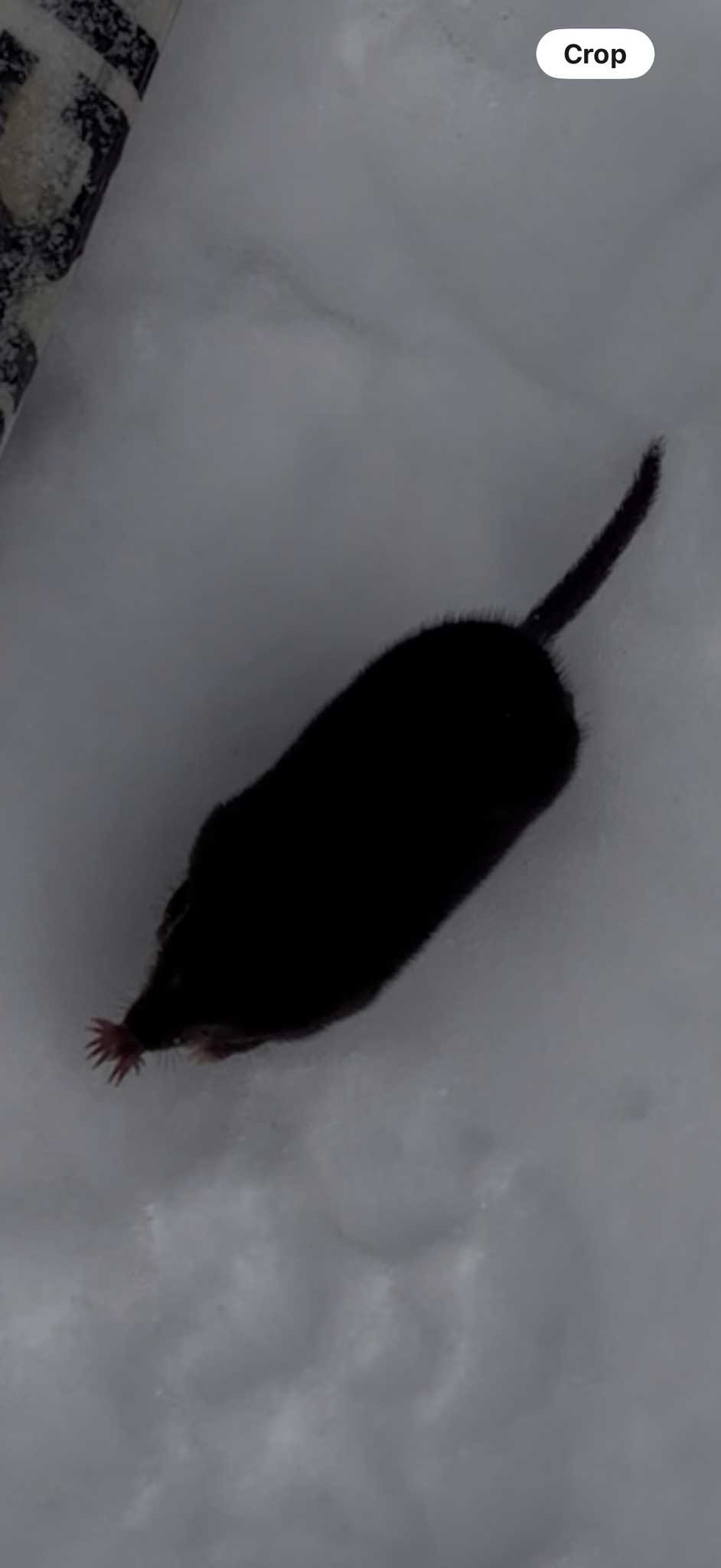
The star-nosed mole (Condylura cristata) is a small semiaquatic mole found in moist, low elevation areas in the northeastern parts of North America.
- Kingdom
- Animalia
- Phylum
- Chordata
- Class
- Mammalia
- Order
- Soricomorpha
- Family
- Talpidae
- Genus
- Condylura
- Species
- Condylura cristata
Description
The star-nosed mole (Condylura cristata) is a small semiaquatic mole found in moist, low elevation areas in the northeastern parts of North America. It is the only extant member of the tribe Condylurini and genus Condylura. It has more than 25,000 minute sensory receptors in touch organs, known as Eimer's organs, with which this hamster-sized mole feels its way around. With the help of its Eimer's organs, it may be perfectly poised to detect seismic wave vibrations. The nose is about 1.5 cm (0.59 in) in diameter with its Eimer's organs distributed on 22 appendages. Eimer's organs were first described in the European mole in 1872 by German zoologist Theodor Eimer. Other mole species also possess Eimer's organs, though they are not as specialized or numerous as in the star-nosed mole. Because the star-nosed mole is functionally blind, the snout was long suspected to be used to detect electrical activity in prey animals, though little, if any, empirical support has been found for this hypothesis. The nasal star and dentition of this species appear to be primarily adapted to exploit extremely small prey. A report in the journal Nature gives this animal the title of fastest-eating mammal, taking as little as 120 milliseconds (average: 227 ms) to identify and consume individual food items. Its brain decides in approximately eight milliseconds if prey is edible or not. This speed is at the limit of the speed of neurons. These moles are also able to smell underwater, accomplished by exhaling air bubbles onto objects or scent trails and then inhaling the bubbles to carry scents back through the nose.
Gallery
Ajouter des photos
Partagez vos photos de cette espèce (jusqu'à 20 à la fois) : elles sont vérifiées automatiquement, puis publiées.
Répartition
Occurrences observées (données GBIF). Les zones hors aire d'origine peuvent indiquer une présence introduite ou invasive.
Sources et crédits
Informations provenant de plusieurs sources vérifiées. Dernière mise à jour : .
Crédits photos (4)
- Photo : drkurt · CC BY-NC 4.0 · via GBIF
- Photo : @pascal_samson · CC BY-NC 4.0 · via iNaturalist
- Photo : Yves Dubuc (@lesinsectesduquebec) · CC BY-NC 4.0 · via iNaturalist
- Photo : @klmockingbird · CC BY-NC 4.0 · via iNaturalist
Mentions de licence
Texte disponible sous licence CC BY-SA 4.0. Il adapte notamment Condylura cristata, Wikipedia (CC BY-SA) : Star-nosed mole (Wikipédia, auteurs dans l’historique de l’article).
- Taxonomie : GBIF Backbone Taxonomy (CC BY 4.0)
- Carte : occurrences GBIF, fond © contributeurs OpenStreetMap (ODbL)
- Statut de conservation : Liste rouge de l'UICN, via Wikidata (CC0)
Détail : Sources et licences.
Discussion (0)
Aucun message pour l’instant. Lancez la discussion sur cette fiche (sources, précisions, débats éditoriaux).
Connectez-vous pour participer à la discussion.