
Domesticated Guinea Pig
Cavia porcellus
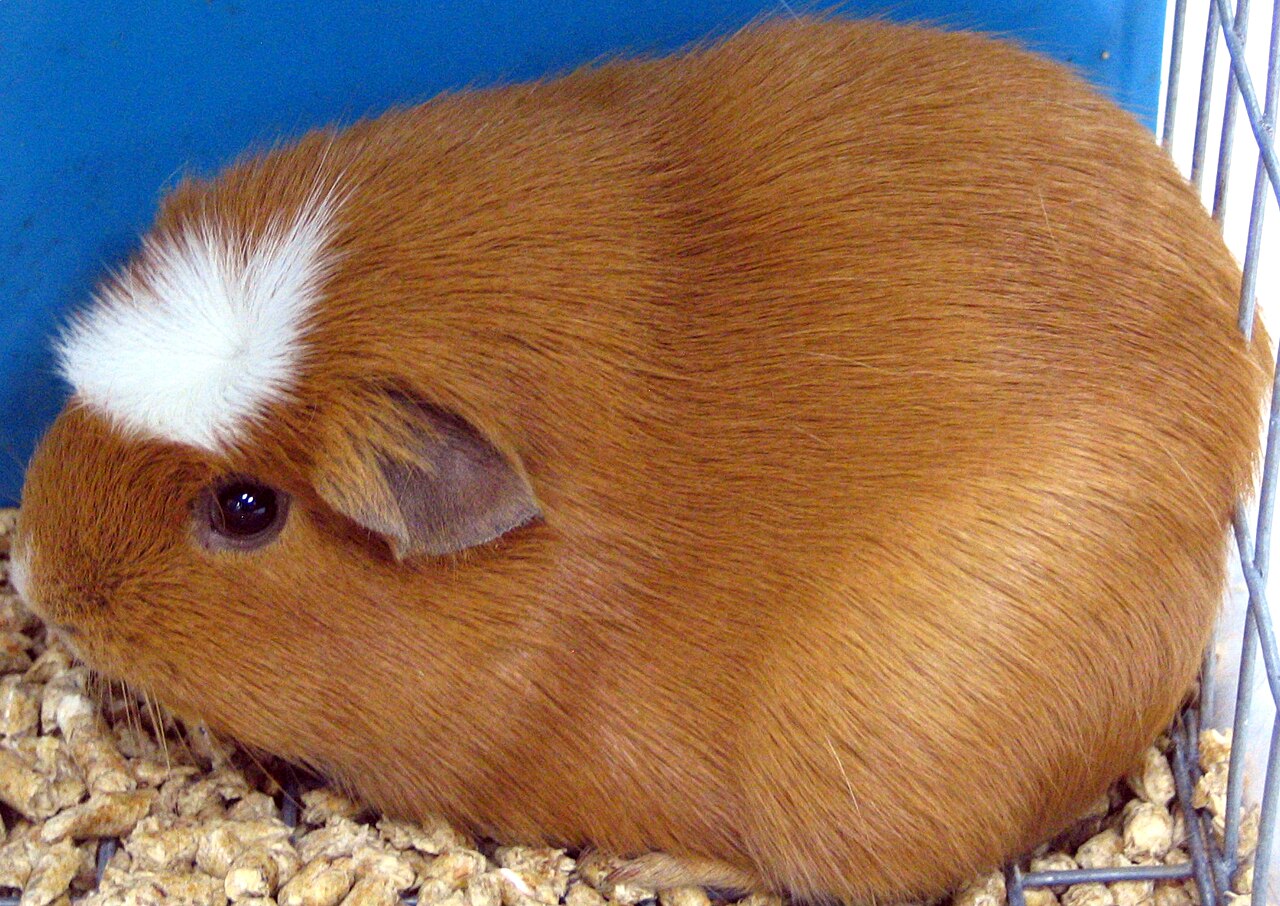
The guinea pig (Cavia porcellus), also known as the domestic guinea pig, cavy or domestic cavy ( KAY-vee), is a species of rodent.
- Kingdom
- Animalia
- Phylum
- Chordata
- Class
- Mammalia
- Order
- Rodentia
- Family
- Caviidae
- Genus
- Cavia
- Species
- Cavia porcellus
Description
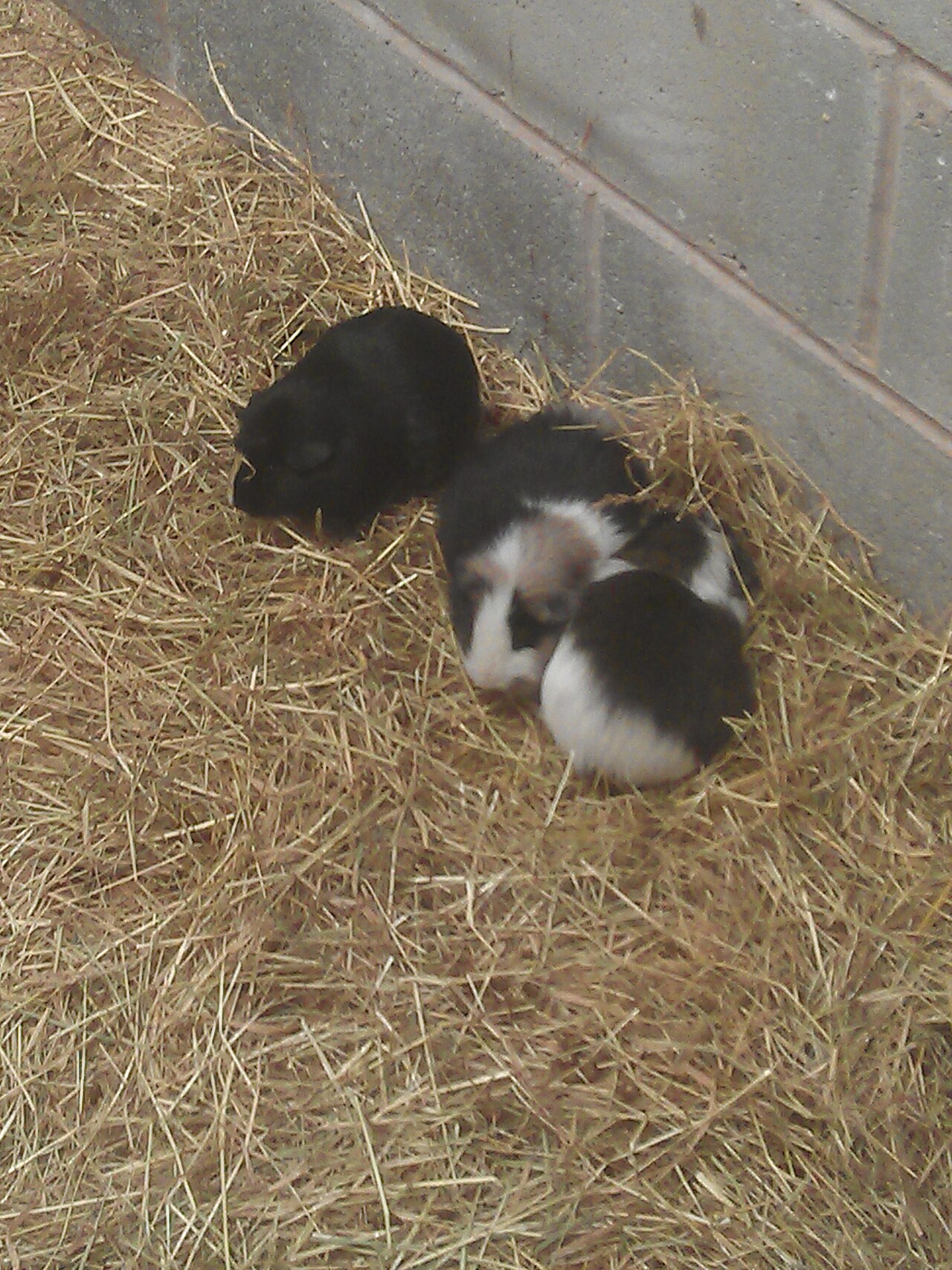
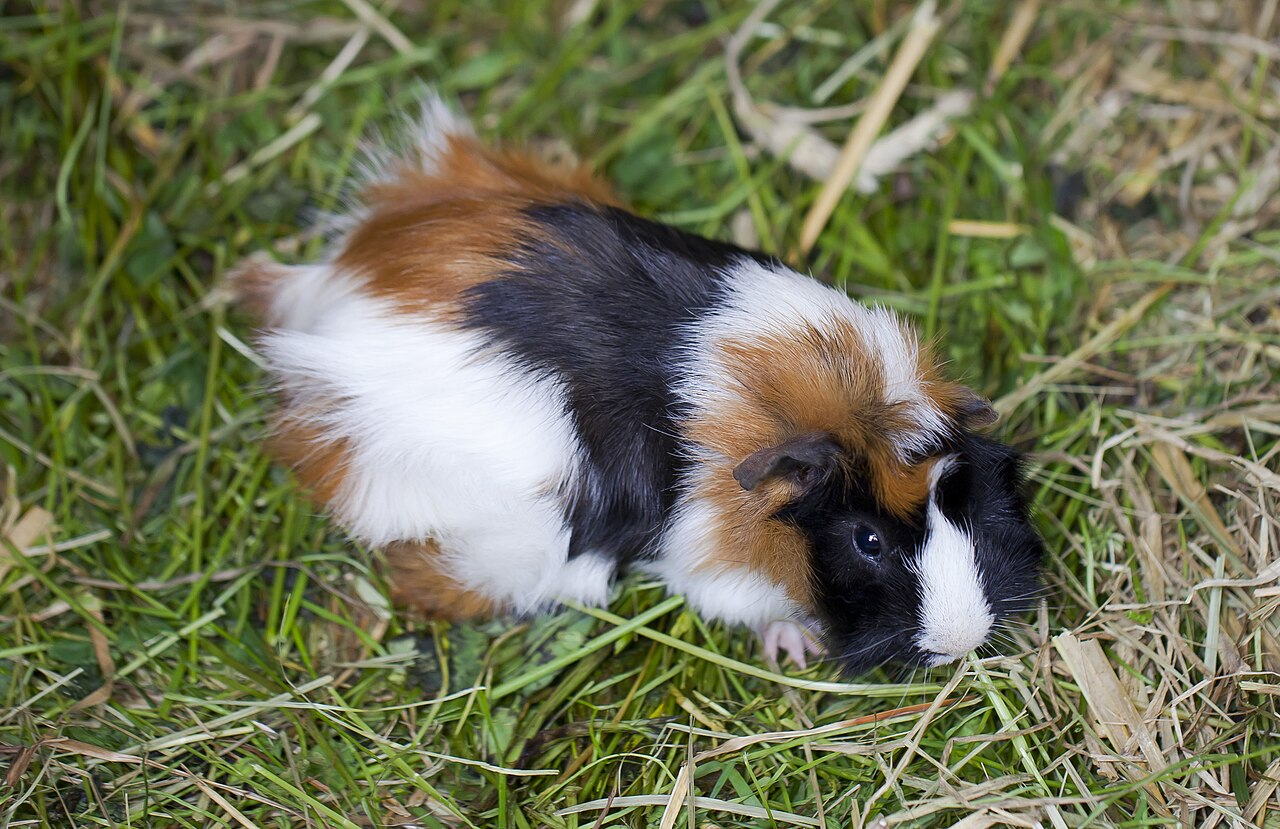
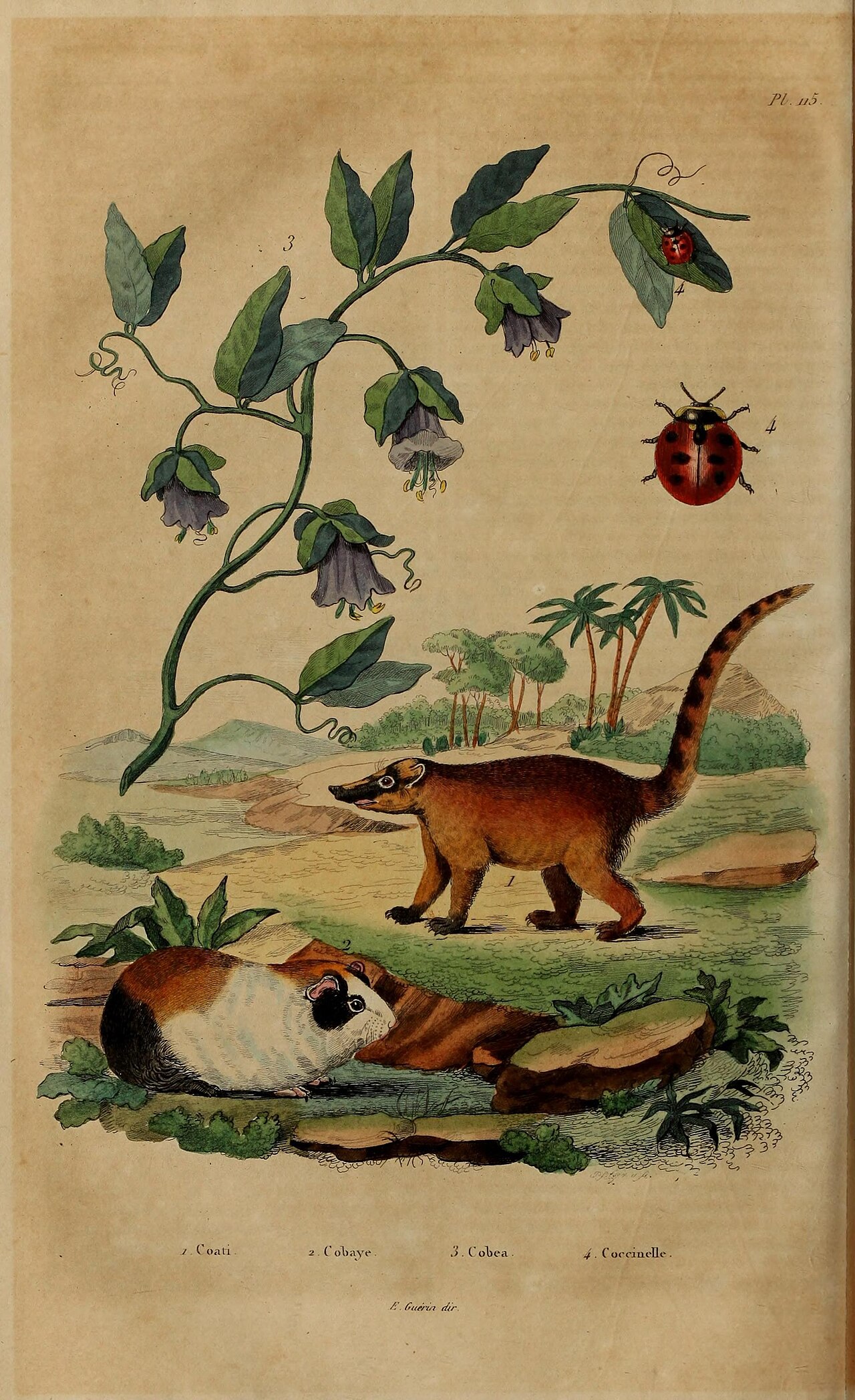
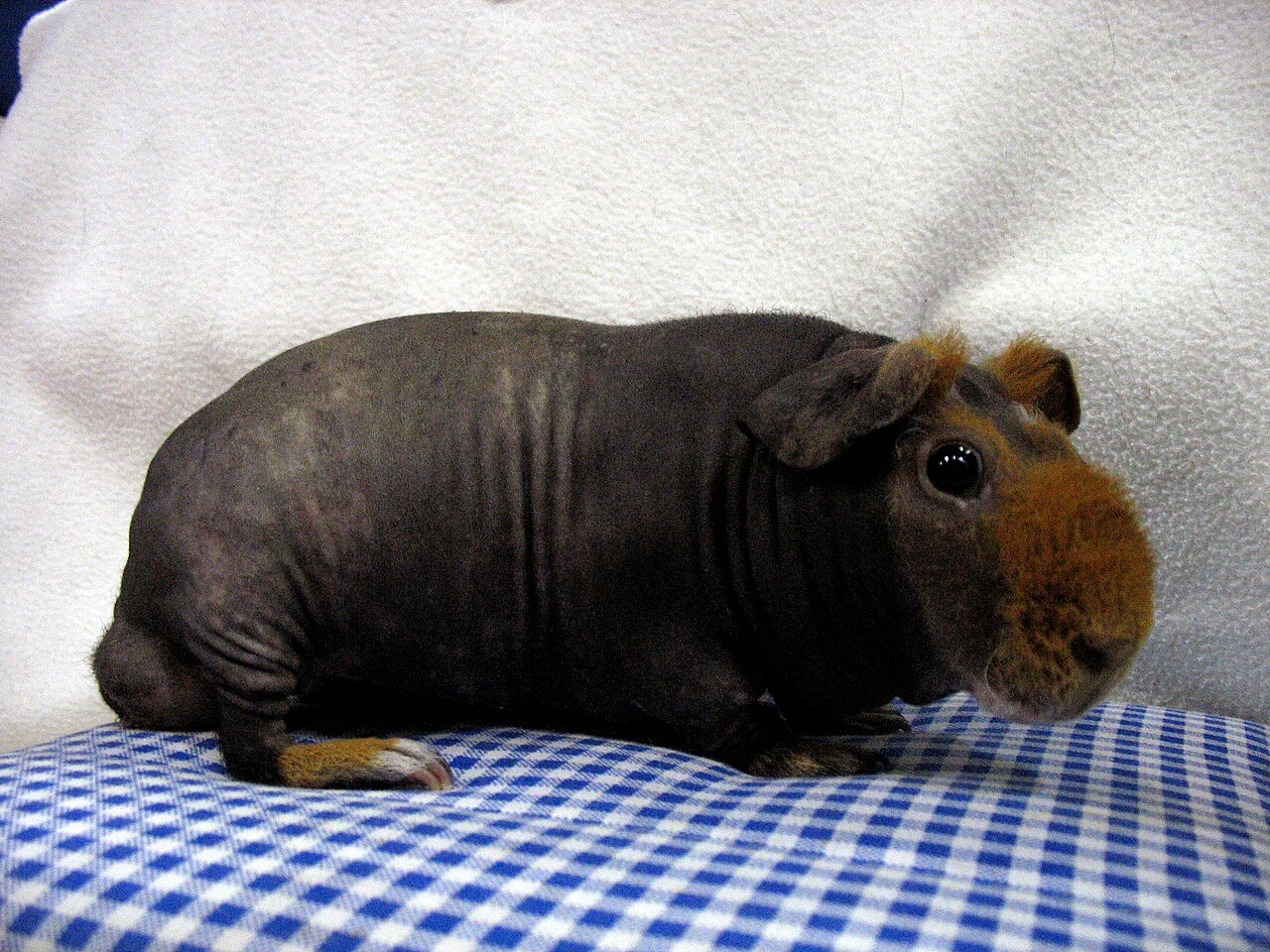
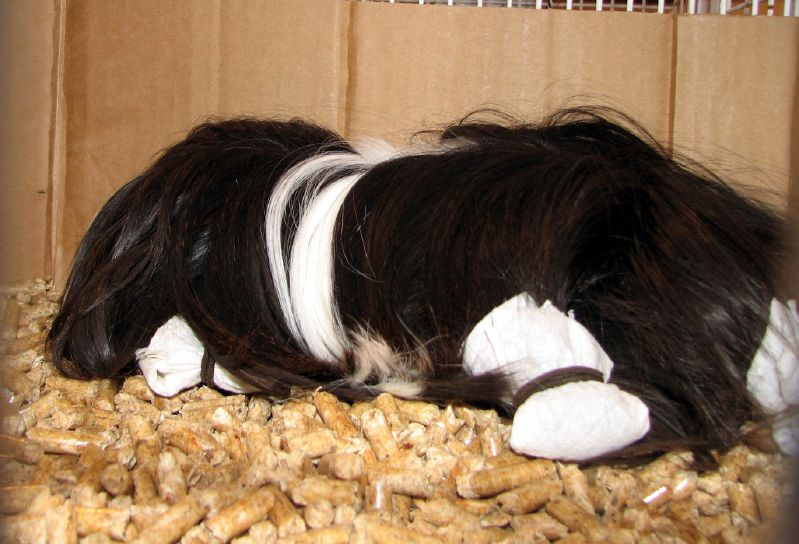
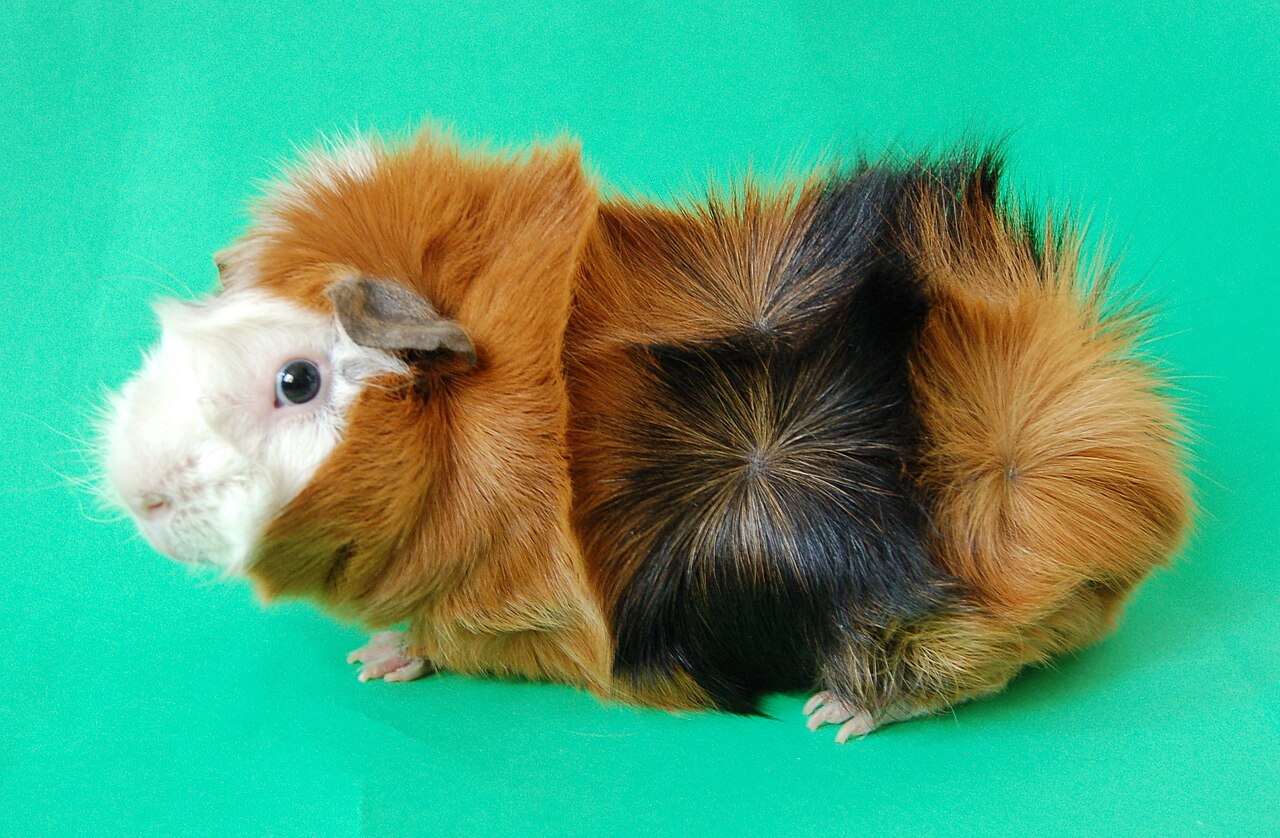
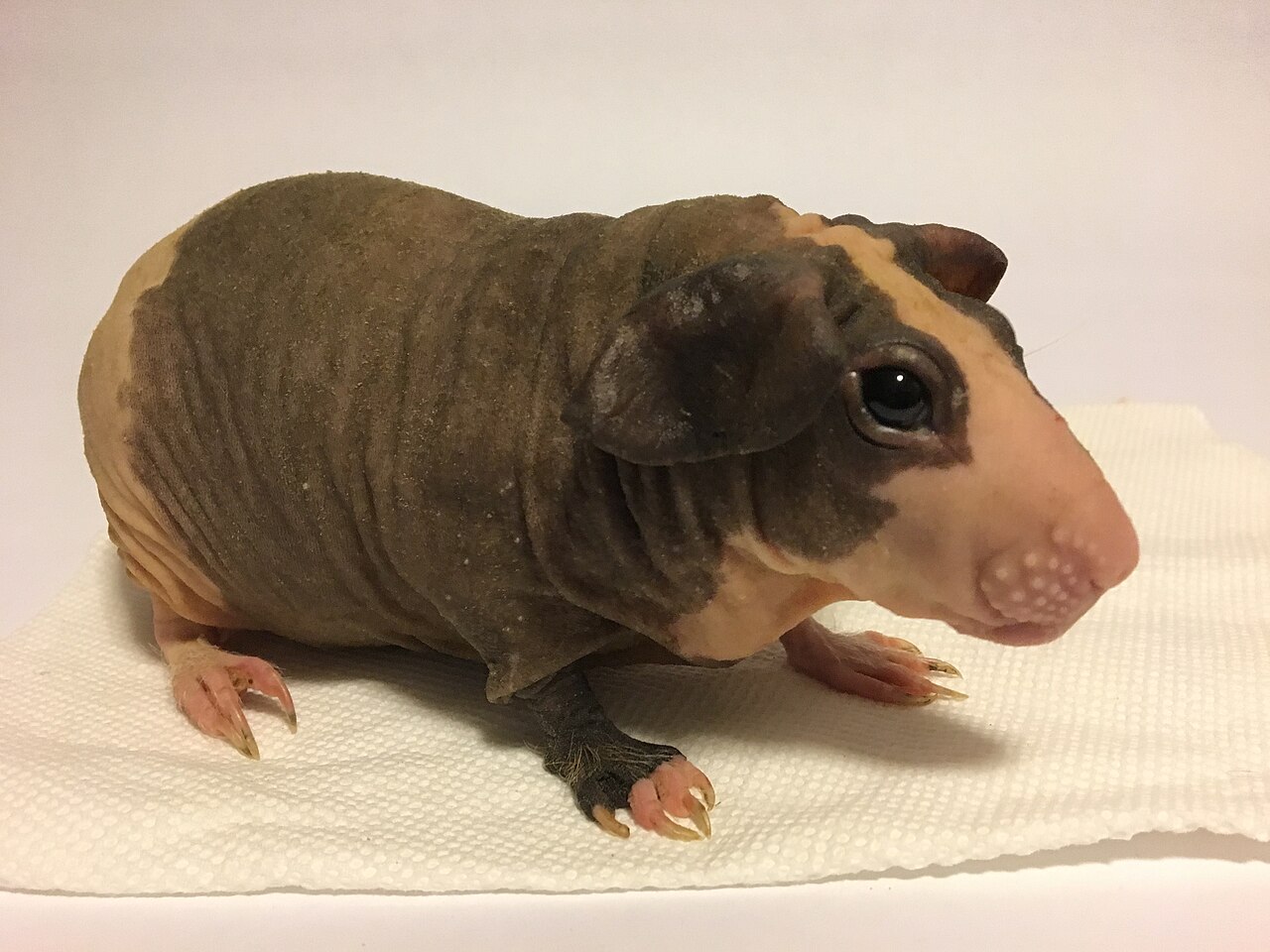
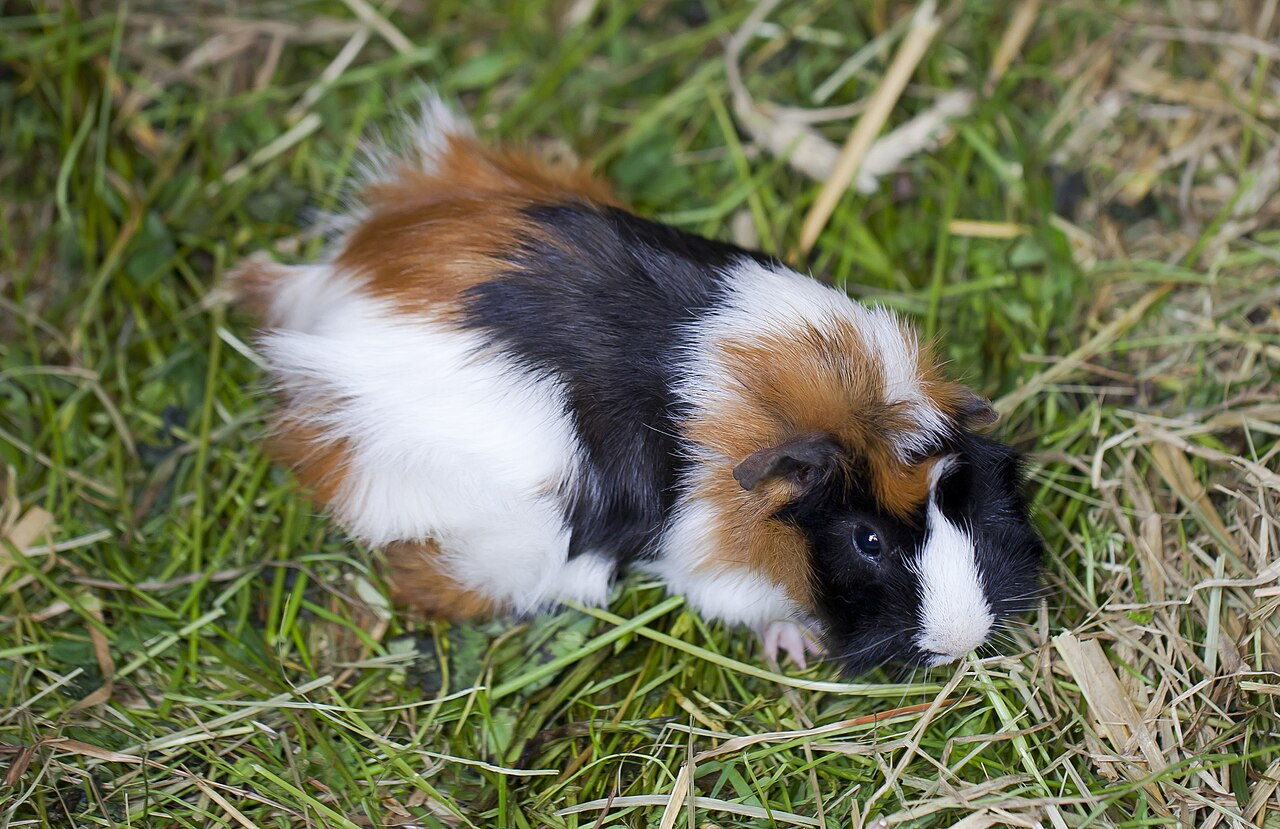
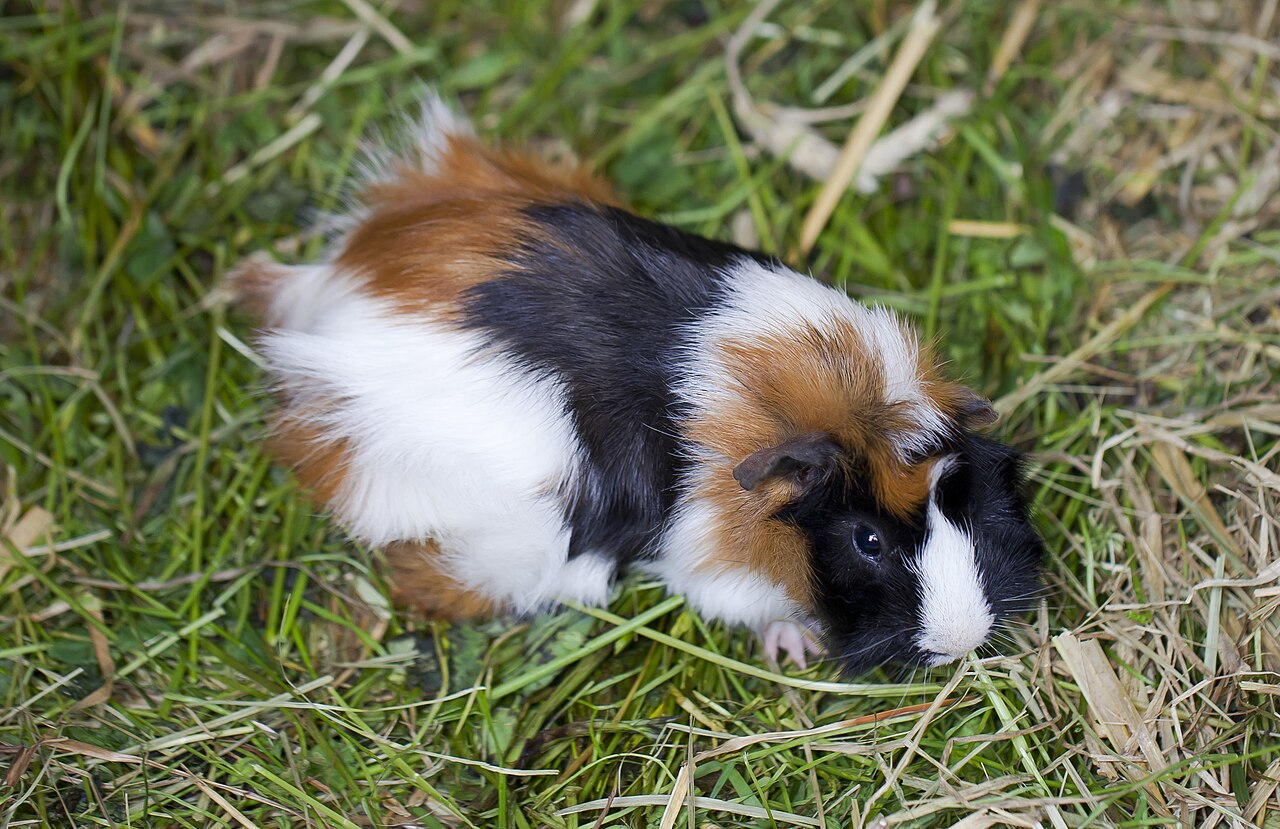
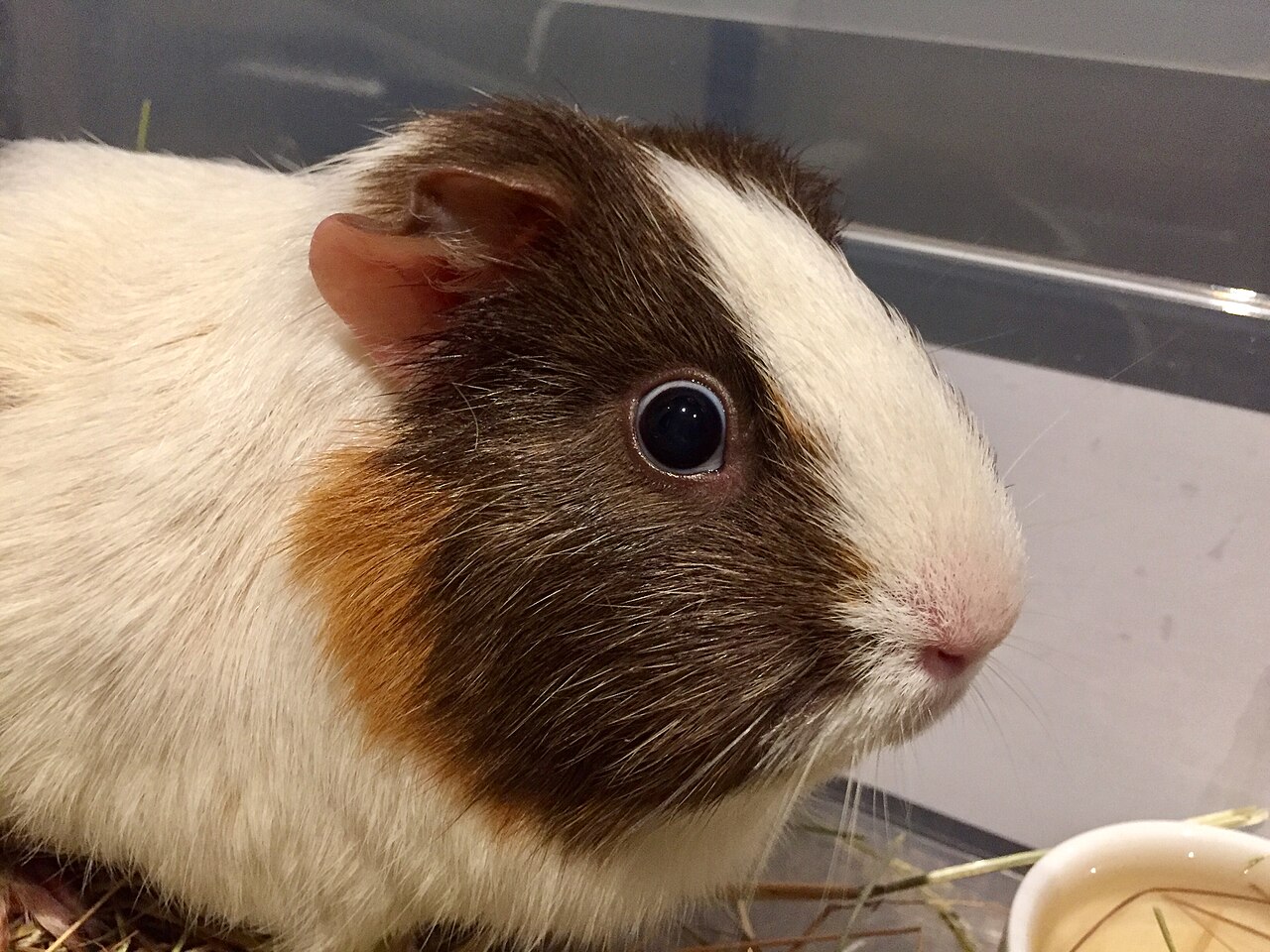
The guinea pig (Cavia porcellus), also known as the domestic guinea pig, cavy or domestic cavy ( KAY-vee), is a species of rodent. It belongs to the genus Cavia, family Caviidae, and its closest wild relatives include the montane guinea pig. Domestic guinea pigs typically weigh between 700 and 1,200 g (1.5 and 2.6 lb) and measure between 20 and 25 cm (8 and 10 in) in length; most breeds have fur, and they have long front teeth that grow continuously, leading the animals to chew regularly to wear them down. They are social animals, and are skittish in response to noise or danger, evincing a freeze or flight strategy. Guinea pigs have been raised by humans as a meat source, as pets, as laboratory test subjects, and for ceremonial use. When guinea pigs are kept by humans, studies indicate the importance of social housing, environmental enrichment (like hides and structures), constant access to hay, and adequate space for healthy stress levels and well-being. Veterinary guidance recommends keeping males and females separate when breeding is not intended. Originally, guinea pigs were domesticated as livestock for their meat, in the Andean region of South America, and they are still consumed there. In the Andes, guinea pigs are also used in folk medicine and in community religious ceremonies. In Western society, the guinea pig has enjoyed widespread popularity as a pet since its introduction to Europe and North America by European traders in the 16th century. Their docile nature and friendly responsiveness to handling and feeding have continued to make guinea pigs a popular choice of household pets. Organizations devoted to the competitive breeding and exhibition of guinea pigs have been formed worldwide. Through artificial selection, many specialized breeds with varying coat colors and textures have been selected by breeders. Animal testing on guinea pigs has been carried out since the 17th century. The animals were used so frequently as model organisms in the 19th and 20th centuries that the epithet guinea pig came into use to describe a human test subject. Since that time, they have largely been replaced in laboratory testing by other rodents, such as mice and rats. However, they are still used in research, primarily as models to study human medical conditions.
Gallery
Ajouter des photos
Partagez vos photos de cette espèce (jusqu'à 20 à la fois) : elles sont vérifiées automatiquement, puis publiées.
Les races de cette espèce (23)

Sources et crédits
Informations provenant de plusieurs sources vérifiées. Dernière mise à jour : .
Crédits photos (5)
- Photo : Brent Moore from Antioch, TN · CC BY 2.0 · via Wikimedia Commons
- Photo : Tavu · CC BY-SA 3.0 · via Wikimedia Commons
- Photo : Tukka · Domaine public · via Wikimedia Commons
- Photo : No machine-readable author provided. J-Luc assumed (based on copyright claims). · CC BY-SA 3.0 · via Wikimedia Commons
- Photo : JYB Devot · CC BY-SA 4.0 · via Wikimedia Commons
Mentions de licence
Texte disponible sous licence CC BY-SA 4.0. Il adapte notamment Wikipedia (CC BY-SA) : Guinea pig (Wikipédia, auteurs dans l’historique de l’article).
- Taxonomie : GBIF Backbone Taxonomy (CC BY 4.0)
Détail : Sources et licences.
Discussion (0)
Aucun message pour l’instant. Lancez la discussion sur cette fiche (sources, précisions, débats éditoriaux).
Connectez-vous pour participer à la discussion.