
Greater Dwarf Lemur
Cheirogaleus major
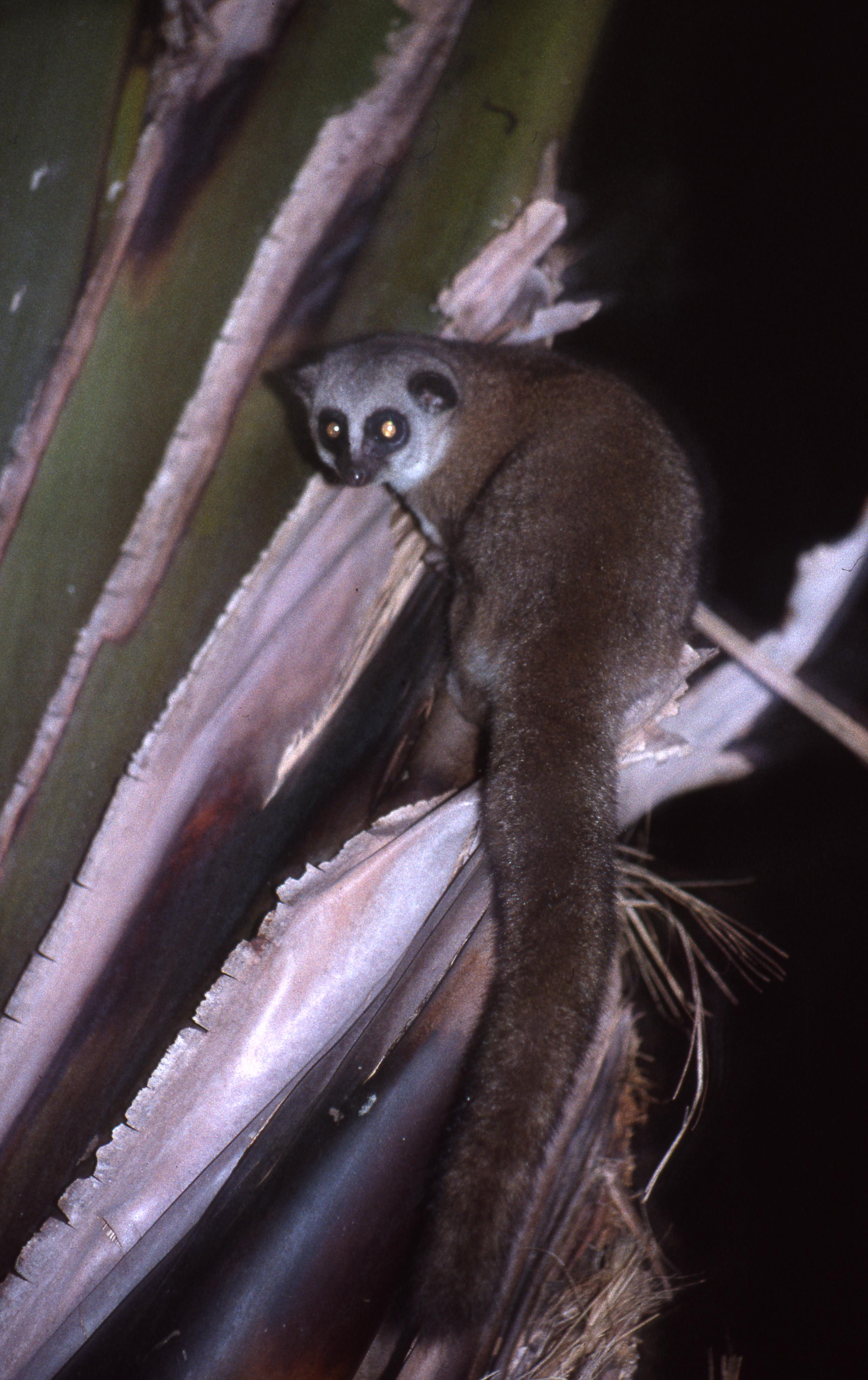
The greater dwarf lemur (Cheirogaleus major), or the Geoffroy's dwarf lemur, is a lemur that is widely distributed over the primary and secondary forests near the eastern coast of Madagascar.
- Kingdom
- Animalia
- Phylum
- Chordata
- Class
- Mammalia
- Order
- Primates
- Family
- Cheirogaleidae
- Genus
- Cheirogaleus
- Species
- Cheirogaleus major
Description
The greater dwarf lemur (Cheirogaleus major), or the Geoffroy's dwarf lemur, is a lemur that is widely distributed over the primary and secondary forests near the eastern coast of Madagascar. They are also found in northern parts of Madagascar. Greater dwarf lemurs live in forests and dry scrub areas. The head and body of the greater dwarf lemur can range from 167 to 264 millimeters in length, and 164 to 600 grams. Their tails can range from 195 to 310 millimeters in length. Greater dwarf lemurs are nocturnal. During the day, they sleep in nests of twigs, leaves, and grass, or hollowed sections of trees padded with dry leaves. Their diet consists mostly of fruits, flowers, and nectar. Flower nectar is an important part of the diet from November to December. Sometimes they will also eat insects and small vertebrates. During the dry seasons they will store fat in their tail and become dormant. Its fur is short, dense, grey or reddish brown, and there are dark circles of fur around the eyes. At the end of the wet season the tail will become somewhat swollen with fat. The greater dwarf lemur is preyed upon by the ring-tailed mongoose (Galidia elegans) during the dormant season. Other predators the Malagasy tree boa (Boa manditra), the Madagascar buzzard (Buteo brachypterus), and it is thought probably by the fossa (Cryptoprocta ferox) as well, since the latter preys on other lemurs.
Gallery
Ajouter des photos
Partagez vos photos de cette espèce (jusqu'à 20 à la fois) : elles sont vérifiées automatiquement, puis publiées.
Répartition
Occurrences observées (données GBIF). Les zones hors aire d'origine peuvent indiquer une présence introduite ou invasive.
Sources et crédits
Informations provenant de plusieurs sources vérifiées. Dernière mise à jour : .
Crédits photos (7)
- Photo : Adam Britt · CC BY 3.0
- Photo : Adam Britt · CC BY 3.0
- Photo : Frank-Roland Fließ (@franky-m) · CC BY-NC 4.0 · via iNaturalist
- Photo : Royle Safaris (@roylesafaris) · CC BY-NC 4.0 · via iNaturalist
- Photo : @mariusandriamorasata · CC BY-NC 4.0 · via iNaturalist
- Photo : @alanvannorman · CC BY-NC 4.0 · via iNaturalist
- Photo : Jason Fidorra (@jfidorra) · CC BY-NC 4.0 · via iNaturalist
Mentions de licence
Texte disponible sous licence CC BY-SA 4.0. Il adapte notamment Wikipedia (CC BY-SA) : Greater dwarf lemur (Wikipédia, auteurs dans l’historique de l’article).
- Taxonomie : GBIF Backbone Taxonomy (CC BY 4.0)
- Carte : occurrences GBIF, fond © contributeurs OpenStreetMap (ODbL)
- Statut de conservation : Liste rouge de l'UICN, via Wikidata (CC0)
Détail : Sources et licences.
Discussion (0)
Aucun message pour l’instant. Lancez la discussion sur cette fiche (sources, précisions, débats éditoriaux).
Connectez-vous pour participer à la discussion.