
Preuss's Monkey
Allochrocebus preussi
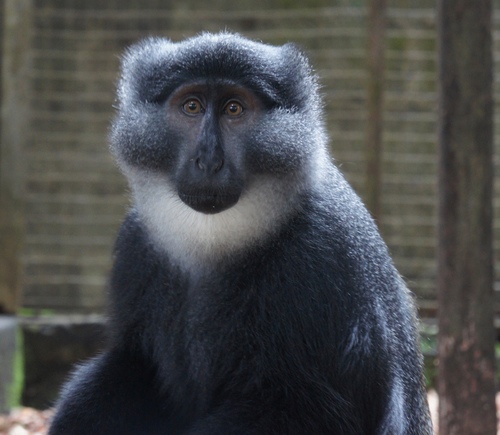
The Preuss's monkey (Allochrocebus preussi), also known as Preuss's guenon, is a diurnal primate that lives terrestrially in mountainous (up to 2500 m) forests of eastern Nigeria, western Cameroon and Bioko in Equatorial Guinea.
- Kingdom
- Animalia
- Phylum
- Chordata
- Class
- Mammalia
- Order
- Primates
- Family
- Cercopithecidae
- Genus
- Allochrocebus
- Species
- Allochrocebus preussi
Description
The Preuss's monkey (Allochrocebus preussi), also known as Preuss's guenon, is a diurnal primate that lives terrestrially in mountainous (up to 2500 m) forests of eastern Nigeria, western Cameroon and Bioko in Equatorial Guinea. It was formerly classified as a subspecies of the L'Hoest's monkey (A. lhoesti). Preuss's monkey is currently classified as a member of the genus Allochrocebus. It was formerly considered a member of the genus Cercopithecus. The diet of Preuss's monkey is primarily fruit, leaves and insects, although the species occasionally raids human crops. It is darkish in coloration with a white chin, and adult males have a blue scrotum. Preuss's monkeys weigh up to 10 kg. Troops consist of one adult male and several females and adolescents, averaging 17 total per troop. Females give birth to a single offspring about once every three years. The young mature at 4 years and live to be an average of 31 years. Preuss's monkey is an endangered species, due to habitat loss and hunting. It is one of the species that live in the Guinean Forests of the West Africa Biodiversity Hotspot. Preuss's monkey is known to occur in captivity at the Centre for Education, Rehabilitation, and Conservation of Primates and Nature (CERCOPAN) in Cross River State, Nigeria and the Limbe Wildlife Centre in Limbe, South-West Region, Cameroon. There are two subspecies of Preuss's monkey: Cameroon Preuss's monkey, Cercopithecus preussi preussi Bioko Preuss's monkey, Cercopithecus preussi insularis
Ajouter des photos
Partagez vos photos de cette espèce (jusqu'à 20 à la fois) : elles sont vérifiées automatiquement, puis publiées.
Répartition
Occurrences observées (données GBIF). Les zones hors aire d'origine peuvent indiquer une présence introduite ou invasive.
Sources et crédits
Informations provenant de plusieurs sources vérifiées. Dernière mise à jour : .
Crédits photos (1)
- Photo : (c) LaetitiaC, some rights reserved (CC BY-SA) · CC BY-SA 4.0 · via iNaturalist
Mentions de licence
Texte disponible sous licence CC BY-SA 4.0. Il adapte notamment Cercopithèque de Preuss, Wikipedia (CC BY-SA) : Preuss's monkey (Wikipédia, auteurs dans l’historique de l’article).
- Taxonomie : GBIF Backbone Taxonomy (CC BY 4.0)
- Carte : occurrences GBIF, fond © contributeurs OpenStreetMap (ODbL)
Détail : Sources et licences.
Discussion (0)
Aucun message pour l’instant. Lancez la discussion sur cette fiche (sources, précisions, débats éditoriaux).
Connectez-vous pour participer à la discussion.