
Weeper capuchin
Cebus olivaceus
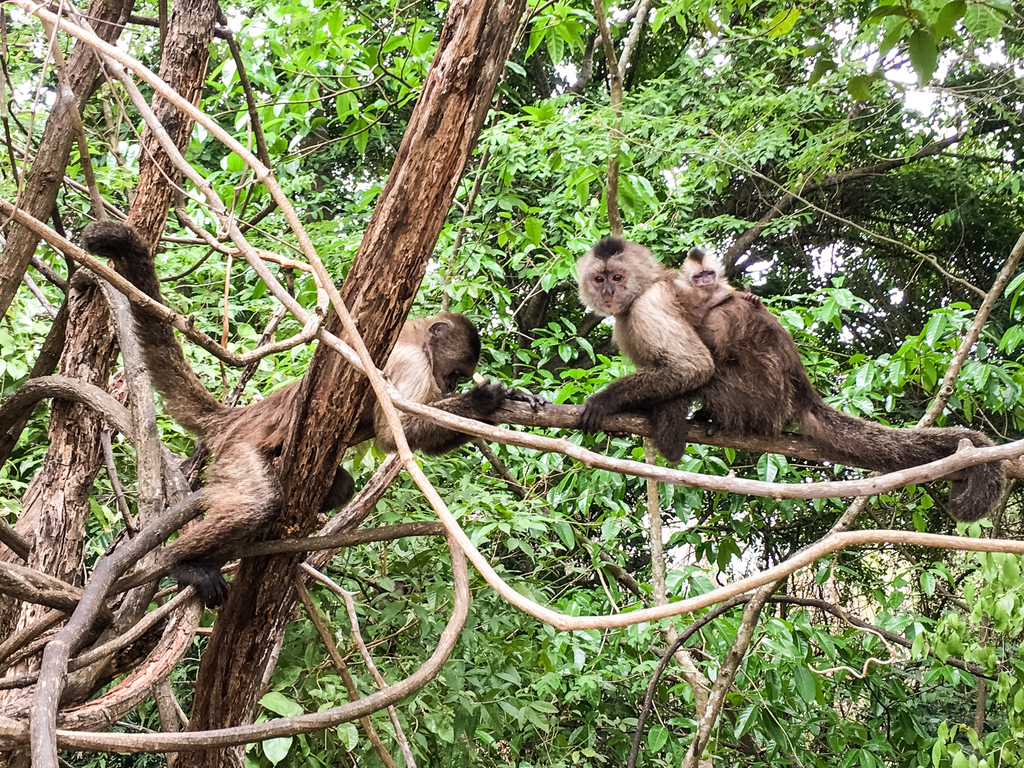
The wedge-capped capuchin or Guianan weeper capuchin (Cebus olivaceus) is a capuchin monkey from South America.
- Kingdom
- Animalia
- Phylum
- Chordata
- Class
- Mammalia
- Order
- Primates
- Family
- Cebidae
- Genus
- Cebus
- Species
- Cebus olivaceus
Description
The wedge-capped capuchin or Guianan weeper capuchin (Cebus olivaceus) is a capuchin monkey from South America. It is found in northern Brazil, Guyana and Venezuela. Cebus olivaceus is known to dwell in tall, primary forest and travel over long distances during the day. These primates are medium-sized monkeys with distinctive "wedge cap" markings on their head and slightly longer limbs than other capuchins for jumping through the forest canopy. Similar to other capuchin monkeys, the diet of wedge-capped capuchin primarily consists of fruits, invertebrates, other plant parts, and on rare occasions small vertebrates. They have also been known to rub millipedes against their fur, especially in the rainy seasons, as a potential means of mosquito repellent. Cebus olivaceus is a polygamous species that lives in groups of anywhere from 5-30 individuals with female-biased sex ratios. The group is organized according to a pre-determined hierarchal system of dominance for both males and females. Although biological lineage is less of a factor of dominance for males than it is for females, due to male migration between groups. Wedge-capped capuchin partake in several behavioral mechanisms to assert and maintain dominance within the group including: infanticide, when an infant is deliberately killed; grooming, used to facilitate social rapport; and alloparenting, which is when members of the group care for offspring that are not their own. The wedge-capped capuchin is listed as Least Concern in the IUCN Red List.
Gallery
Ajouter des photos
Partagez vos photos de cette espèce (jusqu'à 20 à la fois) : elles sont vérifiées automatiquement, puis publiées.
Répartition
Occurrences observées (données GBIF). Les zones hors aire d'origine peuvent indiquer une présence introduite ou invasive.
Sources et crédits
Informations provenant de plusieurs sources vérifiées. Dernière mise à jour : .
Crédits photos (8)
- Photo : Gerardo Chavarri (@gchavarri) · CC BY 4.0 · via iNaturalist
- Photo : Brad Walker (@edgarallenhoopoe) · CC BY-NC 4.0 · via iNaturalist
- Photo : Oswaldo Hernández (@ozzhernandez) · CC BY-NC 4.0 · via iNaturalist
- Photo : @luisag1996 · CC BY-NC 4.0 · via iNaturalist
- Photo : @rupununiwildlife · CC BY-NC 4.0 · via iNaturalist
- Photo : Yoser Linares (@yoser-linares) · CC BY-NC 4.0 · via iNaturalist
- Photo : @elpeterzam · CC BY-NC 4.0 · via iNaturalist
- Photo : Gabriel Leite (@crax) · CC BY-NC 4.0 · via iNaturalist
Mentions de licence
Texte disponible sous licence CC BY-SA 4.0. Il adapte notamment Cebus olivaceus, Wikipedia (CC BY-SA) : Wedge-capped capuchin (Wikipédia, auteurs dans l’historique de l’article).
- Taxonomie : GBIF Backbone Taxonomy (CC BY 4.0)
- Carte : occurrences GBIF, fond © contributeurs OpenStreetMap (ODbL)
- Statut de conservation : Liste rouge de l'UICN, via Wikidata (CC0)
Détail : Sources et licences.
Discussion (0)
Aucun message pour l’instant. Lancez la discussion sur cette fiche (sources, précisions, débats éditoriaux).
Connectez-vous pour participer à la discussion.