
Alpine Ibex
Capra ibex
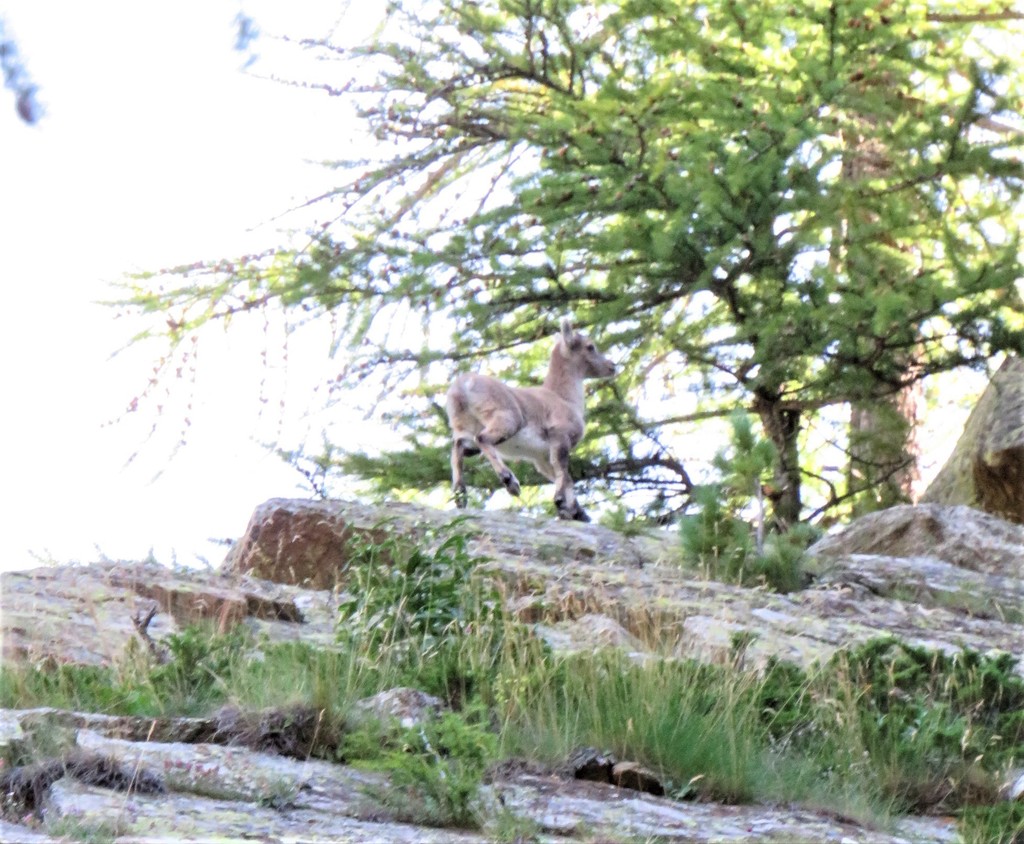
The Alpine ibex (Capra ibex), also known as the steinbock, is a European species of goat which lives in the Alps.
- Kingdom
- Animalia
- Phylum
- Chordata
- Class
- Mammalia
- Order
- Artiodactyla
- Family
- Bovidae
- Genus
- Capra
- Species
- Capra ibex
Description
The Alpine ibex (Capra ibex), also known as the steinbock, is a European species of goat which lives in the Alps. It is one of ten species in the genus Capra, and its closest living relative is the Iberian ibex. The Alpine ibex is a sexually dimorphic species; males are much larger and carry much larger, longer horns than females. Its coat is brownish-grey. Alpine ibexes tend to live in steep, rough terrain and open alpine meadows. They can be found at elevations as high as 3,300 m (10,800 ft) and their sharp hooves allow them to scale the steep slopes and cliffs of their mountainous habitat. Alpine ibexes primarily feed on grass and are active throughout the year. Although they are social animals, adult males and females segregate for most of the year, coming together only to mate. During the breeding season, males use their long horns to fight for access to females. Ibexes have few predators but may succumb to parasites and diseases. By the 19th century, human hunters extirpated the Alpine ibex from most of its range, driving it near to extinction. It went through a population bottleneck of fewer than 100 individuals, all living in Gran Paradiso National Park, Italy. Despite its ensuing very low genetic diversity across populations, the species has been successfully reintroduced to parts of its historical range. As of 2020, the IUCN lists the species as being of least concern.
Gallery
Ajouter des photos
Partagez vos photos de cette espèce (jusqu'à 20 à la fois) : elles sont vérifiées automatiquement, puis publiées.
Répartition
Occurrences observées (données GBIF). Les zones hors aire d'origine peuvent indiquer une présence introduite ou invasive.
Sources et crédits
Informations provenant de plusieurs sources vérifiées. Dernière mise à jour : .
Crédits photos (5)
- Photo : Matteo Stucchi (@matt_sicker) · CC BY-NC 4.0 · via iNaturalist
- Photo : Nils (@hungryholobiont) · CC BY 4.0 · via iNaturalist
- Photo : Samuel Beyertt (@samu4051) · CC BY-NC 4.0 · via iNaturalist
- Photo : Marco 🕉️ (@gryllus) · CC BY-NC 4.0 · via iNaturalist
- Photo : Nicola Zanetti (@nicola_zanetti) · CC BY-NC 4.0 · via iNaturalist
Mentions de licence
Texte disponible sous licence CC BY-SA 4.0. Il adapte notamment Wikipedia (CC BY-SA) : Alpine ibex (Wikipédia, auteurs dans l’historique de l’article).
- Taxonomie : GBIF Backbone Taxonomy (CC BY 4.0)
- Carte : occurrences GBIF, fond © contributeurs OpenStreetMap (ODbL)
- Statut de conservation : Liste rouge de l'UICN, via Wikidata (CC0)
Détail : Sources et licences.
Discussion (0)
Aucun message pour l’instant. Lancez la discussion sur cette fiche (sources, précisions, débats éditoriaux).
Connectez-vous pour participer à la discussion.