
Bemaraha woolly lemur
Avahi cleesei
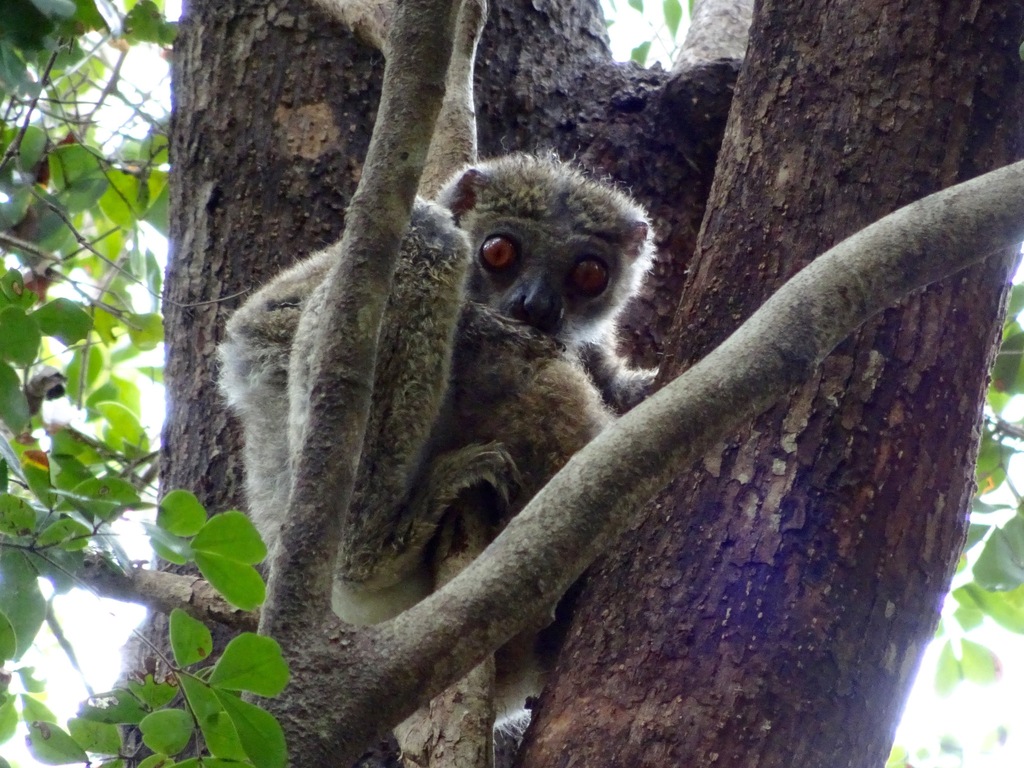
The Bemaraha woolly lemur (Avahi cleesei), also known as Cleese's woolly lemur, is a species of woolly lemur native to western Madagascar, named after John Cleese.
- Kingdom
- Animalia
- Phylum
- Chordata
- Class
- Mammalia
- Order
- Primates
- Family
- Indriidae
- Genus
- Avahi
- Species
- Avahi cleesei
Description
The Bemaraha woolly lemur (Avahi cleesei), also known as Cleese's woolly lemur, is a species of woolly lemur native to western Madagascar, named after John Cleese. The first scientist to discover the species named it after Cleese, star of Monty Python, mainly because of Cleese's fondness for lemurs, as shown in Operation Lemur with John Cleese and Fierce Creatures, and his efforts at protecting and preserving them. The species was first recorded in 1990 by a team of scientists from Zurich University led by Urs Thalmann, but was not formally described as a species until 11 November 2005. The diurnal animal weighs about 5–6 kilograms (11–13 lb), has brown skin with white regions on the rear and inside of the thighs and has a short damp nose, large plate eyes, and ears which hardly stand out from the skin. It typically has a strictly vegetarian diet of leaves and buds, living together in small families. The local population calls the species dadintsifaky, which means "grandfather of the sifaka", because it is similarly sized to sifakas, but more ponderous, heavyset and has ample greyish-brown fur. The habitat is limited to the Tsingy de Bemaraha Strict Nature Reserve in western Madagascar, which is a UNESCO World Heritage Site. The animal is probably threatened with becoming extinct in the long run, since the size of the population is unknown so far and its habitat shrinks continuously.
Gallery
Ajouter des photos
Partagez vos photos de cette espèce (jusqu'à 20 à la fois) : elles sont vérifiées automatiquement, puis publiées.
Répartition
Occurrences observées (données GBIF). Les zones hors aire d'origine peuvent indiquer une présence introduite ou invasive.
Sources et crédits
Informations provenant de plusieurs sources vérifiées. Dernière mise à jour : .
Crédits photos (4)
- Photo : @ttso · CC BY-NC 4.0 · via iNaturalist
- Photo : Barry Stewart (@moonmoths) · CC BY 4.0 · via iNaturalist
- Photo : Frank-Roland Fließ (@franky-m) · CC BY-NC 4.0 · via iNaturalist
- Photo : Kieron Huston (@kieron_huston) · CC BY-NC 4.0 · via iNaturalist
Mentions de licence
Texte disponible sous licence CC BY-SA 4.0. Il adapte notamment Avahi cleesei, Wikipedia (CC BY-SA) : Bemaraha woolly lemur (Wikipédia, auteurs dans l’historique de l’article).
- Taxonomie : GBIF Backbone Taxonomy (CC BY 4.0)
- Carte : occurrences GBIF, fond © contributeurs OpenStreetMap (ODbL)
- Statut de conservation : Liste rouge de l'UICN, via Wikidata (CC0)
Détail : Sources et licences.
Discussion (0)
Aucun message pour l’instant. Lancez la discussion sur cette fiche (sources, précisions, débats éditoriaux).
Connectez-vous pour participer à la discussion.