
Death watch beetle
Xestobium rufovillosum
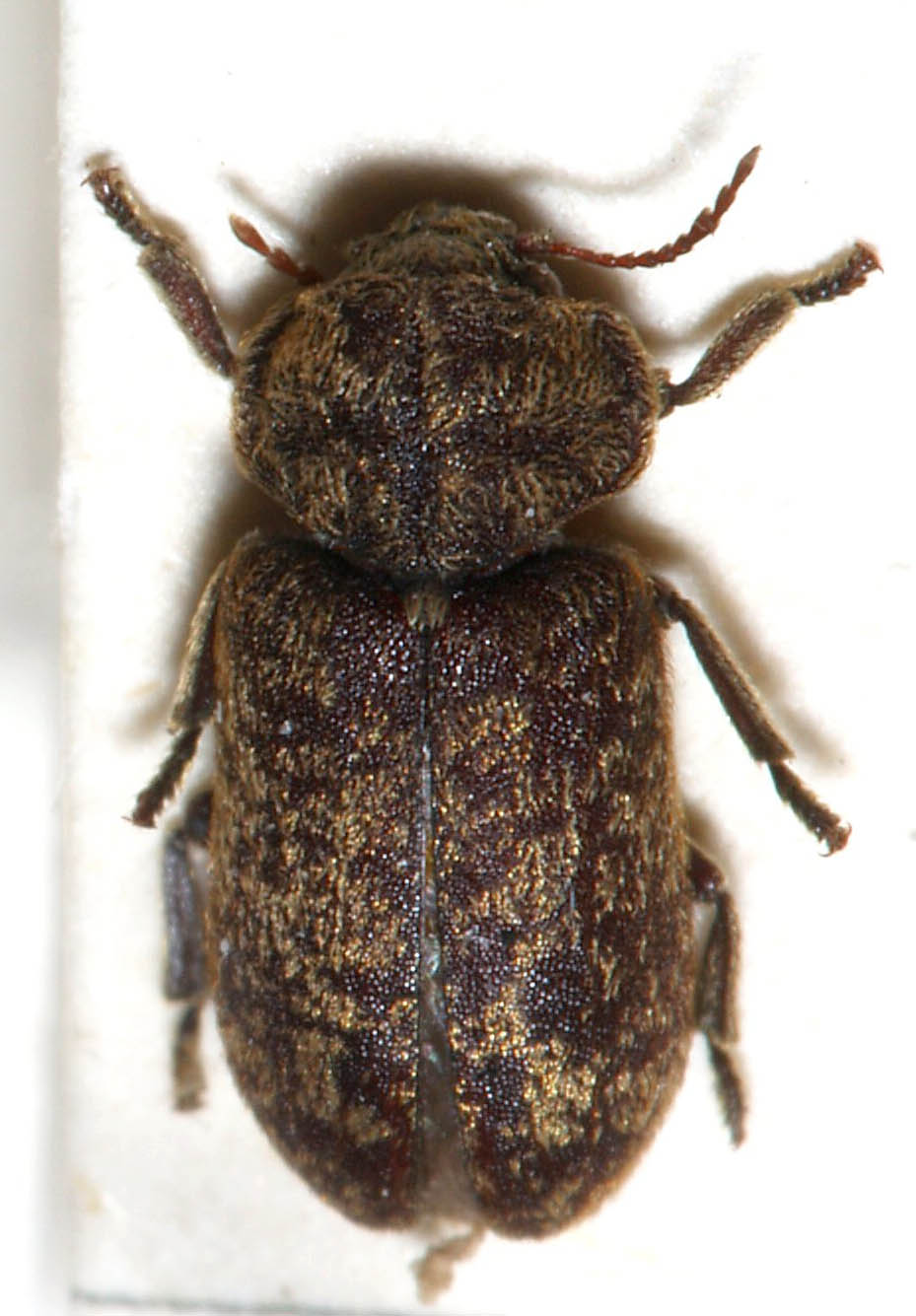
The deathwatch beetle (Xestobium rufovillosum) is a species of woodboring beetle that sometimes infests the structural timbers of old buildings.
- Kingdom
- Animalia
- Phylum
- Arthropoda
- Class
- Insecta
- Order
- Coleoptera
- Family
- Anobiidae
- Genus
- Xestobium
- Species
- Xestobium rufovillosum
Description
The deathwatch beetle (Xestobium rufovillosum) is a species of woodboring beetle that sometimes infests the structural timbers of old buildings. The adult beetle is brown and averages 7 mm (0.3 in) in length. Eggs are laid in dark crevices in old wood inside buildings, trees, or tunnels left behind by previous larvae. The larvae bore into the timber, feeding for up to ten years before pupating, after which they emerge from the wood as adult beetles. Timber that has been damp and is affected by fungal decay is soft enough for the larvae to chew through. They obtain nourishment by using enzymes present in their gut to digest the cellulose and hemicellulose in the wood. The larvae of deathwatch beetles weaken the structural timbers of a building by tunneling through them. Treatment with insecticides to kill the larvae is largely ineffective, and killing the adult beetles when they emerge in spring and early summer may be a better option. However, infestations by the beetles are often limited to historic buildings, because modern buildings tend to use softwoods for joists and rafters, rather than the aged oak timbers which the beetles prefer. To attract mates, the adult insects create a tapping or ticking sound that can sometimes be heard in the rafters of old buildings on summer nights. For that reason, the deathwatch beetle is associated with quiet, sleepless nights, so it was named for the vigil (watch) being kept beside the dying or dead. By extension, there exists a superstition that the sounds are an omen of impending death.
Gallery
Ajouter des photos
Partagez vos photos de cette espèce (jusqu'à 20 à la fois) : elles sont vérifiées automatiquement, puis publiées.
Répartition
Occurrences observées (données GBIF). Les zones hors aire d'origine peuvent indiquer une présence introduite ou invasive.
Sources et crédits
Informations provenant de plusieurs sources vérifiées. Dernière mise à jour : .
Crédits photos (6)
- Photo : Sarefo · CC BY-SA 3.0
- Photo : Denys Davydov (@davydovbotany) · CC BY-NC 4.0 · via iNaturalist
- Photo : AWI i Pr. (@gijwans) · CC BY-NC 4.0 · via iNaturalist
- Photo : Matthieu Le Goïc (@matthieu_le_goic) · CC BY 4.0 · via iNaturalist
- Photo : Aron Bellersheim (@coleomaniac) · CC BY-NC 4.0 · via iNaturalist
- Photo : Jean-Paul Boerekamps (@jeanpaulboerekamps) · CC0 (domaine public) · via iNaturalist
Mentions de licence
Texte disponible sous licence CC BY-SA 4.0. Il adapte notamment Wikipedia (CC BY-SA) : Deathwatch beetle (Wikipédia, auteurs dans l’historique de l’article).
- Taxonomie : GBIF Backbone Taxonomy (CC BY 4.0)
- Carte : occurrences GBIF, fond © contributeurs OpenStreetMap (ODbL)
Détail : Sources et licences.
Discussion (0)
Aucun message pour l’instant. Lancez la discussion sur cette fiche (sources, précisions, débats éditoriaux).
Connectez-vous pour participer à la discussion.