
Grizzled skipper
Pyrgus malvae
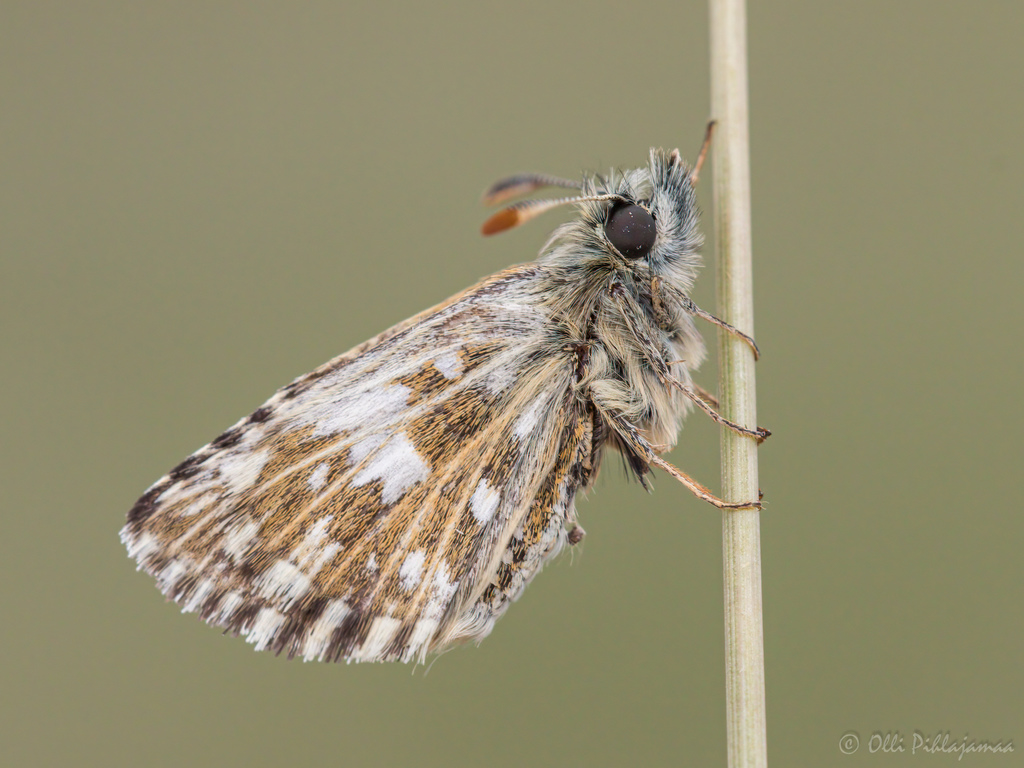
Pyrgus malvae, the grizzled skipper, is a butterfly species from the family Hesperiidae.
- Kingdom
- Animalia
- Phylum
- Arthropoda
- Class
- Insecta
- Order
- Lepidoptera
- Family
- Hesperiidae
- Genus
- Pyrgus
- Species
- Pyrgus malvae
Description
Pyrgus malvae, the grizzled skipper, is a butterfly species from the family Hesperiidae. It is a small skipper (butterfly) with a chequered pattern on its wings that appears to be black and white. This butterfly can be found throughout Europe and is common in central and southern regions of England. The butterfly prefers three major types of habitat: woodland, grassland, and industrial. Referenced as a superspecies, Pyrgus malvae includes three semispecies: malvae, malvoides, and melotis. Eggs are laid on plants that will provide warmth and proper nutrition for development. As larvae, their movement is usually restricted to a single plant, on which they will build tents, unless they move onto a second host plant. Larvae then spin cocoons, usually on the last host plant they have occupied, where they remain until spring. Upon emerging as adult butterflies, grizzled skippers are quite active during the day and tend to favour blue or violet-coloured plants for food. They also possess multiple methods of communication; for example, vibrations are used to communicate with ants, and chemical secretions play a role in mating. Exhibiting territorial behaviour, males apply perching and patrolling strategies to mate with a desired female.
Gallery
Ajouter des photos
Partagez vos photos de cette espèce (jusqu'à 20 à la fois) : elles sont vérifiées automatiquement, puis publiées.
Répartition
Occurrences observées (données GBIF). Les zones hors aire d'origine peuvent indiquer une présence introduite ou invasive.
Sources et crédits
Informations provenant de plusieurs sources vérifiées. Dernière mise à jour : .
Crédits photos (8)
- Photo : Olli Pihlajamaa (@zensmile) · CC BY-NC 4.0 · via iNaturalist
- Photo : Dimitǎr Boevski (@exonie) · CC BY 4.0 · via iNaturalist
- Photo : Petri Metsälä (@petri_metsala) · CC BY-NC 4.0 · via iNaturalist
- Photo : @dab37 · CC BY-NC 4.0 · via iNaturalist
- Photo : @gogo5760 · CC BY-NC 4.0 · via iNaturalist
- Photo : Norbert Helm (@norbert_helm) · CC BY-NC 4.0 · via iNaturalist
- Photo : chris_w (@wech65) · CC BY-NC 4.0 · via iNaturalist
- Photo : Jana Matějíčková (@jana_matejickova) · CC BY-NC 4.0 · via iNaturalist
Mentions de licence
Texte disponible sous licence CC BY-SA 4.0. Il adapte notamment Wikipedia (CC BY-SA) : Pyrgus malvae (Wikipédia, auteurs dans l’historique de l’article).
- Taxonomie : GBIF Backbone Taxonomy (CC BY 4.0)
- Carte : occurrences GBIF, fond © contributeurs OpenStreetMap (ODbL)
- Statut de conservation : Liste rouge de l'UICN, via Wikidata (CC0)
Détail : Sources et licences.
Discussion (0)
Aucun message pour l’instant. Lancez la discussion sur cette fiche (sources, précisions, débats éditoriaux).
Connectez-vous pour participer à la discussion.