
Ant-lion
Myrmeleon formicarius
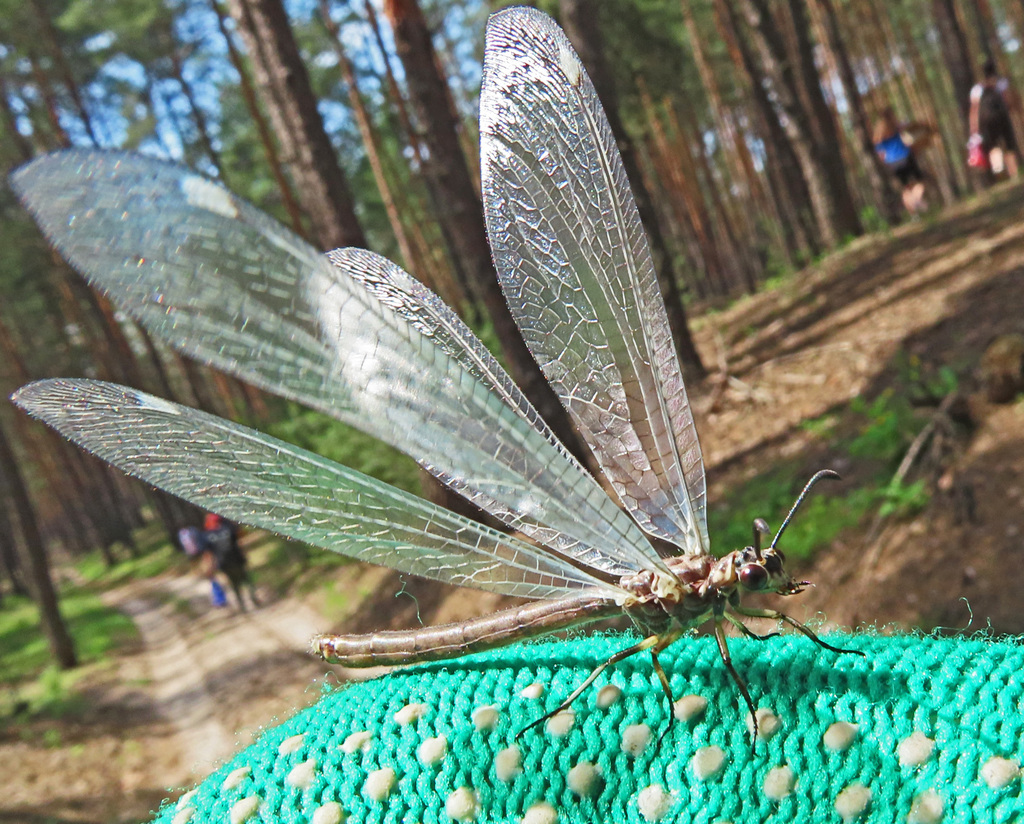
Myrmeleon formicarius is a species of antlion native to Belgium and other parts of Europe.
- Kingdom
- Animalia
- Phylum
- Arthropoda
- Class
- Insecta
- Order
- Neuroptera
- Family
- Myrmeleontidae
- Genus
- Myrmeleon
- Species
- Myrmeleon formicarius
Description
Myrmeleon formicarius is a species of antlion native to Belgium and other parts of Europe. It is known to be present in the Genk nature reserve Opglabbekerzavel in 2020, according to the species inventory prepared for the city by the ecological study/advice company Mieco-effect. According to the European Environment Agency, this species has not yet been assessed by the IUCN and as such lacks an official conservation threat status. Despite there being little species-specific information available online, the Encyclopædia Britannica describes it as "the best known of the 65 described species" of antlions. It has been suggested that there is a great deal of confusion in the distinction of individuals between M. formicarius and Euroleon nostras. The easiest hallmark of M. formicarius larvae is its largely black head, but this can easily be mis-seen due to fine humus/substrate particles clinging to their many head hairs. For adults, the lack of black flecks in their wing colours is an identifying feature. A 2020 study by Wu et al., sequenced their mitochondrial genome and found that they are most closely related to Myrmeleon immanis, another antlion species. The common name of M. formicarius in Dutch is Zwartkopmierenleeuw, which translates to "Blackhead antlion".
Gallery
Ajouter des photos
Partagez vos photos de cette espèce (jusqu'à 20 à la fois) : elles sont vérifiées automatiquement, puis publiées.
Répartition
Occurrences observées (données GBIF). Les zones hors aire d'origine peuvent indiquer une présence introduite ou invasive.
Sources et crédits
Informations provenant de plusieurs sources vérifiées. Dernière mise à jour : .
Crédits photos (6)
- Photo : Юрій Бенгус (@yuri_bengus) · CC BY-NC 4.0 · via iNaturalist
- Photo : @superhik · CC BY-NC 4.0 · via iNaturalist
- Photo : Oliver Stöhr (@oli_sto) · CC BY-NC 4.0 · via iNaturalist
- Photo : Yury Kvach (@kukarzinio) · CC BY-NC 4.0 · via iNaturalist
- Photo : Gabriele La Grasta (@gabriele_lagrasta) · CC BY-NC 4.0 · via iNaturalist
- Photo : @evgeniy_57 · CC BY-NC 4.0 · via iNaturalist
Mentions de licence
Texte disponible sous licence CC BY-SA 4.0. Il adapte notamment Wikipedia (CC BY-SA) : Myrmeleon formicarius (Wikipédia, auteurs dans l’historique de l’article).
- Taxonomie : GBIF Backbone Taxonomy (CC BY 4.0)
- Carte : occurrences GBIF, fond © contributeurs OpenStreetMap (ODbL)
Détail : Sources et licences.
Discussion (0)
Aucun message pour l’instant. Lancez la discussion sur cette fiche (sources, précisions, débats éditoriaux).
Connectez-vous pour participer à la discussion.