
Micronecta scholtzi
Micronecta scholtzi
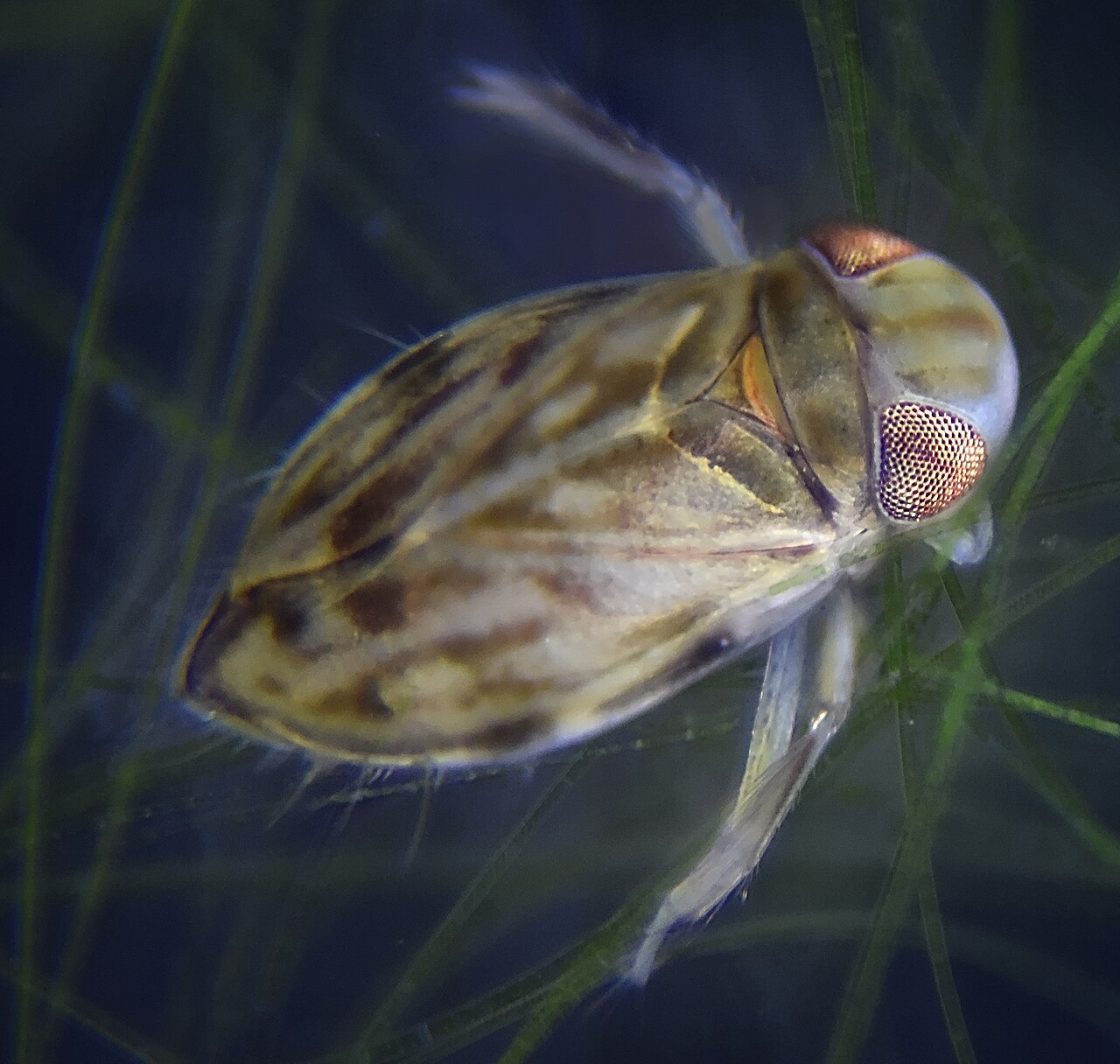
Micronecta scholtzi, the lesser water boatman, is a species of pygmy water boatman in the family Micronectidae.
- Kingdom
- Animalia
- Phylum
- Arthropoda
- Class
- Insecta
- Order
- Hemiptera
- Family
- Micronectidae
- Genus
- Micronecta
- Species
- Micronecta scholtzi
Description
Micronecta scholtzi, the lesser water boatman, is a species of pygmy water boatman in the family Micronectidae. It was first described by Franz Xaver Fieber in 1860. They are some 2 mm long and are common in freshwater ponds and lakes across Europe, preferring stagnant to moderately moving water. In Central Europe, the genus Micronecta is represented by five species, as follows: Micronecta (Dichaetonecta) pusilla (Géza Horváth, 1895) Micronecta (Dichaetonecta) scholtzi (Fieber, 1860) Micronecta (Micronecta) griseola Géza Horváth, 1899 Micronecta (Micronecta) minutissima (Linnaeus, 1758) Micronecta (Micronecta) poweri (Douglas & Scott, 1869) M. scholtzi is easily differentiated from other species in this genus by the twisted left paramere of the male genitalia, (see traumatic insemination) the short pronotum and a distinctive dark pattern on the head. Little is known of its habits and habitat, but it is thought to flourish in the shallows of ponds or lake shores. The male of this species produces its underwater courtship song by stridulating a ridge on its penis across corrugations on its abdomen. The area involved measures only 50 micrometres across, or about the thickness of a human hair. A team of biologists and sound engineers from France and Scotland have recorded M. scholtzi producing sound up to 99.2 decibels, a volume comparable to a passing freight train. The noise was so unexpectedly loud that the engineers checked the calibration of their instruments. It is classified by Guinness World Records as the loudest penis. Almost all volume is lost when sound moves from water to air, but even so remains audible to humans walking along the pond shore. This species is considered the loudest of all animals for its size. Despite knowing the mechanism of its sound production, researchers are still mystified by the volume produced and feel that once the process is understood, it could open up a useful avenue in ultrasonics. Not many insects are known to generate sound with reproductive organs, but there is another, the pyralid moth, Syntonarcha iriastis, which emits ultrasonic squeaks.
Gallery
Ajouter des photos
Partagez vos photos de cette espèce (jusqu'à 20 à la fois) : elles sont vérifiées automatiquement, puis publiées.
Répartition
Occurrences observées (données GBIF). Les zones hors aire d'origine peuvent indiquer une présence introduite ou invasive.
Sources et crédits
Informations provenant de plusieurs sources vérifiées. Dernière mise à jour : .
Crédits photos (6)
- Photo : ExaVolt · CC BY-SA 4.0
- Photo : Pedro Antonio Lázaro Molinero (@pedroantoniolazaro) · CC BY-NC 4.0 · via iNaturalist
- Photo : Axel Gosseries (@axelgosseries) · CC BY-NC 4.0 · via iNaturalist
- Photo : @faluke · CC BY-NC 4.0 · via iNaturalist
- Photo : Tommy Andriollo (@tommy_andriollo) · CC BY 4.0 · via iNaturalist
- Photo : 龙栩川 (@xuc) · CC BY-NC 4.0 · via iNaturalist
Mentions de licence
Texte disponible sous licence CC BY-SA 4.0. Il adapte notamment Wikipedia (CC BY-SA) : Micronecta scholtzi (Wikipédia, auteurs dans l’historique de l’article).
- Taxonomie : GBIF Backbone Taxonomy (CC BY 4.0)
- Carte : occurrences GBIF, fond © contributeurs OpenStreetMap (ODbL)
Détail : Sources et licences.
Discussion (0)
Aucun message pour l’instant. Lancez la discussion sur cette fiche (sources, précisions, débats éditoriaux).
Connectez-vous pour participer à la discussion.