
Forest Tent Caterpillar Moth
Malacosoma disstria
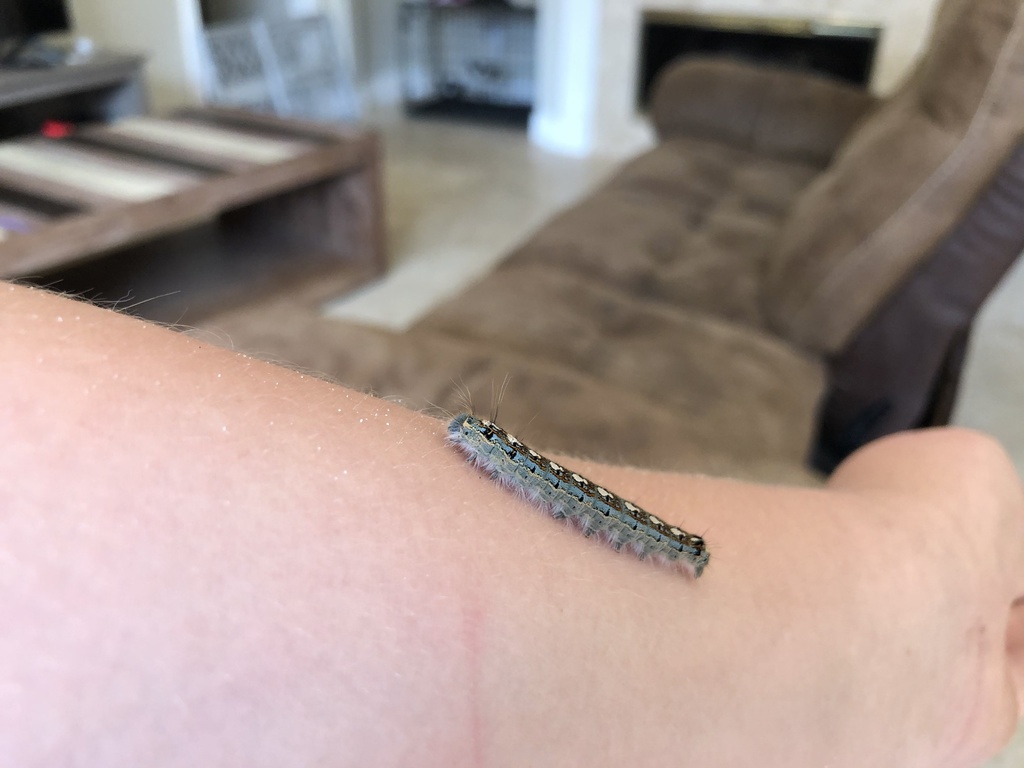
The forest tent caterpillar moth (Malacosoma disstria) is a moth found throughout North America, especially in the eastern regions.
- Kingdom
- Animalia
- Phylum
- Arthropoda
- Class
- Insecta
- Order
- Lepidoptera
- Family
- Lasiocampidae
- Genus
- Malacosoma
- Species
- Malacosoma disstria
Description
The forest tent caterpillar moth (Malacosoma disstria) is a moth found throughout North America, especially in the eastern regions. Unlike related tent caterpillar species, the larvae of forest tent caterpillars do not make tents, but rather, weave a silky sheet where they lie together during molting. They also lay down strands of silk as they move over branches and travel as groups along these pheromone-containing silk trails. The caterpillars are social, traveling together to feed and massing as a group at rest. Group behavior diminishes as the caterpillars increase in size, so that by the fifth instar (molt) the caterpillars are feeding and resting independently. The adult moths of this species favor oak, sweetgum, tupelo, aspen, and sugar maple for egg laying in the summer. The females lay eggs in masses of up to 300, which are stuck to twigs and covered with a gluey cement called spumaline, which prevents them from desiccating and freezing. Eggs hatch the following spring. The larvae can be found feeding on many other species of deciduous trees or shrubs. High population density outbreaks tend to recur at reasonably regular intervals every decade or so and usually last two to three years, during which time trees and shrubs can be almost completely denuded of leaves. Most plants replace the lost leaves without permanent damage.
Gallery
Ajouter des photos
Partagez vos photos de cette espèce (jusqu'à 20 à la fois) : elles sont vérifiées automatiquement, puis publiées.
Répartition
Occurrences observées (données GBIF). Les zones hors aire d'origine peuvent indiquer une présence introduite ou invasive.
Sources et crédits
Informations provenant de plusieurs sources vérifiées. Dernière mise à jour : .
Crédits photos (8)
- Photo : Mike Brady (@bradymh) · CC BY 4.0 · via iNaturalist
- Photo : Malakai Johnson (@malakaijohnson259) · CC BY-NC 4.0 · via iNaturalist
- Photo : @alcheringa · CC BY-NC 4.0 · via iNaturalist
- Photo : Alexis Godin (@alexisgodin) · CC BY 4.0 · via iNaturalist
- Photo : @sandiegomike · CC BY-NC 4.0 · via iNaturalist
- Photo : @soulflower_ecological · CC BY-NC 4.0 · via iNaturalist
- Photo : Marc Belisle (@marc_belisle_usherbrooke) · CC BY-NC 4.0 · via iNaturalist
- Photo : Jonathan Fréchette (@joefrechette) · CC BY-NC 4.0 · via iNaturalist
Mentions de licence
Texte disponible sous licence CC BY-SA 4.0. Il adapte notamment Wikipedia (CC BY-SA) : Forest tent caterpillar moth (Wikipédia, auteurs dans l’historique de l’article).
- Taxonomie : GBIF Backbone Taxonomy (CC BY 4.0)
- Carte : occurrences GBIF, fond © contributeurs OpenStreetMap (ODbL)
Détail : Sources et licences.
Discussion (0)
Aucun message pour l’instant. Lancez la discussion sur cette fiche (sources, précisions, débats éditoriaux).
Connectez-vous pour participer à la discussion.