
Lytta vesicatoria
Lytta vesicatoria
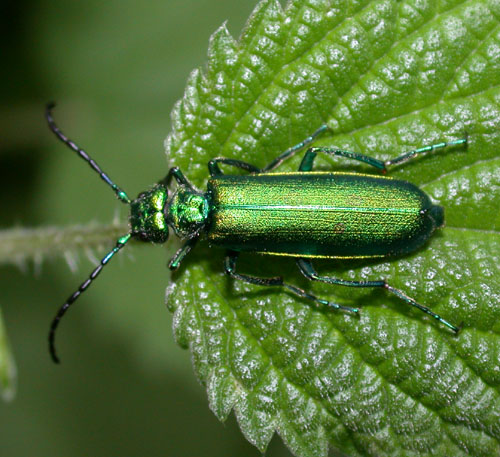
Lytta vesicatoria, also known as the Spanish fly, is an aposematic emerald-green beetle in the blister beetle family (Meloidae).
- Kingdom
- Animalia
- Phylum
- Arthropoda
- Class
- Insecta
- Order
- Coleoptera
- Family
- Meloidae
- Genus
- Lytta
- Species
- Lytta vesicatoria
Description
Lytta vesicatoria, also known as the Spanish fly, is an aposematic emerald-green beetle in the blister beetle family (Meloidae). It is distributed across Eurasia. The species and others in its family were used in traditional apothecary preparations as "Cantharides". The insect is the source of the terpenoid cantharidin, a toxic blistering agent once used as an exfoliating agent, anti-rheumatic drug and an aphrodisiac. The substance has also found culinary use in some blends of the North African spice mix ras el hanout. Its various supposed benefits have been responsible for accidental poisonings.
Gallery
Ajouter des photos
Partagez vos photos de cette espèce (jusqu'à 20 à la fois) : elles sont vérifiées automatiquement, puis publiées.
Répartition
Occurrences observées (données GBIF). Les zones hors aire d'origine peuvent indiquer une présence introduite ou invasive.
Sources et crédits
Informations provenant de plusieurs sources vérifiées. Dernière mise à jour : .
Crédits photos (6)
- Photo : Franco christophe · CC BY-SA 3.0
- Photo : @rolandtours · CC BY-NC 4.0 · via iNaturalist
- Photo : Joao Fernandes (@joaofernandes) · CC BY-NC 4.0 · via iNaturalist
- Photo : @mallaliev · CC BY-NC 4.0 · via iNaturalist
- Photo : @bonushenricus · CC BY-NC 4.0 · via iNaturalist
- Photo : Oleg Kosterin (@oleg_kosterin) · CC BY 4.0 · via iNaturalist
Mentions de licence
Texte disponible sous licence CC BY-SA 4.0. Il adapte notamment Wikipedia (CC BY-SA) : Lytta vesicatoria (Wikipédia, auteurs dans l’historique de l’article).
- Taxonomie : GBIF Backbone Taxonomy (CC BY 4.0)
- Carte : occurrences GBIF, fond © contributeurs OpenStreetMap (ODbL)
Détail : Sources et licences.
Discussion (0)
Aucun message pour l’instant. Lancez la discussion sur cette fiche (sources, précisions, débats éditoriaux).
Connectez-vous pour participer à la discussion.