
Leucodonta bicoloria
Leucodonta bicoloria
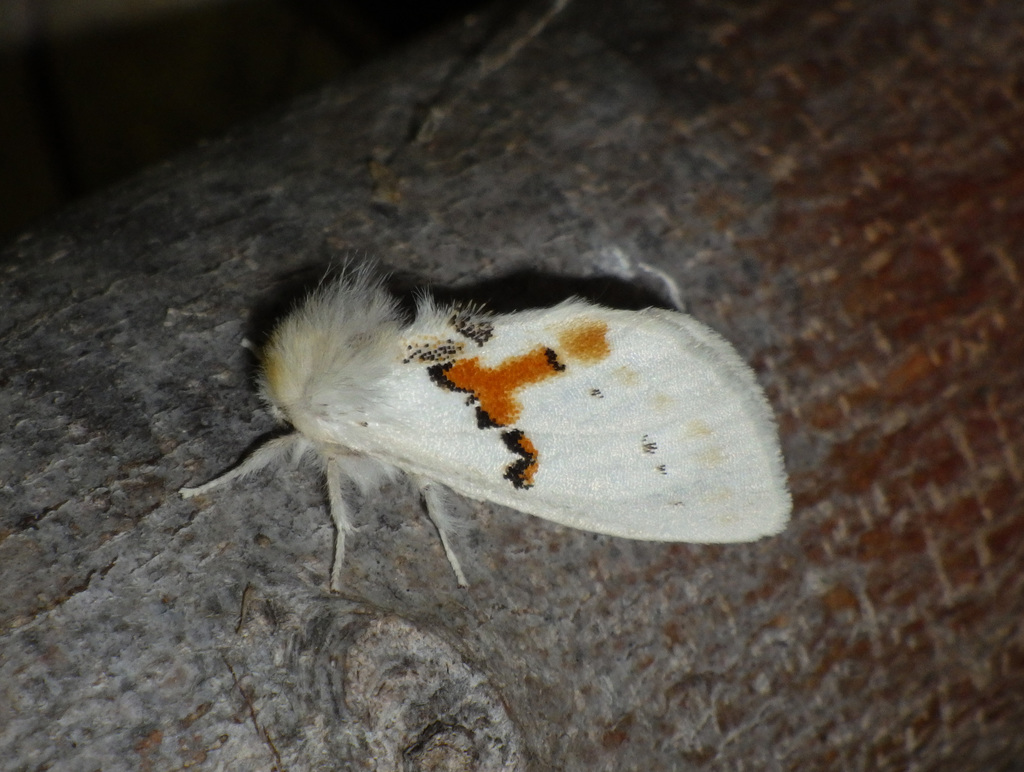
Leucodonta bicoloria, the white prominent, is a moth from the family Notodontidae.
- Kingdom
- Animalia
- Phylum
- Arthropoda
- Class
- Insecta
- Order
- Lepidoptera
- Family
- Notodontidae
- Genus
- Leucodonta
- Species
- Leucodonta bicoloria
Description
Leucodonta bicoloria, the white prominent, is a moth from the family Notodontidae. It ranges from Western Europe (Ireland) to Hokkaido (Japan) being found in the northern part of Middle Europe, Northern Europe and Russia to the Amur region. In the western parts of the range it is a local and rare species. It is likely extirpated in Britain but a population was recently rediscovered in Ireland. The habitat requirements of the species are a bit unusual, it seems to prefer locally warm deciduous and mixed forests, where birch, the sole host plant, forms the canopy (except Japan, where Sorbus reported). The moth survives winter as a pupa underground. The moths reach a wingspan of 28 to 36 millimeters. They are distinctively patterned. All wings have a snow-white ground color. On the forewings there is a typical, clearly orange-yellow marking approximately in the form of a Y, framed by two other, smaller spots of the same colour. On the outer edge of the forewings there are some small black dots. The lower wings at the inner edge have very fine white hairs. The egg is flat arched of white, yellowish or light green colour. The caterpillar is smooth with only a few hairs. It is yellow-green, with two dark green, yellowish dorsal lines, as well as black stigmas and golden yellow stripes above the feet. The head is dark green. The pupa is slender and cylindrical, rounded at the end.
Gallery
Ajouter des photos
Partagez vos photos de cette espèce (jusqu'à 20 à la fois) : elles sont vérifiées automatiquement, puis publiées.
Répartition
Occurrences observées (données GBIF). Les zones hors aire d'origine peuvent indiquer une présence introduite ou invasive.
Sources et crédits
Informations provenant de plusieurs sources vérifiées. Dernière mise à jour : .
Crédits photos (8)
- Photo : Andreas Manz (@amzamz) · CC0 (domaine public) · via iNaturalist
- Photo : Leonid (@sibnaturalist) · CC BY-NC 4.0 · via iNaturalist
- Photo : も (@mo_tsukuba) · CC BY-NC 4.0 · via iNaturalist
- Photo : Junho Choe (@choejunho) · CC BY-NC 4.0 · via iNaturalist
- Photo : @bakkasv · CC BY-NC 4.0 · via iNaturalist
- Photo : @vintschgi · CC BY-NC 4.0 · via iNaturalist
- Photo : Валерия Ковалева (@valerkov) · CC BY 4.0 · via iNaturalist
- Photo : Вячеслав Юсупов (@tomegatherion) · CC BY 4.0 · via iNaturalist
Mentions de licence
Texte disponible sous licence CC BY-SA 4.0. Il adapte notamment Wikipedia (CC BY-SA) : Leucodonta bicoloria (Wikipédia, auteurs dans l’historique de l’article).
- Taxonomie : GBIF Backbone Taxonomy (CC BY 4.0)
- Carte : occurrences GBIF, fond © contributeurs OpenStreetMap (ODbL)
Détail : Sources et licences.
Discussion (0)
Aucun message pour l’instant. Lancez la discussion sur cette fiche (sources, précisions, débats éditoriaux).
Connectez-vous pour participer à la discussion.