
Grayling
Hipparchia semele
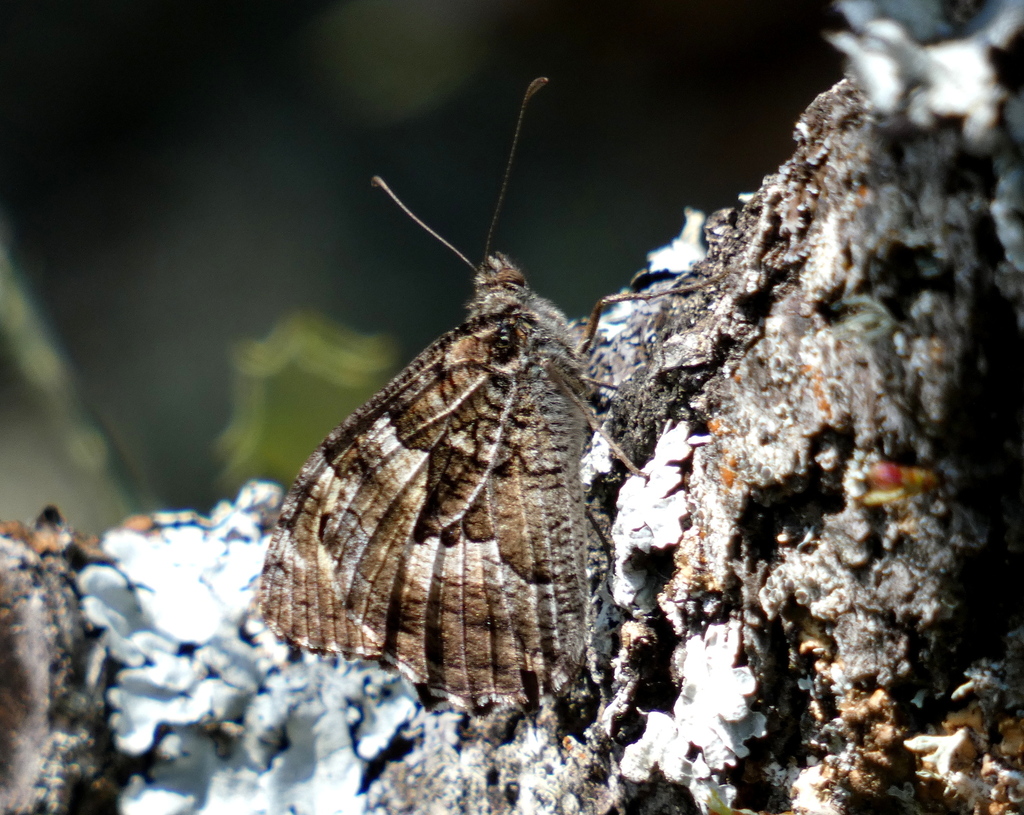
The grayling or rock grayling (Hipparchia semele) is a species in the brush-footed butterfly family Nymphalidae.
- Kingdom
- Animalia
- Phylum
- Arthropoda
- Class
- Insecta
- Order
- Lepidoptera
- Family
- Nymphalidae
- Genus
- Hipparchia
- Species
- Hipparchia semele
Description
The grayling or rock grayling (Hipparchia semele) is a species in the brush-footed butterfly family Nymphalidae. Although found all over Europe, the grayling mostly inhabits coastal areas, with inland populations declining significantly in recent years. The grayling lives in dry and warm habitats with easy access to the sun, which helps them with body temperature regulation. A grayling goes through four stages in its life cycle. The eggs hatch around August, and larvae grow in four instars from August to the following June. By June, the larvae begin to pupate by spinning a silk cocoon below the surface of the ground. The adult grayling emerges around August. The grayling migrates in small groups of two or three butterflies throughout most of August, typically moving southeast. H. semele engages in cryptic coloring, with their tan and brown colored wings helping them camouflage into their surroundings. The grayling exposes the eyespots on its wings when it believes to have been detected by a predator, but generally keeps them hidden to avoid being seen. Male butterflies are territorial, and engage in flight performances to determine who settles in the best oviposition site. Additionally, the grayling regulates its body temperature by orienting its body and posture to adjust to the heat from the sun. Grayling populations have recently begun to decline, and while it is not globally endangered, the species is now considered a priority for conservation efforts in the United Kingdom.
Gallery
Ajouter des photos
Partagez vos photos de cette espèce (jusqu'à 20 à la fois) : elles sont vérifiées automatiquement, puis publiées.
Répartition
Occurrences observées (données GBIF). Les zones hors aire d'origine peuvent indiquer une présence introduite ou invasive.
Sources et crédits
Informations provenant de plusieurs sources vérifiées. Dernière mise à jour : .
Crédits photos (6)
- Photo : Enrique Pelayo (@epelayo) · CC BY-NC 4.0 · via iNaturalist
- Photo : @keith681 · CC BY-NC 4.0 · via iNaturalist
- Photo : Javisa Hun (@javisahun) · CC BY-NC 4.0 · via iNaturalist
- Photo : @daisyjb · CC BY-NC 4.0 · via iNaturalist
- Photo : @neuspip · CC BY-NC 4.0 · via iNaturalist
- Photo : Antón Vázquez (@antonva) · CC BY-NC 4.0 · via iNaturalist
Mentions de licence
Texte disponible sous licence CC BY-SA 4.0. Il adapte notamment Wikipedia (CC BY-SA) : Grayling (butterfly) (Wikipédia, auteurs dans l’historique de l’article).
- Taxonomie : GBIF Backbone Taxonomy (CC BY 4.0)
- Carte : occurrences GBIF, fond © contributeurs OpenStreetMap (ODbL)
- Statut de conservation : Liste rouge de l'UICN, via Wikidata (CC0)
Détail : Sources et licences.
Discussion (0)
Aucun message pour l’instant. Lancez la discussion sur cette fiche (sources, précisions, débats éditoriaux).
Connectez-vous pour participer à la discussion.