
Silver-spotted skipper
Hesperia comma
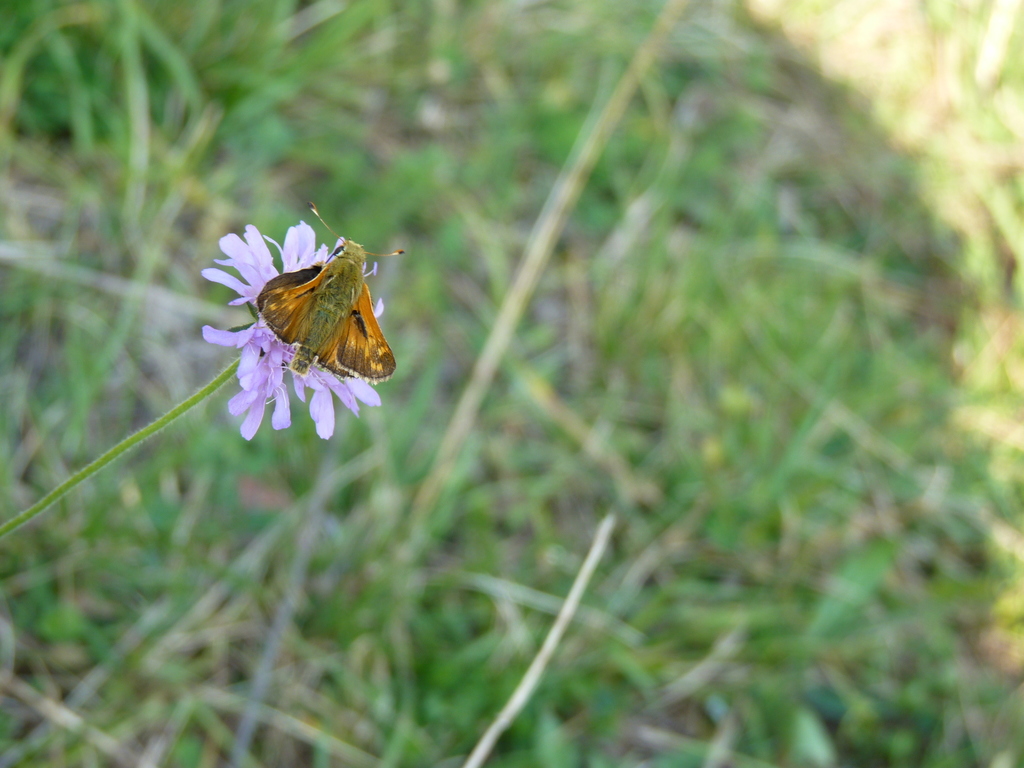
Hesperia comma, the silver-spotted skipper or common branded skipper, is a butterfly of the family Hesperiidae.
- Kingdom
- Animalia
- Phylum
- Arthropoda
- Class
- Insecta
- Order
- Lepidoptera
- Family
- Hesperiidae
- Genus
- Hesperia
- Species
- Hesperia comma
Description
Hesperia comma, the silver-spotted skipper or common branded skipper, is a butterfly of the family Hesperiidae. The species is known as silver-spotted skipper in Europe and common branded skipper in North America where the butterfly Epargyreus clarus, a spread-winged skipper, also has the common name of "Silver-Spotted Skipper". Originally the species was known as the Pearl Skipper but as time went on the name Silver-Spotted Skipper began being ascribed to it more frequently. There are numerous subspecies spread throughout the world in Asia, Europe, and North America. The species has at least 15 subspecies in North America. In the UK they are rare, usually only found in the chalk hills of the Southern UK and are believed to have arrived in the UK either in the Late Glacial Period or the Holocene. As adults they have white tips with yellowish-white spots. They typically live for a year with most of their life spend overwintering as eggs for 7 months until temperatures warm in the spring. The larvae typically grow up in grazed areas with not too much overgrown vegetation and feed on host plants such as Sheep's Fescues (Festuca ovina). The larvae form tents made of silk and grass blades and as they pupate form cocoon-like structures out of the same materials near the ground. They emerge as adults in July through September. In the UK the species was facing decline, however due to restoration efforts and global warming their populations have begun to grow again.
Gallery
Ajouter des photos
Partagez vos photos de cette espèce (jusqu'à 20 à la fois) : elles sont vérifiées automatiquement, puis publiées.
Répartition
Occurrences observées (données GBIF). Les zones hors aire d'origine peuvent indiquer une présence introduite ou invasive.
Sources et crédits
Informations provenant de plusieurs sources vérifiées. Dernière mise à jour : .
Crédits photos (8)
- Photo : @franziskavi · CC BY-NC 4.0 · via iNaturalist
- Photo : @danmao · CC BY-NC 4.0 · via iNaturalist
- Photo : Philip Mark Osso (@philipmarkosso) · CC BY-NC 4.0 · via iNaturalist
- Photo : @djones_uk · CC BY 4.0 · via iNaturalist
- Photo : Stefano (@stefano_aguzzi) · CC BY-NC 4.0 · via iNaturalist
- Photo : Sławomir Pietrzyk (@p_slawek) · CC BY-NC 4.0 · via iNaturalist
- Photo : DDutrey (@ddutrey) · CC BY 4.0 · via iNaturalist
- Photo : Sylvain Eichhorn (@sylvain_eichhorn) · CC BY 4.0 · via iNaturalist
Mentions de licence
Texte disponible sous licence CC BY-SA 4.0. Il adapte notamment Wikipedia (CC BY-SA) : Hesperia comma (Wikipédia, auteurs dans l’historique de l’article).
- Taxonomie : GBIF Backbone Taxonomy (CC BY 4.0)
- Carte : occurrences GBIF, fond © contributeurs OpenStreetMap (ODbL)
- Statut de conservation : Liste rouge de l'UICN, via Wikidata (CC0)
Détail : Sources et licences.
Discussion (0)
Aucun message pour l’instant. Lancez la discussion sur cette fiche (sources, précisions, débats éditoriaux).
Connectez-vous pour participer à la discussion.