
Common brimstone
Gonepteryx rhamni
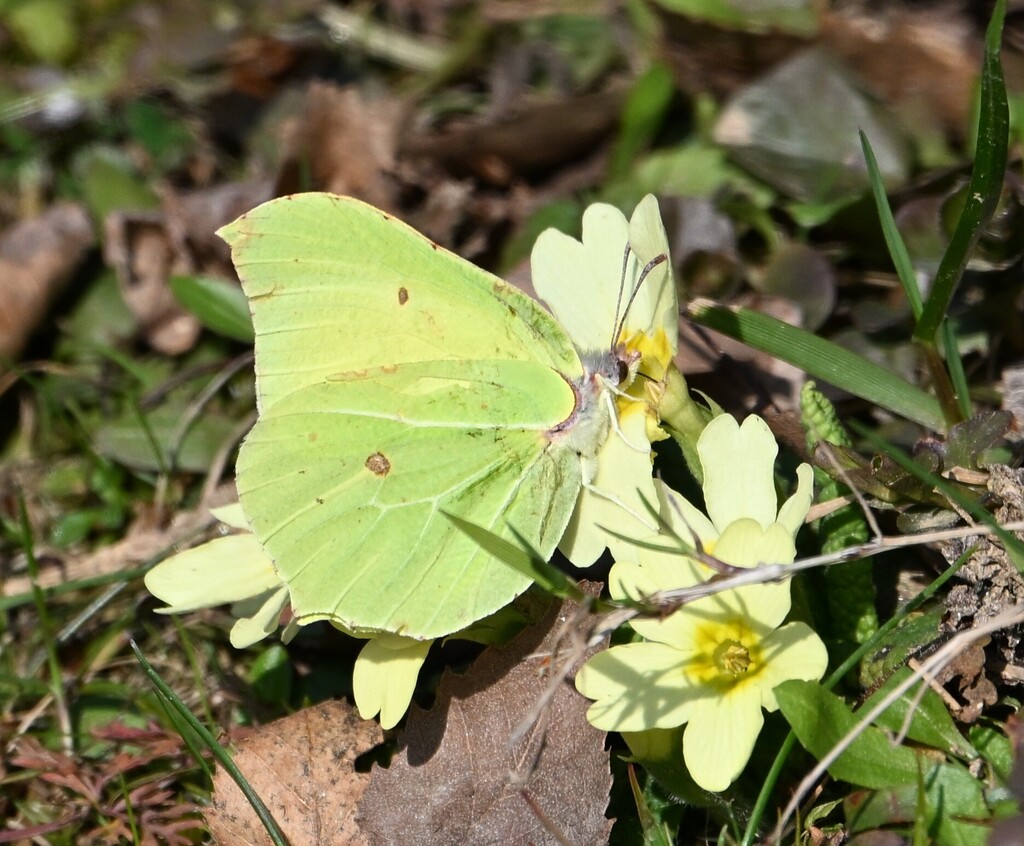
Gonepteryx rhamni, commonly named the common brimstone, is a butterfly of the family Pieridae.
- Kingdom
- Animalia
- Phylum
- Arthropoda
- Class
- Insecta
- Order
- Lepidoptera
- Family
- Pieridae
- Genus
- Gonepteryx
- Species
- Gonepteryx rhamni
Description
Gonepteryx rhamni, commonly named the common brimstone, is a butterfly of the family Pieridae. It lives throughout the Palearctic zone and is commonly found across Europe, Asia, and North Africa. Across much of its range, it is the only species of its genus, and is therefore simply known locally as the brimstone. Its wing span size is 60–74 mm (2.4–2.9 in). It should not be confused with the brimstone moth Opisthograptis luteolata. The brimstone relies on two species of buckthorn plants as host plants for its larvae; this influences its geographic range and distribution, as these plants are commonly found in wetlands. The adult brimstone travels to woodland areas to spend seven months overwintering. In spring when their host plants have developed, they return to the wetlands to breed and lay eggs. Both the larval and adult forms of the common brimstone have protective coloration and behaviour that decreases their chances of being recognised and subsequently preyed upon. The adult common brimstone has sexual dimorphism in its wing coloration: males have yellow wings and iridescence while females have greenish-white wings and are not iridescent. This iridescence is affected by environmental factors. The name "butterfly" is believed to have originated from this species, which was called the "butter-coloured fly" by early British naturalists.
Gallery
Ajouter des photos
Partagez vos photos de cette espèce (jusqu'à 20 à la fois) : elles sont vérifiées automatiquement, puis publiées.
Répartition
Occurrences observées (données GBIF). Les zones hors aire d'origine peuvent indiquer une présence introduite ou invasive.
Sources et crédits
Informations provenant de plusieurs sources vérifiées. Dernière mise à jour : .
Crédits photos (8)
- Photo : Florian Arbesleitner (@florian_arbesleitner) · CC BY-NC 4.0 · via iNaturalist
- Photo : @wlw · CC BY-NC 4.0 · via iNaturalist
- Photo : @biggi20 · CC BY-NC 4.0 · via iNaturalist
- Photo : Gabriele La Grasta (@gabriele_lagrasta) · CC BY-NC 4.0 · via iNaturalist
- Photo : @mothdragon · CC BY-NC 4.0 · via iNaturalist
- Photo : Мария Викторовна Щекало (@hom-12yak) · CC BY-NC 4.0 · via iNaturalist
- Photo : @hubert_sch · CC BY-NC 4.0 · via iNaturalist
- Photo : @fear-fantasy · CC BY-NC 4.0 · via iNaturalist
Mentions de licence
Texte disponible sous licence CC BY-SA 4.0. Il adapte notamment Wikipedia (CC BY-SA) : Gonepteryx rhamni (Wikipédia, auteurs dans l’historique de l’article).
- Taxonomie : GBIF Backbone Taxonomy (CC BY 4.0)
- Carte : occurrences GBIF, fond © contributeurs OpenStreetMap (ODbL)
Détail : Sources et licences.
Discussion (0)
Aucun message pour l’instant. Lancez la discussion sur cette fiche (sources, précisions, débats éditoriaux).
Connectez-vous pour participer à la discussion.