
Wormwood pug
Eupithecia absinthiata
The wormwood pug (Eupithecia absinthiata) is a moth of the family Geometridae.
- Kingdom
- Animalia
- Phylum
- Arthropoda
- Class
- Insecta
- Order
- Lepidoptera
- Family
- Geometridae
- Genus
- Eupithecia
- Species
- Eupithecia absinthiata
Description
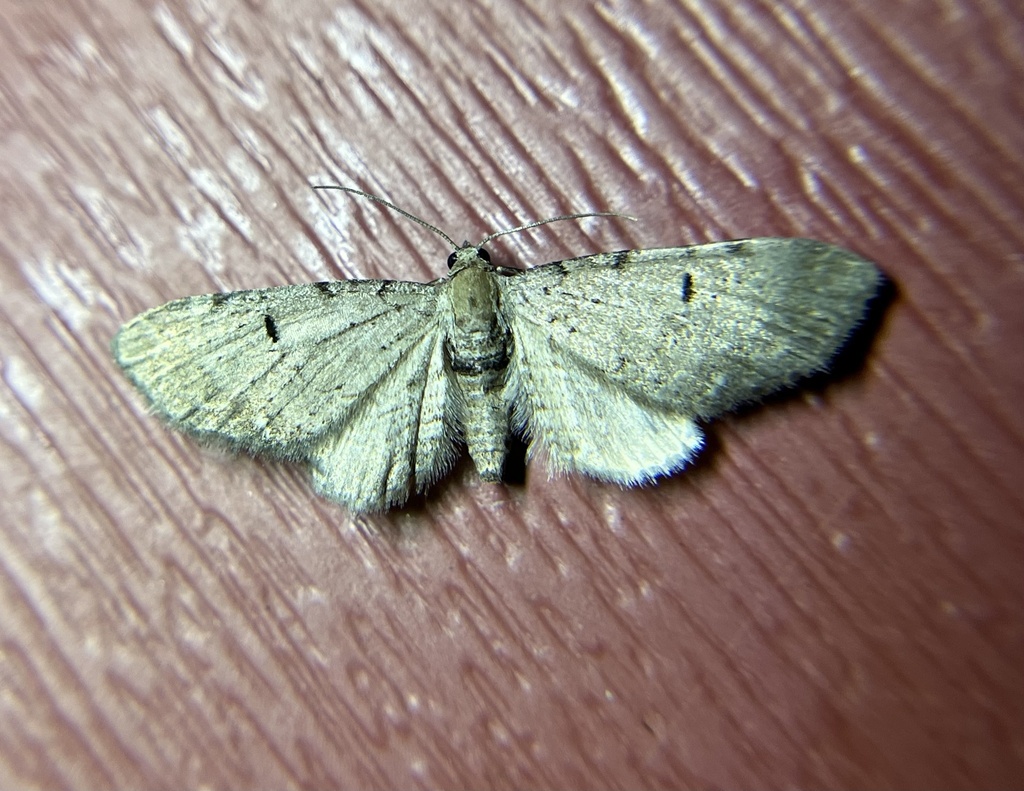
The wormwood pug (Eupithecia absinthiata) is a moth of the family Geometridae. The species was first described by Carl Alexander Clerck in 1759. It is a common species across the Palearctic region as well as North America. The wingspan is 21–23 mm and the forewings are warm brown with two black spots along the costa with a black discal spot completing a distinctive triangle. There is a pale narrow line near the fringe with a distinct whitish spot near the tornus, although this is not as prominent as in the rather similar currant pug. The hindwings are greyish brown.ab. obscura Dietze (Kassimov, Central Russia) is much darker, the forewing described as sepia-coloured. Adult larvae are smooth and elongated. They adapt to the basic colour of the respective food plant and are accordingly greenish, cream-colored or brownish colored and usually show a reddish-brown diamond-like pattern on the back. Sometimes light green, almost unmarked specimens also appear. The yellow-brown pupa is provided with greenish wing sheaths. At the cremaster there are eight hook bristles, the middle pair of which is strongly formed. Eupithecia absinthiata requires examination of a genital preparation for certain identification. The species flies at night in June and July and is attracted to light. As the name suggests, the larva feeds on the flowers of mugwort (which is sometimes called "common wormwood"), but it will also feed on the flowers of a range of other plants (see list below). The species overwinters as a pupa.
Gallery
Ajouter des photos
Partagez vos photos de cette espèce (jusqu'à 20 à la fois) : elles sont vérifiées automatiquement, puis publiées.
Répartition
Occurrences observées (données GBIF). Les zones hors aire d'origine peuvent indiquer une présence introduite ou invasive.
Sources et crédits
Informations provenant de plusieurs sources vérifiées. Dernière mise à jour : .
Crédits photos (8)
- Photo : Joe D. (@hiramguy) · CC BY-NC 4.0 · via iNaturalist
- Photo : John P (@astrapia) · CC BY-NC 4.0 · via iNaturalist
- Photo : @hardcorelore · CC BY-NC 4.0 · via iNaturalist
- Photo : @robertdifruscia · CC BY-NC 4.0 · via iNaturalist
- Photo : Rob Westerduijn (@rob-westerduijn) · CC BY-NC 4.0 · via iNaturalist
- Photo : Pierre Lamothe (@pierlamothe) · CC BY-NC 4.0 · via iNaturalist
- Photo : James Senn (@jimsenn) · CC BY-NC 4.0 · via iNaturalist
- Photo : Deryl Nethercott (@find_report) · CC BY-NC 4.0 · via iNaturalist
Mentions de licence
Texte disponible sous licence CC BY-SA 4.0. Il adapte notamment Wikipedia (CC BY-SA) : Wormwood pug (Wikipédia, auteurs dans l’historique de l’article).
- Taxonomie : GBIF Backbone Taxonomy (CC BY 4.0)
- Carte : occurrences GBIF, fond © contributeurs OpenStreetMap (ODbL)
Détail : Sources et licences.
Discussion (0)
Aucun message pour l’instant. Lancez la discussion sur cette fiche (sources, précisions, débats éditoriaux).
Connectez-vous pour participer à la discussion.