
Grey scalloped bar
Dyscia fagaria
Dyscia fagaria, the grey scalloped bar, is a moth of the family Geometridae.
- Kingdom
- Animalia
- Phylum
- Arthropoda
- Class
- Insecta
- Order
- Lepidoptera
- Family
- Geometridae
- Genus
- Dyscia
- Species
- Dyscia fagaria
Description
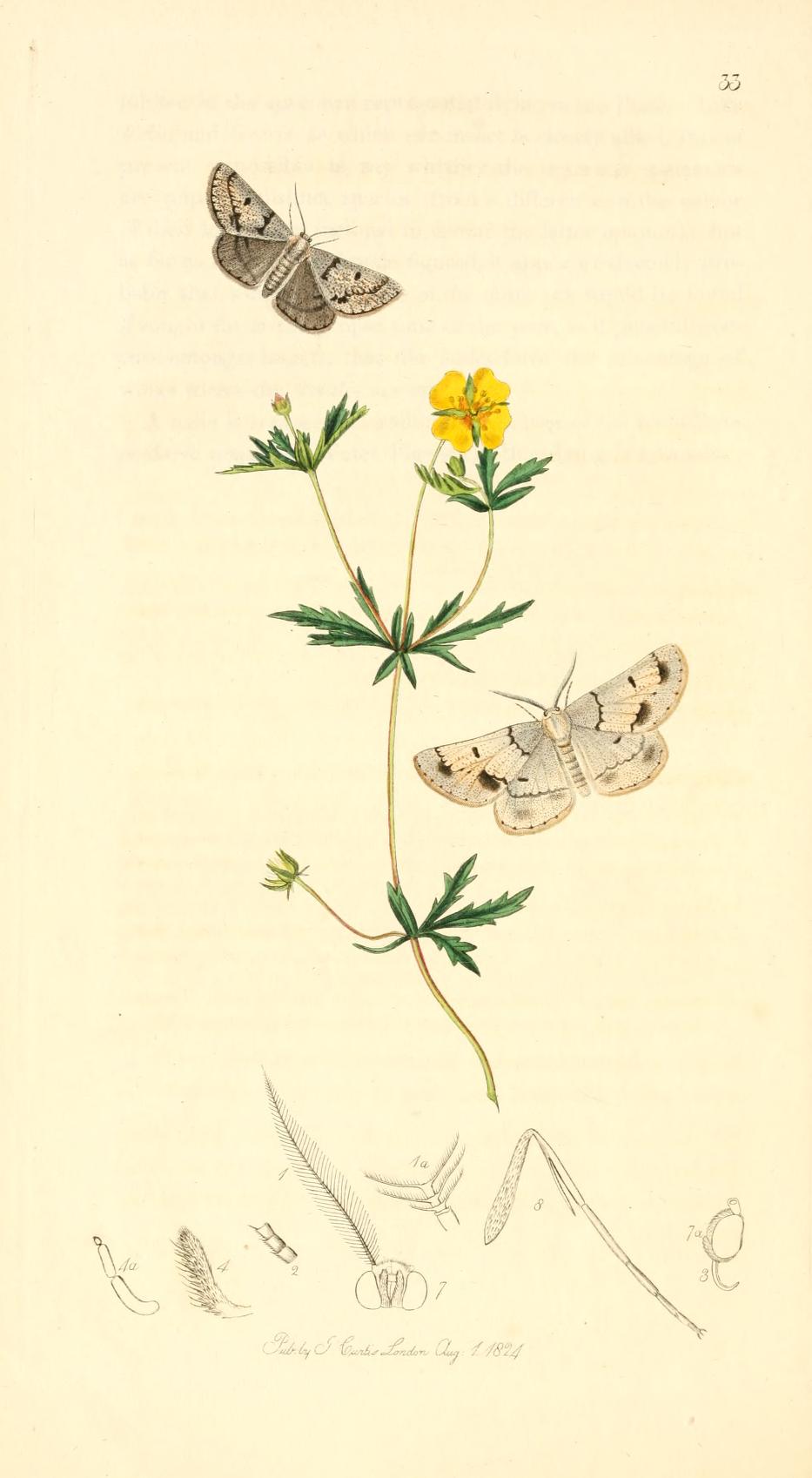
Dyscia fagaria, the grey scalloped bar, is a moth of the family Geometridae. The species was first described by Carl Peter Thunberg in 1784 and it can be found in Europe. The wingspan is 31–40 mm (1.2–1.6 inches), the females are a bit smaller. The colour of the wings varies from whitish to brown. The outer cross line on the front wings consists of dark points (often connected) and is well developed. The interior cross line is similar to the outer, but only weakly implied in some specimens. The discal stain stands out clearly. The dark outer cross line of the forewings continues in attenuated form on the hindwings. There are fine black dots on the margins of all wings. Ab. alvarensis Wahlgren is rather a light form and weakly marked, the lines only distinct at the margins; ab.favillacearia Hbn. is cinereous, not densely irrorated, the lines somewhat broken into vein-dots, that of the hindwing almost or quite obsolete; ab. fleischmatini Rbl. is almost unicolorous black-grey; ab.psoficaria Ev. is a dark, densely irrorated form from the Ural, Transcaucasia and Transcaspia; ab.albidaria Stgr. is almost white, with little irroration, markings strong. The larva is dungy brown, with a whitish dorsal stripe and some grey markings on the sides. The species occurs mainly in north central Europe and eastwards to the Urals, predominantly in sandy heathland habitats. It has been found in open moorland, heathland and peat bogs in many areas in the north of England and Wales, in Scotland and in Ireland. It also has been found in the very south of England. The moths fly from June to July, or earlier, depending on the location. The larvae feed on heather (Calluna) and heath (Erica) species.
Gallery
Ajouter des photos
Partagez vos photos de cette espèce (jusqu'à 20 à la fois) : elles sont vérifiées automatiquement, puis publiées.
Répartition
Occurrences observées (données GBIF). Les zones hors aire d'origine peuvent indiquer une présence introduite ou invasive.
Sources et crédits
Informations provenant de plusieurs sources vérifiées. Dernière mise à jour : .
Crédits photos (6)
- Photo : John Curtis · Domaine public
- Photo : Axel Gosseries (@axelgosseries) · CC BY-NC 4.0 · via iNaturalist
- Photo : @dirkmertens · CC BY-NC 4.0 · via iNaturalist
- Photo : Martin Wood-Weatherill (@martinww) · CC BY 4.0 · via iNaturalist
- Photo : @peterallenbds · CC BY-NC 4.0 · via iNaturalist
- Photo : Corey Callaghan (@coreytcallaghan) · CC BY-NC 4.0 · via iNaturalist
Mentions de licence
Texte disponible sous licence CC BY-SA 4.0. Il adapte notamment Wikipedia (CC BY-SA) : Dyscia fagaria (Wikipédia, auteurs dans l’historique de l’article).
- Taxonomie : GBIF Backbone Taxonomy (CC BY 4.0)
- Carte : occurrences GBIF, fond © contributeurs OpenStreetMap (ODbL)
Détail : Sources et licences.
Discussion (0)
Aucun message pour l’instant. Lancez la discussion sur cette fiche (sources, précisions, débats éditoriaux).
Connectez-vous pour participer à la discussion.