
Rosy Maple Moth
Dryocampa rubicunda
Dryocampa rubicunda, the rosy maple moth, is a small North American moth in the family Saturniidae, also known as the great silk moths.
- Kingdom
- Animalia
- Phylum
- Arthropoda
- Class
- Insecta
- Order
- Lepidoptera
- Family
- Saturniidae
- Genus
- Dryocampa
- Species
- Dryocampa rubicunda
Description
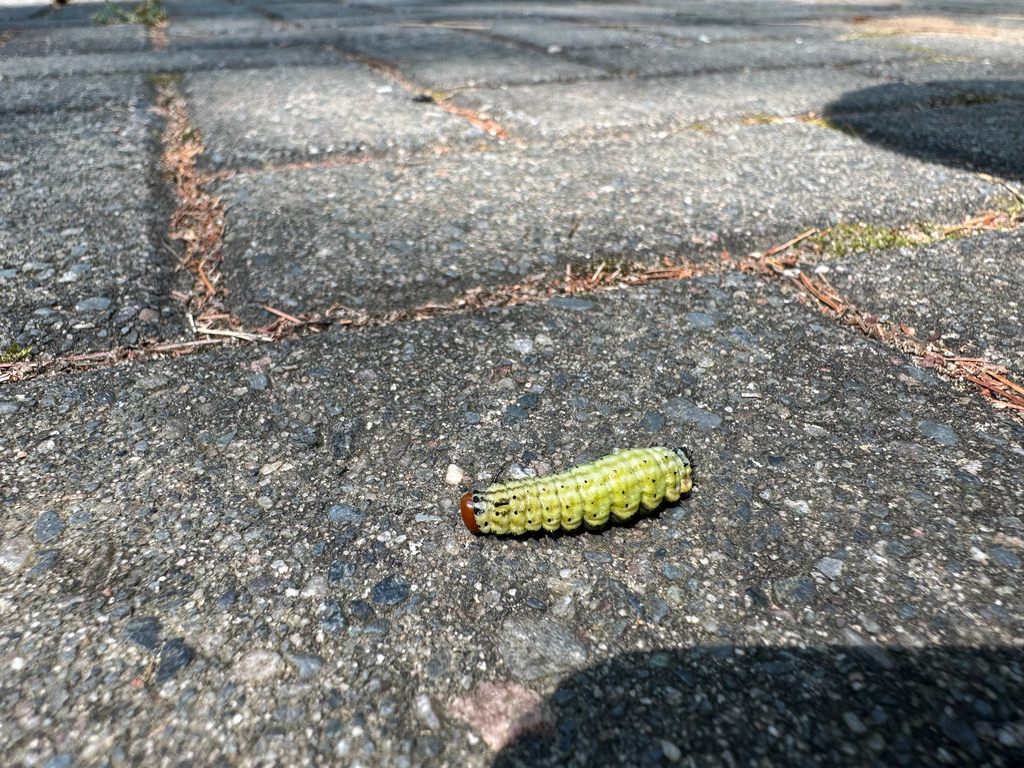
Dryocampa rubicunda, the rosy maple moth, is a small North American moth in the family Saturniidae, also known as the great silk moths. It was first described by Johan Christian Fabricius in 1793. The species is known for its wooly body and pink and yellow coloration, which varies from cream or white to bright pink or yellow. Males have bushier antennae than females, which allow them to sense female pheromones for mating. As the common name of the species implies, the preferred host trees are maple trees. Adult females lay their yellow ovular eggs in groups of 10 to 40 on the underside of maple leaves. The emerging caterpillars, also known as the greenstriped mapleworm, mainly feed on the leaves of their host maple trees, particularly red maple, silver maple, and sugar maple. Since the caterpillars eat the entire leaf blade, in dense populations, caterpillars have been known to defoliate trees, resulting in aesthetic rather than permanent damage. However, like all other Saturniid moths, the adult moths do not eat.
Gallery
Ajouter des photos
Partagez vos photos de cette espèce (jusqu'à 20 à la fois) : elles sont vérifiées automatiquement, puis publiées.
Répartition
Occurrences observées (données GBIF). Les zones hors aire d'origine peuvent indiquer une présence introduite ou invasive.
Sources et crédits
Informations provenant de plusieurs sources vérifiées. Dernière mise à jour : .
Crédits photos (8)
- Photo : Conor MacNeil (@conor_macneil) · CC BY-NC 4.0 · via iNaturalist
- Photo : Patric Carpenter (@pisaunt) · CC BY-NC 4.0 · via iNaturalist
- Photo : @smwhite · CC BY-NC 4.0 · via iNaturalist
- Photo : Jake McCumber (@jakemccumber) · CC BY 4.0 · via iNaturalist
- Photo : Jewelwing66 (@jewelwing66) · CC BY-NC 4.0 · via iNaturalist
- Photo : Adam C (@bushmantis) · CC BY-NC 4.0 · via iNaturalist
- Photo : Alex Lamoreaux (@alexlamoreaux) · CC BY-NC 4.0 · via iNaturalist
- Photo : @popcornchichin · CC BY-NC 4.0 · via iNaturalist
Mentions de licence
Texte disponible sous licence CC BY-SA 4.0. Il adapte notamment Wikipedia (CC BY-SA) : Dryocampa rubicunda (Wikipédia, auteurs dans l’historique de l’article).
- Taxonomie : GBIF Backbone Taxonomy (CC BY 4.0)
- Carte : occurrences GBIF, fond © contributeurs OpenStreetMap (ODbL)
Détail : Sources et licences.
Discussion (0)
Aucun message pour l’instant. Lancez la discussion sur cette fiche (sources, précisions, débats éditoriaux).
Connectez-vous pour participer à la discussion.