
Grape phylloxera
Daktulosphaira vitifoliae
Grape phylloxera is an insect pest of grapevines worldwide, originally native to eastern North America.
- Kingdom
- Animalia
- Phylum
- Arthropoda
- Class
- Insecta
- Order
- Hemiptera
- Family
- Phylloxeridae
- Genus
- Daktulosphaira
- Species
- Daktulosphaira vitifoliae
Description
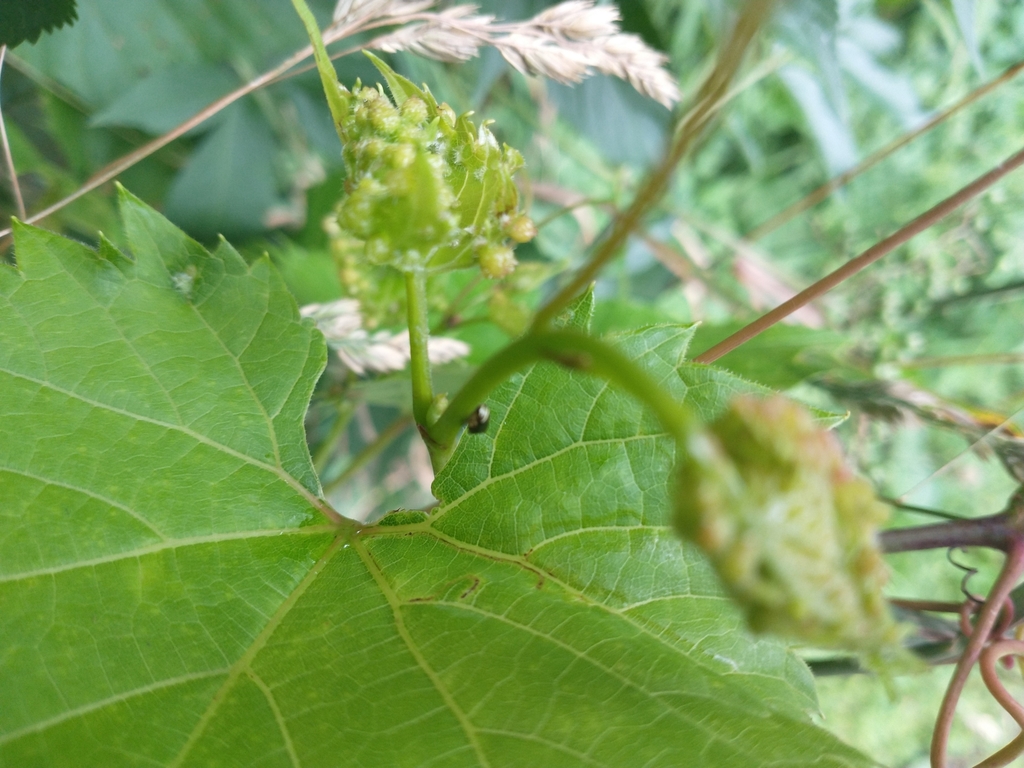
Grape phylloxera is an insect pest of grapevines worldwide, originally native to eastern North America. Grape phylloxera (Daktulosphaira vitifoliae Fitch 1855) belongs to the family Phylloxeridae, within the order Hemiptera, bugs); originally described in France as Phylloxera vastatrix; it is equated to the previously described Daktulosphaera vitifoliae and Phylloxera vitifoliae. The insect is commonly just called phylloxera (; from Ancient Greek: φύλλον, leaf, and ξηρός, dry). These almost microscopic, pale yellow, sap-sucking insects, related to aphids, feed on the roots and leaves of grapevines (depending on the phylloxera genetic strain). On Vitis vinifera, the resulting deformations on roots ("nodosities" and "tuberosities") and secondary fungal infections can girdle roots, gradually cutting off the flow of nutrients and water to the vine. Nymphs also form protective galls on the undersides of grapevine leaves of some Vitis species and overwinter under the bark or on the vine roots; these leaf galls are typically only found on the leaves of American vines. American vine species (such as Vitis labrusca) have evolved to have several natural defenses against phylloxera. The roots of the American vines exude a sticky sap that repels the nymph form by clogging its mouth when it tries to feed from the vine. If the nymph is successful in creating a feeding wound on the root, American vines respond by forming a protective layer of tissue to cover the wound and protect it from secondary bacterial or fungal infections. Currently, no cure for phylloxera is known, and unlike other grape diseases such as powdery or downy mildew, no chemical control or response is available. The only successful means of controlling phylloxera has been the grafting of phylloxera-resistant American rootstock (usually hybrid varieties created from the Vitis berlandieri, V. riparia, and V. ruprestris species) to more susceptible European V. vinifera vines.
Gallery
Ajouter des photos
Partagez vos photos de cette espèce (jusqu'à 20 à la fois) : elles sont vérifiées automatiquement, puis publiées.
Répartition
Occurrences observées (données GBIF). Les zones hors aire d'origine peuvent indiquer une présence introduite ou invasive.
Sources et crédits
Informations provenant de plusieurs sources vérifiées. Dernière mise à jour : .
Crédits photos (8)
- Photo : @john5309 · CC BY-NC 4.0 · via iNaturalist
- Photo : Bfc (@benfrankclegg) · CC BY-NC 4.0 · via iNaturalist
- Photo : Mandy Wolski (@naturalist_mandy) · CC BY-NC 4.0 · via iNaturalist
- Photo : Jennifer Rycenga (@gyrrlfalcon) · CC BY-NC 4.0 · via iNaturalist
- Photo : Duarte Frade (@duarte) · CC BY 4.0 · via iNaturalist
- Photo : Sara Rall (@srall) · CC BY-NC 4.0 · via iNaturalist
- Photo : Mark Apgar (@apgarm) · CC BY 4.0 · via iNaturalist
- Photo : joe dziewa (@joedziewa) · CC BY-NC 4.0 · via iNaturalist
Mentions de licence
Texte disponible sous licence CC BY-SA 4.0. Il adapte notamment Wikipedia (CC BY-SA) : Phylloxera (Wikipédia, auteurs dans l’historique de l’article).
- Taxonomie : GBIF Backbone Taxonomy (CC BY 4.0)
- Carte : occurrences GBIF, fond © contributeurs OpenStreetMap (ODbL)
Détail : Sources et licences.
Discussion (0)
Aucun message pour l’instant. Lancez la discussion sur cette fiche (sources, précisions, débats éditoriaux).
Connectez-vous pour participer à la discussion.