
Northern house mosquito
Culex pipiens
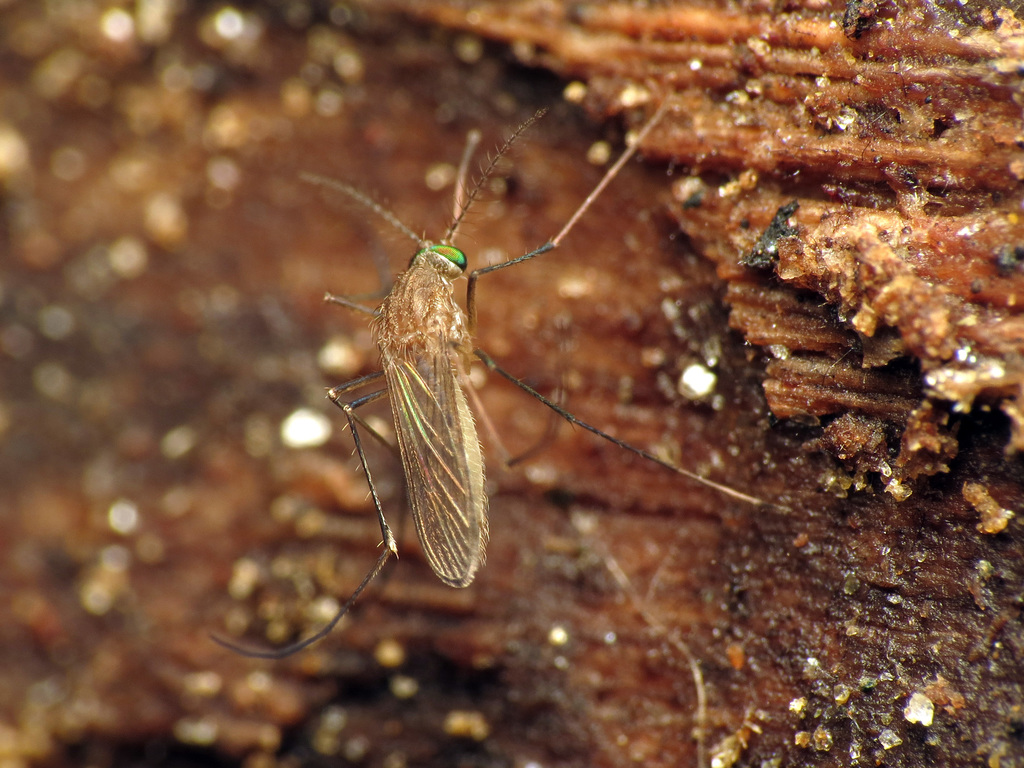
Culex pipiens is a species of mosquito commonly referred to as the common house mosquito or northern house mosquito.
- Kingdom
- Animalia
- Phylum
- Arthropoda
- Class
- Insecta
- Order
- Diptera
- Family
- Culicidae
- Genus
- Culex
- Species
- Culex pipiens
Description
Culex pipiens is a species of mosquito commonly referred to as the common house mosquito or northern house mosquito. Native to Africa, Asia and Europe, it is now widely distributed in temperate regions on every continent except Antarctica and is one of the most common mosquitoes found in human habitats in temperate parts of the northern hemisphere. A major vector of some viruses, it can be abundant in cities, especially those with poor wastewater management. It is the most common mosquito to the northern regions of the US. Culex pipiens is the type species for the genus Culex. Culex pipiens includes two morphologically indistinguishable forms, Culex pipiens form pipiens and Culex pipiens form molestus. Despite their morphological similarity, the two forms exhibit striking ecological and behavioral differences. Form pipiens lives above ground and primarily feeds on birds. Form molestus, also known as the London Underground mosquito, can live under ground and frequently bites mammals including humans. The two forms are largely genetically isolated in Europe, but have been reported to hybridize in the United States. Importantly, hybrids appear to have intermediate feeding behavior, biting both humans and birds, and are implicated as a bridge vector in the maintenance and transmission of the West Nile virus from birds to humans. In Californian molestus populations, it was shown that most females of C. pipiens do not enter reproductive diapause during the winter (homodynamy), which differs from other mosquito species, such as C. stigmatosoma or C. tarsalis. Most of them overwinter in a stage of host-seeking arrest. The practice of overwintering tends to vary based on location, and in effect temperature and the period of time per day an organism receives sunlight, also known as the photoperiod. Parous females may overwinter together with nulliparous. Overwintering mosquitoes are considered as hibernating by mosquito scientists. Typically, mosquitoes copulate when temperatures are the most temperate, and many species begin breeding when temperatures reach 50 °F (10 °C). Because of this temperature condition, mosquito breeding seasons vary by region and climate characteristics of a given area.
Gallery
Ajouter des photos
Partagez vos photos de cette espèce (jusqu'à 20 à la fois) : elles sont vérifiées automatiquement, puis publiées.
Répartition
Occurrences observées (données GBIF). Les zones hors aire d'origine peuvent indiquer une présence introduite ou invasive.
Sources et crédits
Informations provenant de plusieurs sources vérifiées. Dernière mise à jour : .
Crédits photos (7)
- Photo : Katja Schulz (@treegrow) · CC BY 4.0 · via iNaturalist
- Photo : Liubov Ilminska (@liubov_ilminska) · CC0 (domaine public) · via iNaturalist
- Photo : Andrew Zamler-Carhart (@andrew_zamler_carhart) · CC BY-NC 4.0 · via iNaturalist
- Photo : Lau (@lau_u) · CC BY-NC 4.0 · via iNaturalist
- Photo : Ujjal Kishor De (@iamukd) · CC BY-NC 4.0 · via iNaturalist
- Photo : Jarosław Krogulec (@krogulec) · CC BY-NC 4.0 · via iNaturalist
- Photo : Konstantin Romanov (@kildor) · CC BY-NC 4.0 · via iNaturalist
Mentions de licence
Texte disponible sous licence CC BY-SA 4.0. Il adapte notamment Wikipedia (CC BY-SA) : Culex pipiens (Wikipédia, auteurs dans l’historique de l’article).
- Taxonomie : GBIF Backbone Taxonomy (CC BY 4.0)
- Carte : occurrences GBIF, fond © contributeurs OpenStreetMap (ODbL)
Détail : Sources et licences.
Discussion (0)
Aucun message pour l’instant. Lancez la discussion sur cette fiche (sources, précisions, débats éditoriaux).
Connectez-vous pour participer à la discussion.