
Green carpet
Colostygia pectinataria
Colostygia pectinataria, the green carpet, is a Palearctic moth of the genus Colostygia in the family Geometridae.
- Kingdom
- Animalia
- Phylum
- Arthropoda
- Class
- Insecta
- Order
- Lepidoptera
- Family
- Geometridae
- Genus
- Colostygia
- Species
- Colostygia pectinataria
Description
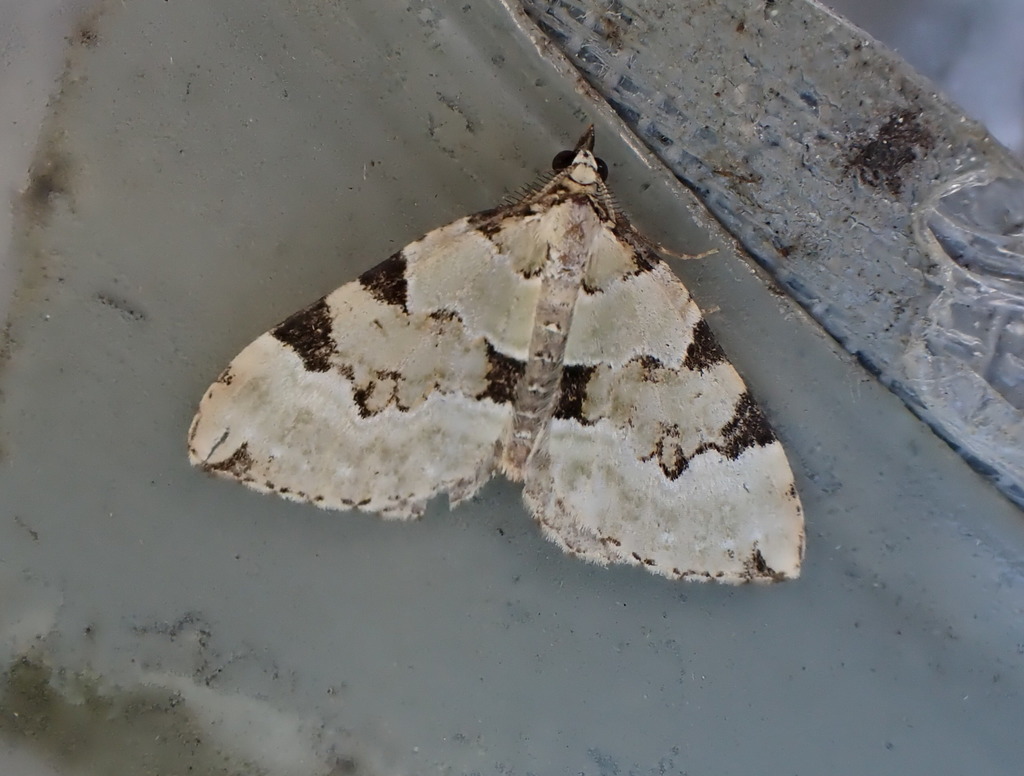
Colostygia pectinataria, the green carpet, is a Palearctic moth of the genus Colostygia in the family Geometridae. It was first described by August Wilhelm Knoch in 1781. The moth has a wingspan from 22 to 28 millimetres (0.87 to 1.10 in). The strong forewing ground colour is green to bluish green. The wing pattern shows the following colour sequence: a small region at the wing base brown green, the ensuing basal region brighter green, a wide and strongly serrated on the outside discal region dark green edged with white, the postdiscal region whitish green and the marginal region tinted brownish green. There are two distinct blackish spots near the front edge of the wing (costa) and one on the inner edge. In older specimens, the greenish colour can fade. Sometimes newly emerged hatched moths have a whitish, yellowish or pink colour. The hindwings shimmer grey white and have faint lines. The antennae of the males are combed, those of females are simple. The larva is stout, gnarled and light grey violet in colour. It has numerous small black spots that each carry a short, stiff brush. It occurs in many different biotopes, on moors, in marshy terrain and also in forests. The larvae feed primarily on Galium but also on Rumex and Lamium. The moths fly at night in June – July and often come to light. It is a Palearctic species found in the Iberian Peninsula over western and central Europe including the British Isles and east to the Altai Mountains. C. pectinataria reaches the Arctic Circle in Fennoscandia, to the south the occurrence ranges from the western Mediterranean to the Balkan Peninsula, the Black Sea region and the Caucasus. In the mountains C. pectinataria has been recorded at elevations of over 2,000 metres (6,600 ft). Bogs, forests, bushy forest edges and damp heath areas are preferred.
Gallery
Ajouter des photos
Partagez vos photos de cette espèce (jusqu'à 20 à la fois) : elles sont vérifiées automatiquement, puis publiées.
Répartition
Occurrences observées (données GBIF). Les zones hors aire d'origine peuvent indiquer une présence introduite ou invasive.
Sources et crédits
Informations provenant de plusieurs sources vérifiées. Dernière mise à jour : .
Crédits photos (8)
- Photo : Steve Orridge (@steve_orridge) · CC BY-NC 4.0 · via iNaturalist
- Photo : @kathinkadalseg · CC BY-NC 4.0 · via iNaturalist
- Photo : @sarah-hall · CC BY-NC 4.0 · via iNaturalist
- Photo : @stefanodirektor · CC BY-NC 4.0 · via iNaturalist
- Photo : Stephen James McWilliam (@steve_mcwilliam) · CC0 (domaine public) · via iNaturalist
- Photo : Josh Boe (@entomolojosh) · CC BY 4.0 · via iNaturalist
- Photo : Shamgar Brook (@shamgar-brook) · CC BY-NC 4.0 · via iNaturalist
- Photo : Adrian Kreft (@adriankreft) · CC BY-NC 4.0 · via iNaturalist
Mentions de licence
Texte disponible sous licence CC BY-SA 4.0. Il adapte notamment Wikipedia (CC BY-SA) : Colostygia pectinataria (Wikipédia, auteurs dans l’historique de l’article).
- Taxonomie : GBIF Backbone Taxonomy (CC BY 4.0)
- Carte : occurrences GBIF, fond © contributeurs OpenStreetMap (ODbL)
Détail : Sources et licences.
Discussion (0)
Aucun message pour l’instant. Lancez la discussion sur cette fiche (sources, précisions, débats éditoriaux).
Connectez-vous pour participer à la discussion.