
Rusty Patched Bumble Bee
Bombus affinis
Bombus affinis, commonly known as the rusty patched bumble bee, is a species of bumblebee endemic to North America.
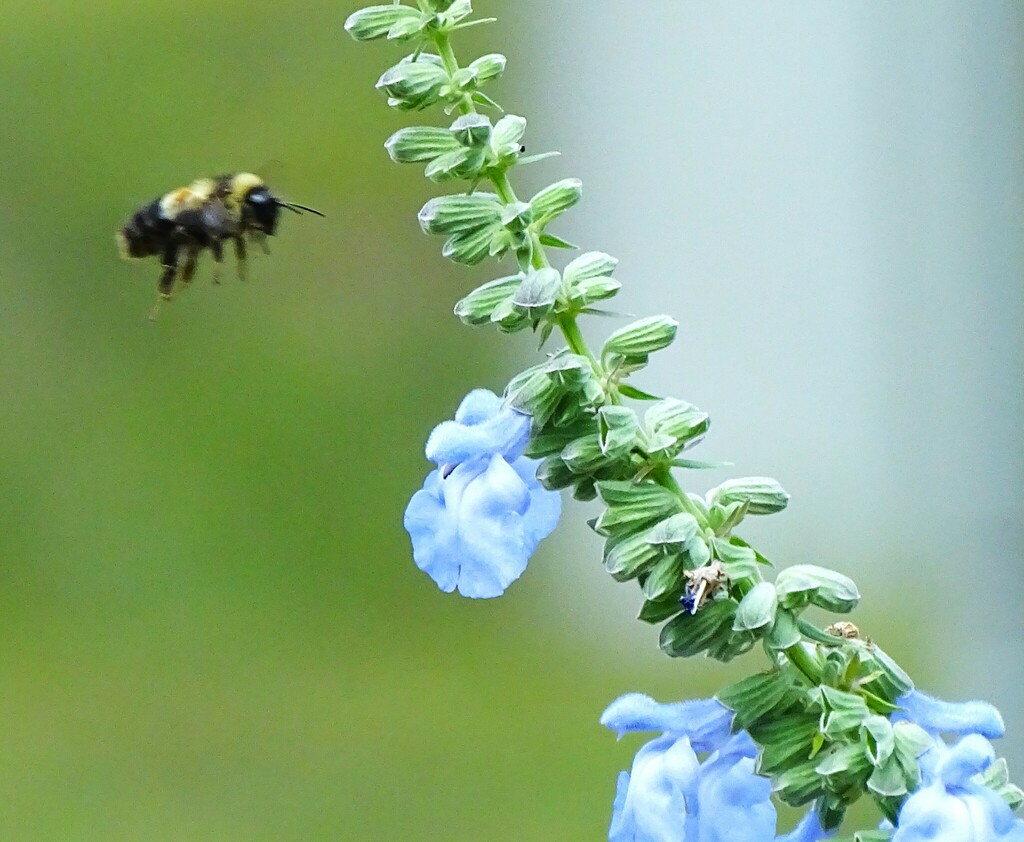
- Kingdom
- Animalia
- Phylum
- Arthropoda
- Class
- Insecta
- Order
- Hymenoptera
- Family
- Apidae
- Genus
- Bombus
- Species
- Bombus affinis
Description
Bombus affinis, commonly known as the rusty patched bumble bee, is a species of bumblebee endemic to North America. Its historical range in North America has been throughout the east and upper Midwest of the United States, north to Ontario, Canada, where it is considered a "species at risk", east to Quebec, south to Georgia, and west to the Dakotas. Its numbers have declined in 87% of its historical habitat range. In April 2010 it was assessed as Endangered in Canada, through the work of Sheila Colla and colleagues. On January 10, 2017, the United States Fish and Wildlife Service placed B. affinis on the list of endangered species, making the rusty patched bumble bee the first bee to be added to the list in the continental United States (seven species of yellow-faced bees native to the Hawaiian islands were added in 2016). Members of B. affinis are relatively large in size, and like other species of bumblebees, are known to be eusocial organisms. Most nests constructed by B. affinis are built underground, and are commonly found in old rodent burrows. Nests created in captivity can house up to 2,100 members, but they are typically much smaller in the wild. This species consumes nectar and pollen from a variety of plants, including Abelia grandiflora, Asclepias syriaca, and Linaria spp. The colony odor is very similar to that of Bombus terricola, which makes it difficult for predators and parasites to differentiate between the two species.
Gallery
Ajouter des photos
Partagez vos photos de cette espèce (jusqu'à 20 à la fois) : elles sont vérifiées automatiquement, puis publiées.
Répartition
Occurrences observées (données GBIF). Les zones hors aire d'origine peuvent indiquer une présence introduite ou invasive.
Sources et crédits
Informations provenant de plusieurs sources vérifiées. Dernière mise à jour : .
Crédits photos (3)
- Photo : Mary Mirasola (@mary137) · CC BY-NC 4.0 · via iNaturalist
- Photo : Jen Knutson (@shadoj) · CC BY-NC 4.0 · via iNaturalist
- Photo : Jacey Bonavia Murray (@jbonavia) · CC BY-NC 4.0 · via iNaturalist
Mentions de licence
Texte disponible sous licence CC BY-SA 4.0. Il adapte notamment Wikipedia (CC BY-SA) : Bombus affinis (Wikipédia, auteurs dans l’historique de l’article).
- Taxonomie : GBIF Backbone Taxonomy (CC BY 4.0)
- Carte : occurrences GBIF, fond © contributeurs OpenStreetMap (ODbL)
- Statut de conservation : Liste rouge de l'UICN, via Wikidata (CC0)
Détail : Sources et licences.
Discussion (0)
Aucun message pour l’instant. Lancez la discussion sur cette fiche (sources, précisions, débats éditoriaux).
Connectez-vous pour participer à la discussion.