
Lined Click Beetle
Agriotes lineatus
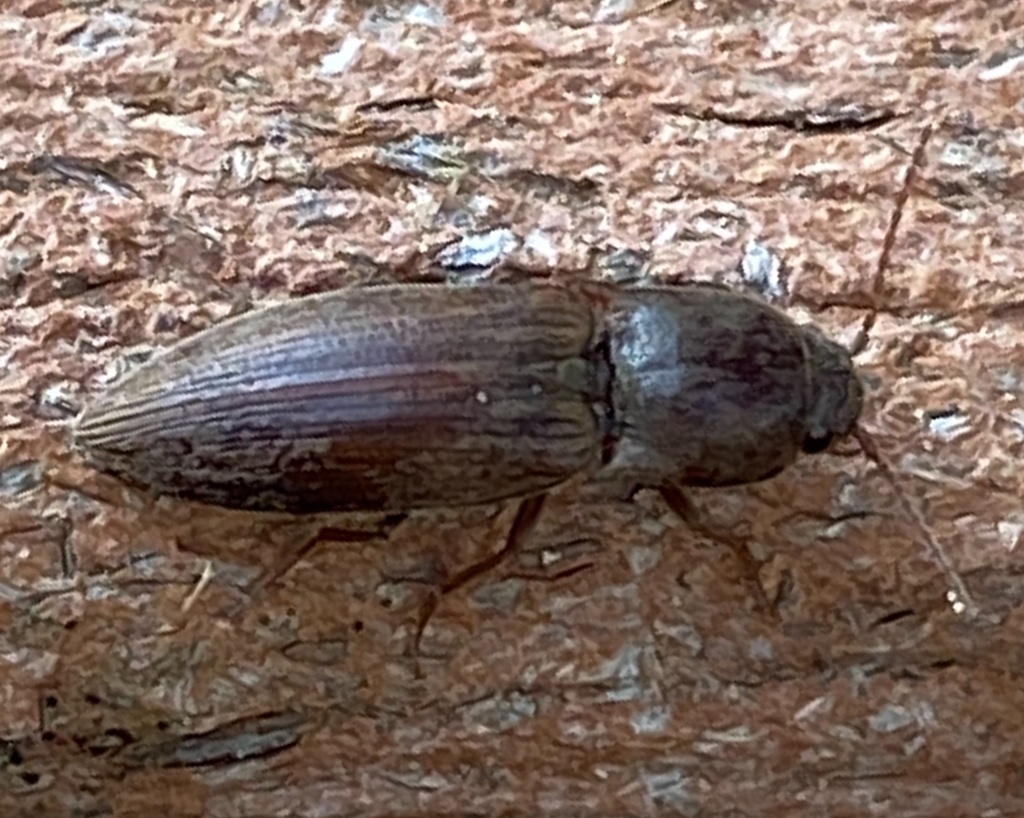
Agriotes lineatus, commonly known as lined click beetle, is a species from the family Elateridae.
- Kingdom
- Animalia
- Phylum
- Arthropoda
- Class
- Insecta
- Order
- Coleoptera
- Family
- Elateridae
- Genus
- Agriotes
- Species
- Agriotes lineatus
Description
Agriotes lineatus, commonly known as lined click beetle, is a species from the family Elateridae. It is common and native to most parts of Europe and also to parts of western Asia and the Near East. Further, it is invasive and has been introduced into two areas of North America, possibly also into Australia and other regions. In North America, it is found now in Atlantic Canada, western Canada (British Columbia) and Washington State (U.S.). The larvae (wireworms) are a significant agricultural pest for potatoes, maize/corn, strawberries and cereal crops, attacking the roots, tubers and seeds. For managing this pest in crop fields, an integrated approach is recommended in order to minimize the harmful environmental effect of pesticides. This involves monitoring the pest populations with pheromone or larval traps, and if damaging numbers are detected, non-pesticide management measures are applied. These include, for example, crop rotation or timing tillage and irrigation in a way so that the eggs and young larvae are desiccated in the top layer of the soil. The adult beetles of A. lineatus are brownish black and about 7.5–11 mm long. The species is named for the longitudinal stripes on the elytra. These stripes are usually more prominent in A. lineatus than in some other species of Agriotes, for example compared to A. sputator or A. modestus. The pronotum of A. lineatus is typically as long as or slightly longer than wide, in contrast to the extremely similar Agriotes proximus (also with very similar striped elytra), where the pronotum is usually slightly wider than long. Apart from the morphological similarities, A. lineatus and A. proximus have the same pheromones, the larval stages are indistinguishable and they share >99% similarity in the DNA sequence of the mitochondrial cytochrome c oxidase subunit I gene. Observations under semi-natural conditions in field cages suggested a life cycle of at least 3 years in central Germany with A. lineatus going through up to 12 larval stages.
Gallery
Ajouter des photos
Partagez vos photos de cette espèce (jusqu'à 20 à la fois) : elles sont vérifiées automatiquement, puis publiées.
Répartition
Occurrences observées (données GBIF). Les zones hors aire d'origine peuvent indiquer une présence introduite ou invasive.
Sources et crédits
Informations provenant de plusieurs sources vérifiées. Dernière mise à jour : .
Crédits photos (8)
- Photo : @schfl764 · CC BY-NC 4.0 · via iNaturalist
- Photo : Alexis Tinker-Tsavalas (@alexis_orion) · CC BY 4.0 · via iNaturalist
- Photo : Liam Steele (@liamsteele) · CC BY 4.0 · via iNaturalist
- Photo : Thomas Barbin (@thomasbarbin) · CC BY-NC 4.0 · via iNaturalist
- Photo : AWI i Pr. (@gijwans) · CC BY-NC 4.0 · via iNaturalist
- Photo : S. Queen (@sylbird) · CC BY-NC 4.0 · via iNaturalist
- Photo : Laurel Amirault (@laurel80) · CC BY-NC 4.0 · via iNaturalist
- Photo : Иван Матершев (@merlu) · CC BY-NC 4.0 · via iNaturalist
Mentions de licence
Texte disponible sous licence CC BY-SA 4.0. Il adapte notamment Wikipedia (CC BY-SA) : Agriotes lineatus (Wikipédia, auteurs dans l’historique de l’article).
- Taxonomie : GBIF Backbone Taxonomy (CC BY 4.0)
- Carte : occurrences GBIF, fond © contributeurs OpenStreetMap (ODbL)
Détail : Sources et licences.
Discussion (0)
Aucun message pour l’instant. Lancez la discussion sur cette fiche (sources, précisions, débats éditoriaux).
Connectez-vous pour participer à la discussion.