
Azure Hawker
Aeshna caerulea
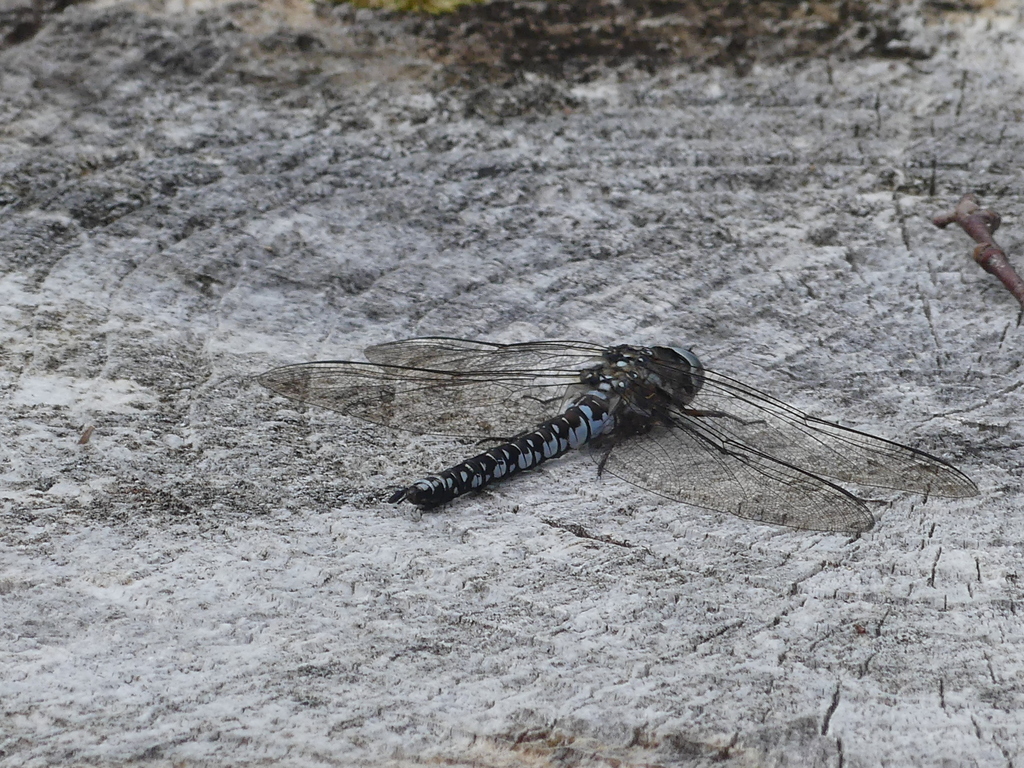
The azure hawker (Aeshna caerulea) is one of the smaller species of hawker dragonflies, (family Aeshnidae).
- Kingdom
- Animalia
- Phylum
- Arthropoda
- Class
- Insecta
- Order
- Odonata
- Family
- Aeshnidae
- Genus
- Aeshna
- Species
- Aeshna caerulea
Description
The azure hawker (Aeshna caerulea) is one of the smaller species of hawker dragonflies, (family Aeshnidae). Its flight period is from late May to August. It is about 62 mm long. Both sexes have azure blue spots on each abdominal segment and the thorax also has azure markings. The markings on the male are brighter and more conspicuous than in the female. The female also has a brown colour form. This species flies in sunshine, but will also frequently bask on stones or tree trunks. By lowering their wings during basking, they are able to increase the temperature of their bodies by as much as 7C compared to air temperature and continue searching for mates. It shelters in heather or similar low vegetation in dull weather. Possibly similar to Austrolestes annulosus and Diphlebia nymphoides, the abdominal and eye spots of males reversibly change from purple-gray pales as temperatures decrease to more bluish as they increase. The species is widespread in the Eurasian polar region and the Alps in Central Europe, leading to the conclusion that the species is a glacial relict. However, larvae are restricted to micro-climates with very consistent, warm water with peaty bottoms. Adults frequently feed upon Boloria aquilonaris, Inachis io, Erebia, and Phytometra gamma which are more common in the bogs of the Alps than surrounding habitats.
Gallery
Ajouter des photos
Partagez vos photos de cette espèce (jusqu'à 20 à la fois) : elles sont vérifiées automatiquement, puis publiées.
Répartition
Occurrences observées (données GBIF). Les zones hors aire d'origine peuvent indiquer une présence introduite ou invasive.
Sources et crédits
Informations provenant de plusieurs sources vérifiées. Dernière mise à jour : .
Crédits photos (5)
- Photo : Chris Lamsdell (@clamsdell) · CC BY-NC 4.0 · via iNaturalist
- Photo : Ritva Valo (@harrastelija0) · CC BY-NC 4.0 · via iNaturalist
- Photo : Ayco Tack (@ajmt) · CC BY-NC 4.0 · via iNaturalist
- Photo : @svetlana_katana · CC BY-NC 4.0 · via iNaturalist
- Photo : Tomasz Wilk (@tomaszwilk) · CC BY-NC 4.0 · via iNaturalist
Mentions de licence
Texte disponible sous licence CC BY-SA 4.0. Il adapte notamment Wikipedia (CC BY-SA) : Azure hawker (Wikipédia, auteurs dans l’historique de l’article).
- Taxonomie : GBIF Backbone Taxonomy (CC BY 4.0)
- Carte : occurrences GBIF, fond © contributeurs OpenStreetMap (ODbL)
- Statut de conservation : Liste rouge de l'UICN, via Wikidata (CC0)
Détail : Sources et licences.
Discussion (0)
Aucun message pour l’instant. Lancez la discussion sur cette fiche (sources, précisions, débats éditoriaux).
Connectez-vous pour participer à la discussion.