
African death head's hawkmoth
Acherontia atropos
Acherontia atropos, the African death's-head hawkmoth, is the most widely recognized of three species within the genus Acherontia (the other two being Acherontia lachesis and Acherontia styx).
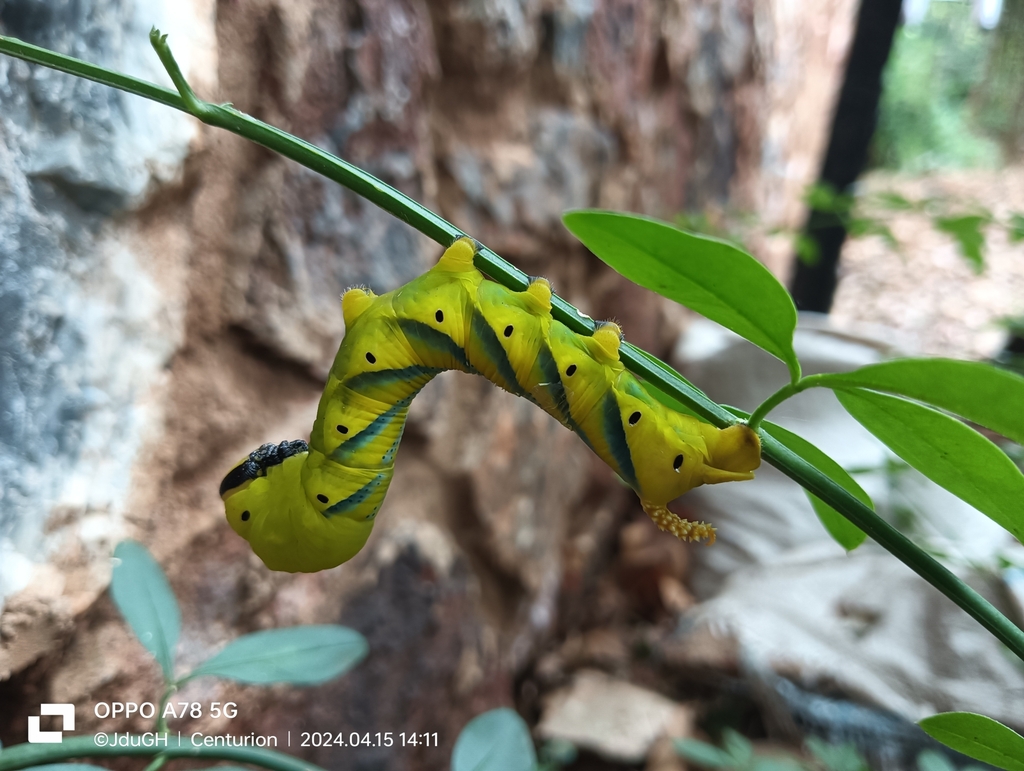
- Kingdom
- Animalia
- Phylum
- Arthropoda
- Class
- Insecta
- Order
- Lepidoptera
- Family
- Sphingidae
- Genus
- Acherontia
- Species
- Acherontia atropos
Description
Acherontia atropos, the African death's-head hawkmoth, is the most widely recognized of three species within the genus Acherontia (the other two being Acherontia lachesis and Acherontia styx). It is most commonly identified by the vaguely skull-shaped pattern adorning the thorax, the characteristic from which its common and scientific names are derived. The species was first given its scientific name by Carl Linnaeus in his 1758 10th edition of Systema Naturae. Death's-head hawk moths are large, ranging from 3.5 to 5 inches (80–120 mm) as adults. The upper wings are dark, creating a stark contrast between them and the lower wings, which range from a bright yellow to a light cream, yellow being the more common. A. atropos appears in popular fiction and media, including The Silence of the Lambs (1991), Dracula (1958), and The Blood Beast Terror (1967). It is commonly found in Southern Europe and throughout much of Africa, from where it is considered to be a native species. Annually, A. atropos migrates to parts of Great Britain, most numerously to the British Isles, where it is less commonly seen than in its native place of residency. However, sometimes it appears as far north as above the Arctic Circle, e.g. in northern Sweden (68°12’21.3”N 21°50’18.1”E).
Gallery
Ajouter des photos
Partagez vos photos de cette espèce (jusqu'à 20 à la fois) : elles sont vérifiées automatiquement, puis publiées.
Répartition
Occurrences observées (données GBIF). Les zones hors aire d'origine peuvent indiquer une présence introduite ou invasive.
Sources et crédits
Informations provenant de plusieurs sources vérifiées. Dernière mise à jour : .
Crédits photos (6)
- Photo : James du G. Harrison (@james_harrison) · CC BY-NC 4.0 · via iNaturalist
- Photo : Marilena Papachristophorou (@marapch) · CC BY-NC 4.0 · via iNaturalist
- Photo : @jacopobianchi · CC BY-NC 4.0 · via iNaturalist
- Photo : Shumik A (@shumik_a) · CC BY-NC 4.0 · via iNaturalist
- Photo : Margarida 🌼 (@margarid_ugh) · CC BY-NC 4.0 · via iNaturalist
- Photo : @stefan_huck · CC BY-NC 4.0 · via iNaturalist
Mentions de licence
Texte disponible sous licence CC BY-SA 4.0. Il adapte notamment Wikipedia (CC BY-SA) : Acherontia atropos (Wikipédia, auteurs dans l’historique de l’article).
- Taxonomie : GBIF Backbone Taxonomy (CC BY 4.0)
- Carte : occurrences GBIF, fond © contributeurs OpenStreetMap (ODbL)
Détail : Sources et licences.
Discussion (0)
Aucun message pour l’instant. Lancez la discussion sur cette fiche (sources, précisions, débats éditoriaux).
Connectez-vous pour participer à la discussion.