
Mediterranean Slipper Lobster
Scyllarides latus
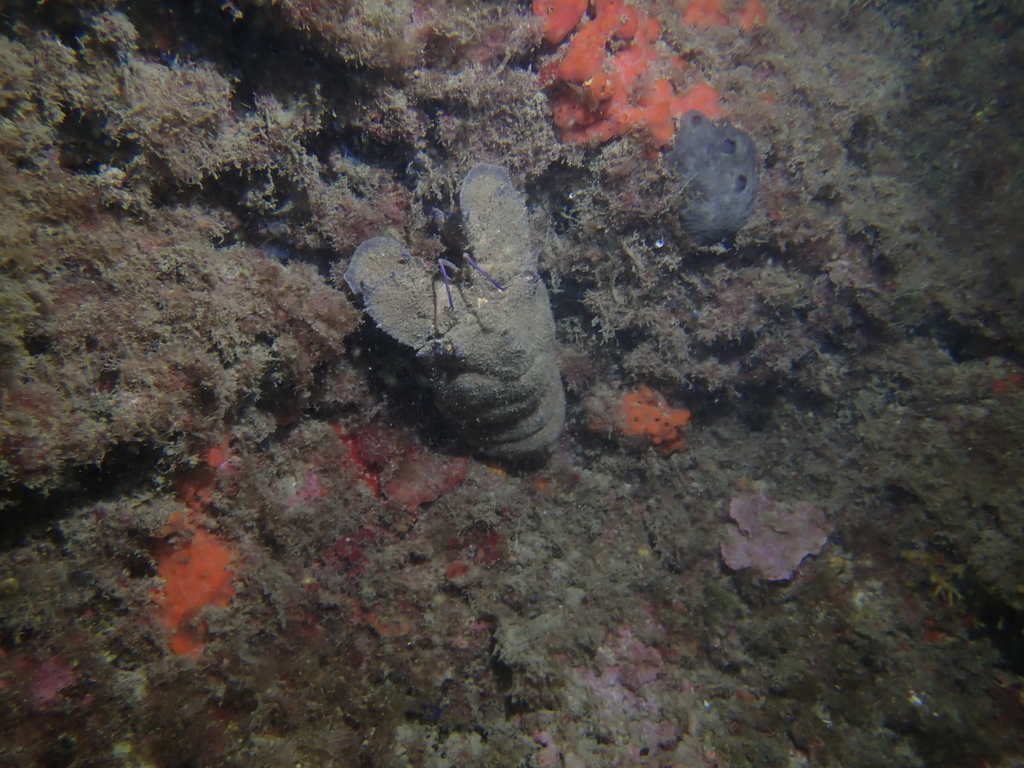
Scyllarides latus, the Mediterranean slipper lobster, is a species of slipper lobster found in the Mediterranean Sea and in the eastern Atlantic Ocean.
- Kingdom
- Animalia
- Phylum
- Arthropoda
- Class
- Malacostraca
- Order
- Decapoda
- Family
- Scyllaridae
- Genus
- Scyllarides
- Species
- Scyllarides latus
Description
Scyllarides latus, the Mediterranean slipper lobster, is a species of slipper lobster found in the Mediterranean Sea and in the eastern Atlantic Ocean. It is edible and highly regarded as food, but is now rare over much of its range due to overfishing. Adults may grow to 1 foot (30 cm) long, are camouflaged, and have no claws. They are nocturnal, emerging from caves and other shelters during the night to feed on molluscs. As well as being eaten by humans, S. latus is also preyed upon by a variety of bony fish. Its closest relative is S. herklotsii, which occurs off the Atlantic coast of West Africa; other species of Scyllarides occur in the western Atlantic Ocean and the Indo-Pacific. The larvae and young animals are largely unknown.
Ajouter des photos
Partagez vos photos de cette espèce (jusqu'à 20 à la fois) : elles sont vérifiées automatiquement, puis publiées.
Répartition
Occurrences observées (données GBIF). Les zones hors aire d'origine peuvent indiquer une présence introduite ou invasive.
Sources et crédits
Informations provenant de plusieurs sources vérifiées. Dernière mise à jour : .
Crédits photos (1)
- Photo : Kaila Wheatley Kornblum (@k_wheatley) · CC BY-NC 4.0 · via iNaturalist
Mentions de licence
Texte disponible sous licence CC BY-SA 4.0. Il adapte notamment Wikipedia (CC BY-SA) : Scyllarides latus (Wikipédia, auteurs dans l’historique de l’article).
- Taxonomie : GBIF Backbone Taxonomy (CC BY 4.0)
- Carte : occurrences GBIF, fond © contributeurs OpenStreetMap (ODbL)
- Statut de conservation : Liste rouge de l'UICN, via Wikidata (CC0)
Détail : Sources et licences.
Discussion (0)
Aucun message pour l’instant. Lancez la discussion sur cette fiche (sources, précisions, débats éditoriaux).
Connectez-vous pour participer à la discussion.