
Ovalipes catharus
Ovalipes catharus
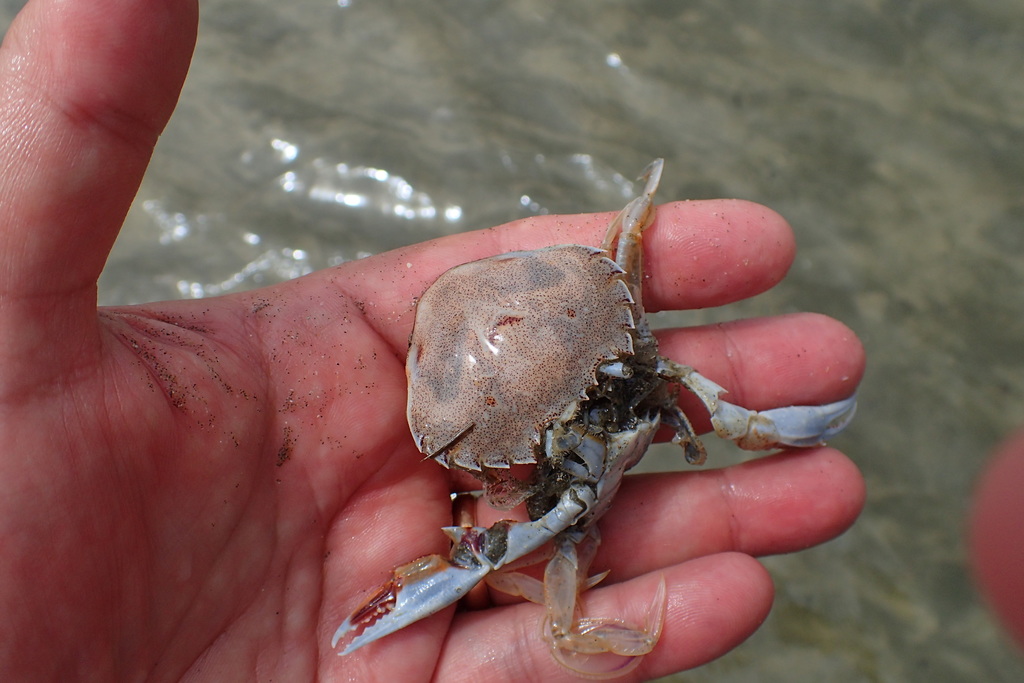
Ovalipes catharus, commonly known as the paddle crab, swimming crab, or, in Māori, pāpaka, is a species of crab in the family Ovalipidae.
- Kingdom
- Animalia
- Phylum
- Arthropoda
- Class
- Malacostraca
- Order
- Decapoda
- Family
- Ovalipidae
- Genus
- Ovalipes
- Species
- Ovalipes catharus
Description
Ovalipes catharus, commonly known as the paddle crab, swimming crab, or, in Māori, pāpaka, is a species of crab in the family Ovalipidae. It is found in shallow, sandy-bottomed waters around the coasts of New Zealand, the Chatham Islands, and uncommonly in southern Australia. O. catharus is an opportunistic, aggressive, and versatile feeder active mostly at night, preying predominantly on molluscs and crustaceans. It is also highly prone to cannibalism, which accounts for over a quarter of its diet in some locations. The crab's paddle-shaped rear legs and streamlined carapace allow it to capture prey by swimming rapidly and to escape predation by burrowing in the sand. Its mating season is in winter and spring; the male carries the female until she moults, after which the two mate and the female likely moves into deeper waters to incubate and disperse her larvae. Commercial fisheries have harvested paddle crabs since the 1970s, with catches declining considerably from a peak in the late 1990s. Its population is expected to be increasing, although ecologists have raised concerns that Charybdis japonica, an invasive crab with a similar size, diet, and habitat, could outcompete the paddle crab. O. catharus is present in Māori culture both as an artistic motif and as a traditional source of food.
Ajouter des photos
Partagez vos photos de cette espèce (jusqu'à 20 à la fois) : elles sont vérifiées automatiquement, puis publiées.
Répartition
Occurrences observées (données GBIF). Les zones hors aire d'origine peuvent indiquer une présence introduite ou invasive.
Sources et crédits
Informations provenant de plusieurs sources vérifiées. Dernière mise à jour : .
Crédits photos (1)
- Photo : @timcurran · CC BY-NC 4.0 · via iNaturalist
Mentions de licence
Texte disponible sous licence CC BY-SA 4.0. Il adapte notamment Wikipedia (CC BY-SA) : Ovalipes catharus (Wikipédia, auteurs dans l’historique de l’article).
- Taxonomie : GBIF Backbone Taxonomy (CC BY 4.0)
- Carte : occurrences GBIF, fond © contributeurs OpenStreetMap (ODbL)
Détail : Sources et licences.
Discussion (0)
Aucun message pour l’instant. Lancez la discussion sur cette fiche (sources, précisions, débats éditoriaux).
Connectez-vous pour participer à la discussion.