
Barbicambarus simmonsi
Barbicambarus simmonsi
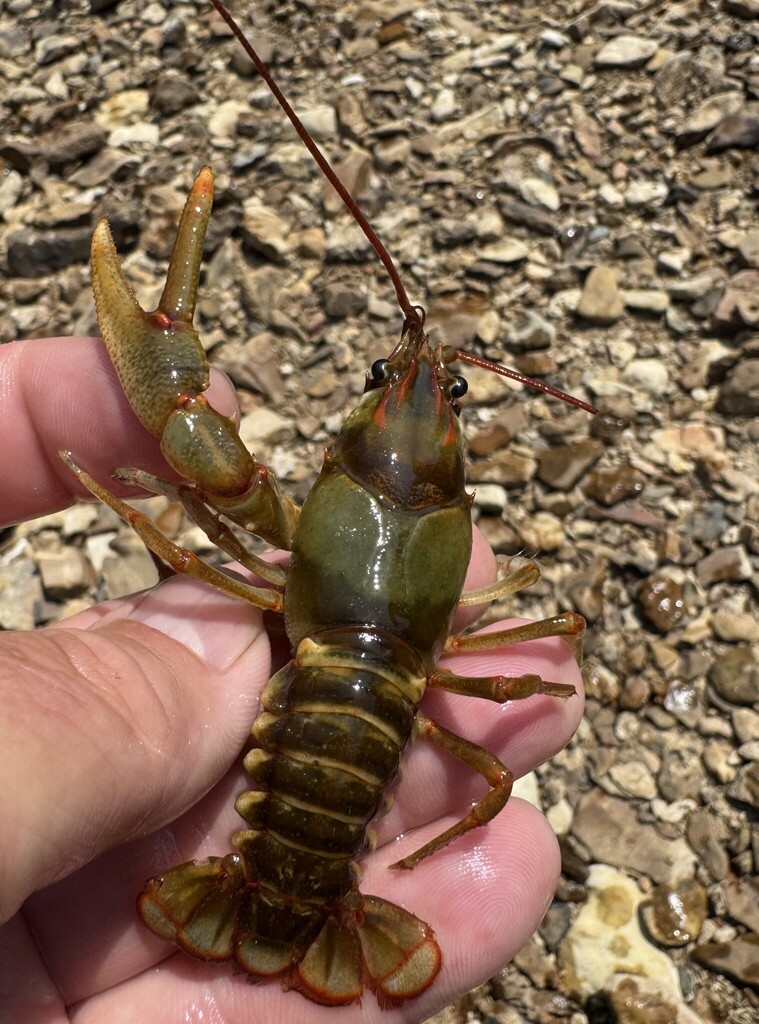
Barbicambarus simmonsi is a species of giant crayfish discovered in southern Tennessee in 2010.
- Kingdom
- Animalia
- Phylum
- Arthropoda
- Class
- Malacostraca
- Order
- Decapoda
- Family
- Cambaridae
- Genus
- Barbicambarus
- Species
- Barbicambarus simmonsi
Description
Barbicambarus simmonsi is a species of giant crayfish discovered in southern Tennessee in 2010. The discovery was announced in January 2011. The animal was discovered in Shoal Creek, a stream in southern Tennessee that ultimately drains into the Tennessee River. The first specimen was discovered by and named for Tennessee Valley Authority scientist Jeffrey Simmons in 2010. University of Illinois aquatic biologist Christopher A. Taylor and Guenter A. Schuster of Eastern Kentucky University found a second specimen and authored the paper announcing the discovery of the new species. The creek has been studied for half a century, so this species is believed to be rare. Taylor further suggests that discovery of such a large species there now indicates that more money should be spent on research inside the United States.
Gallery
Ajouter des photos
Partagez vos photos de cette espèce (jusqu'à 20 à la fois) : elles sont vérifiées automatiquement, puis publiées.
Répartition
Occurrences observées (données GBIF). Les zones hors aire d'origine peuvent indiquer une présence introduite ou invasive.
Sources et crédits
Informations provenant de plusieurs sources vérifiées. Dernière mise à jour : .
Crédits photos (2)
- Photo : Jeff Garner (@jeffgarner) · CC BY-NC 4.0 · via iNaturalist
- Photo : Jeff Garner (@jeffgarner) · CC BY-NC 4.0 · via iNaturalist
Mentions de licence
Texte disponible sous licence CC BY-SA 4.0. Il adapte notamment Wikipedia (CC BY-SA) : Barbicambarus simmonsi (Wikipédia, auteurs dans l’historique de l’article).
- Taxonomie : GBIF Backbone Taxonomy (CC BY 4.0)
- Carte : occurrences GBIF, fond © contributeurs OpenStreetMap (ODbL)
Détail : Sources et licences.
Discussion (0)
Aucun message pour l’instant. Lancez la discussion sur cette fiche (sources, précisions, débats éditoriaux).
Connectez-vous pour participer à la discussion.