
Giant freshwater crayfish
Astacopsis gouldi
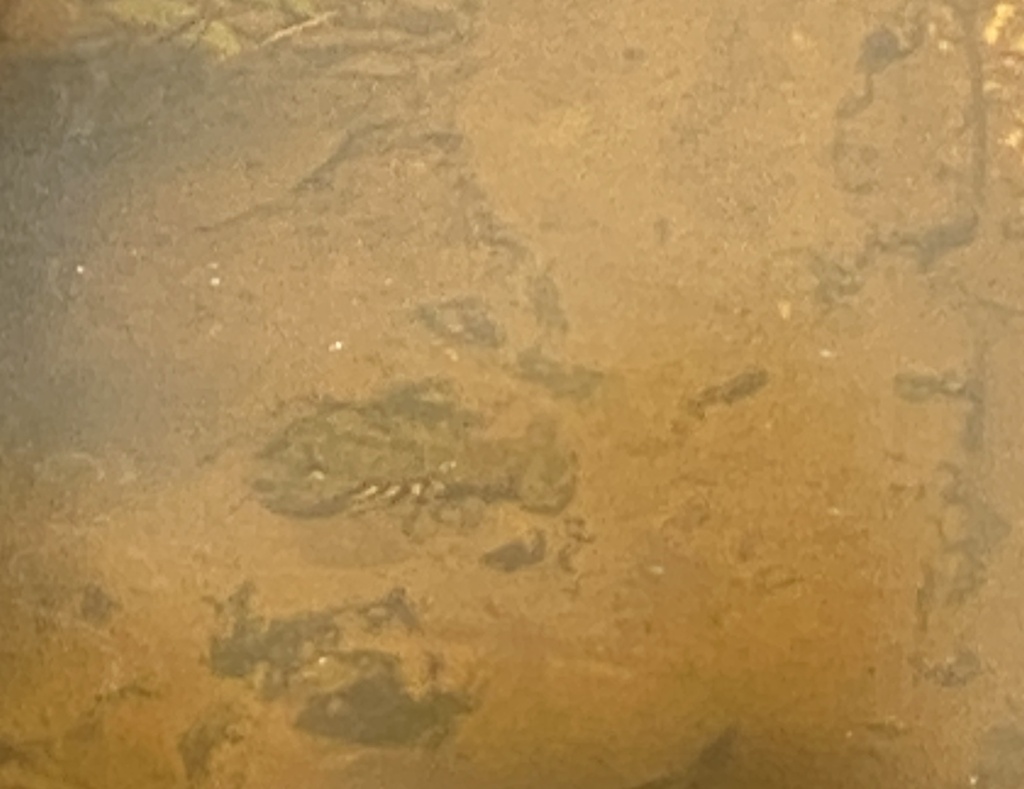
The Tasmanian giant freshwater crayfish (Astacopsis gouldi), also called Tasmanian giant freshwater lobster, is the largest freshwater invertebrate and the largest freshwater crayfish species in the world.
- Kingdom
- Animalia
- Phylum
- Arthropoda
- Class
- Malacostraca
- Order
- Decapoda
- Family
- Parastacidae
- Genus
- Astacopsis
- Species
- Astacopsis gouldi
Description
The Tasmanian giant freshwater crayfish (Astacopsis gouldi), also called Tasmanian giant freshwater lobster, is the largest freshwater invertebrate and the largest freshwater crayfish species in the world. It is found in the rivers below 400 metres (1,300 ft) above sea level in northern Tasmania, Australia. It is listed as an endangered species on the IUCN Red List due to overfishing and habitat degradation, and it has been prohibited to catch it since 1998. The diet of the freshwater crayfish varies with age, but predominantly consists of decaying wood, leaves and their associated microbes. They may also eat small fish, insects, rotting animal flesh and other detritus when available. A. gouldi is very long-lived, surviving for up to 60 years. It has previously been reported to attain weights of up to 6 kilograms (13 lb) and measure over 80 centimetres (31 in) long; however, in recent years the majority of larger specimens are 2–3 kilograms (4.4–6.6 lb). When full-grown the species has no natural predators due to its large size, while smaller individuals can be prey of platypus, river blackfish and rakali.
Gallery
Ajouter des photos
Partagez vos photos de cette espèce (jusqu'à 20 à la fois) : elles sont vérifiées automatiquement, puis publiées.
Répartition
Occurrences observées (données GBIF). Les zones hors aire d'origine peuvent indiquer une présence introduite ou invasive.
Sources et crédits
Informations provenant de plusieurs sources vérifiées. Dernière mise à jour : .
Crédits photos (4)
- Photo : @jstarspots · CC0 (domaine public) · via iNaturalist
- Photo : @aase58 · CC BY-NC 4.0 · via iNaturalist
- Photo : @doc_indy · CC BY-NC 4.0 · via iNaturalist
- Photo : Dr. Premek Hamr (@drcrayfish) · CC BY-NC 4.0 · via iNaturalist
Mentions de licence
Texte disponible sous licence CC BY-SA 4.0. Il adapte notamment Wikipedia (CC BY-SA) : Tasmanian giant freshwater crayfish (Wikipédia, auteurs dans l’historique de l’article).
- Taxonomie : GBIF Backbone Taxonomy (CC BY 4.0)
- Carte : occurrences GBIF, fond © contributeurs OpenStreetMap (ODbL)
Détail : Sources et licences.
Discussion (0)
Aucun message pour l’instant. Lancez la discussion sur cette fiche (sources, précisions, débats éditoriaux).
Connectez-vous pour participer à la discussion.