
Turbatrix aceti
Turbatrix aceti
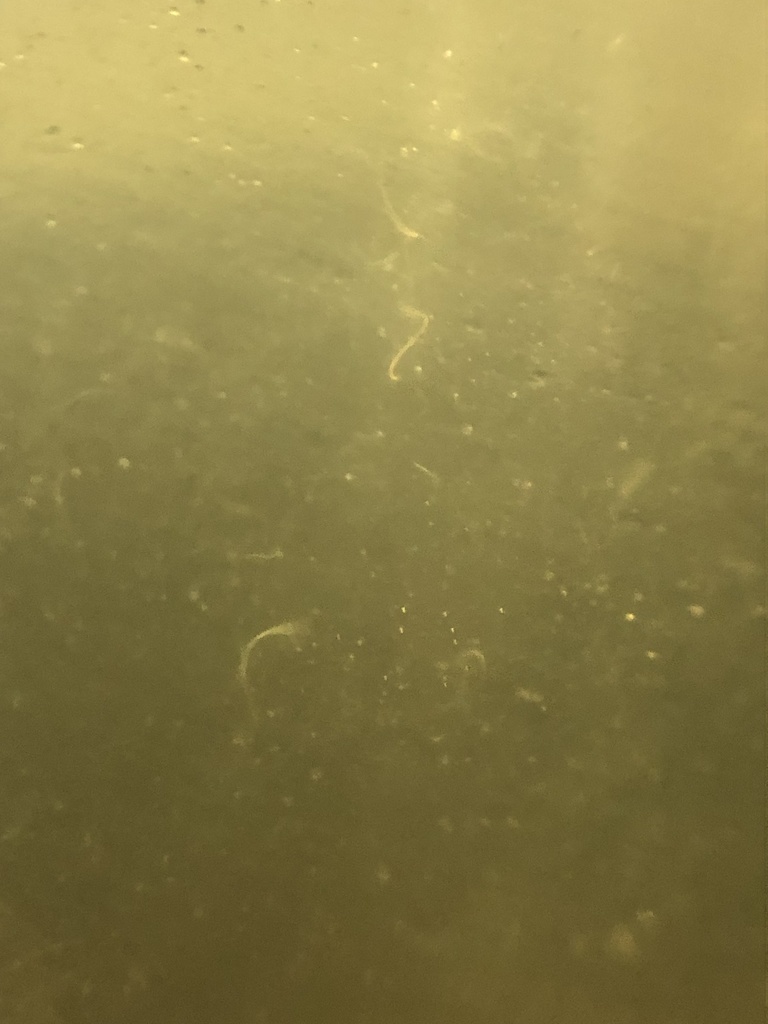
Turbatrix aceti (vinegar eels, vinegar nematode, Anguillula aceti) are free-living nematodes that feed on a microbial culture called mother of vinegar (used to create vinegar) and may be found in unfiltered vinegar.
- Kingdom
- Animalia
- Phylum
- Nematoda
- Class
- Chromadorea
- Order
- Rhabditida
- Family
- Panagrolaimidae
- Genus
- Turbatrix
- Species
- Turbatrix aceti
Description
Turbatrix aceti (vinegar eels, vinegar nematode, Anguillula aceti) are free-living nematodes that feed on a microbial culture called mother of vinegar (used to create vinegar) and may be found in unfiltered vinegar. They were discovered by Pierre Borel in 1656. They are exceptionally tolerant of variation in acidity and alkalinity and they may be able to tolerate a wider range than any other species, being able to survive from pH 1.6 to 11. Vinegar eels are often given to fry (baby fish) as a live food, like microworms. Although they are harmless and non-parasitic, leaving eels in vinegar is considered objectionable (for example, in the United States they are not permitted in vinegar destined for American consumers). Manufacturers normally filter and pasteurize their product prior to bottling, destroying the live bacterial and yeast culture that these nematodes require for sustenance. At high concentration near a boundary, vinegar eels synchronize their undulations, forming a collective wave. Aging in T. aceti is associated with a decline in the ability to repair DNA damage, a finding that is consistent with the theory that DNA damage contributes to aging.
Gallery
Ajouter des photos
Partagez vos photos de cette espèce (jusqu'à 20 à la fois) : elles sont vérifiées automatiquement, puis publiées.
Répartition
Occurrences observées (données GBIF). Les zones hors aire d'origine peuvent indiquer une présence introduite ou invasive.
Sources et crédits
Informations provenant de plusieurs sources vérifiées. Dernière mise à jour : .
Crédits photos (2)
- Photo : shady af comebacks (@attinella) · CC BY-NC 4.0 · via iNaturalist
- Photo : @chethanbio · CC BY-NC 4.0 · via iNaturalist
Mentions de licence
Texte disponible sous licence CC BY-SA 4.0. Il adapte notamment Wikipedia (CC BY-SA) : Turbatrix aceti (Wikipédia, auteurs dans l’historique de l’article).
- Taxonomie : GBIF Backbone Taxonomy (CC BY 4.0)
- Carte : occurrences GBIF, fond © contributeurs OpenStreetMap (ODbL)
Détail : Sources et licences.
Discussion (0)
Aucun message pour l’instant. Lancez la discussion sur cette fiche (sources, précisions, débats éditoriaux).
Connectez-vous pour participer à la discussion.