
Suberites domuncula
Suberites domuncula
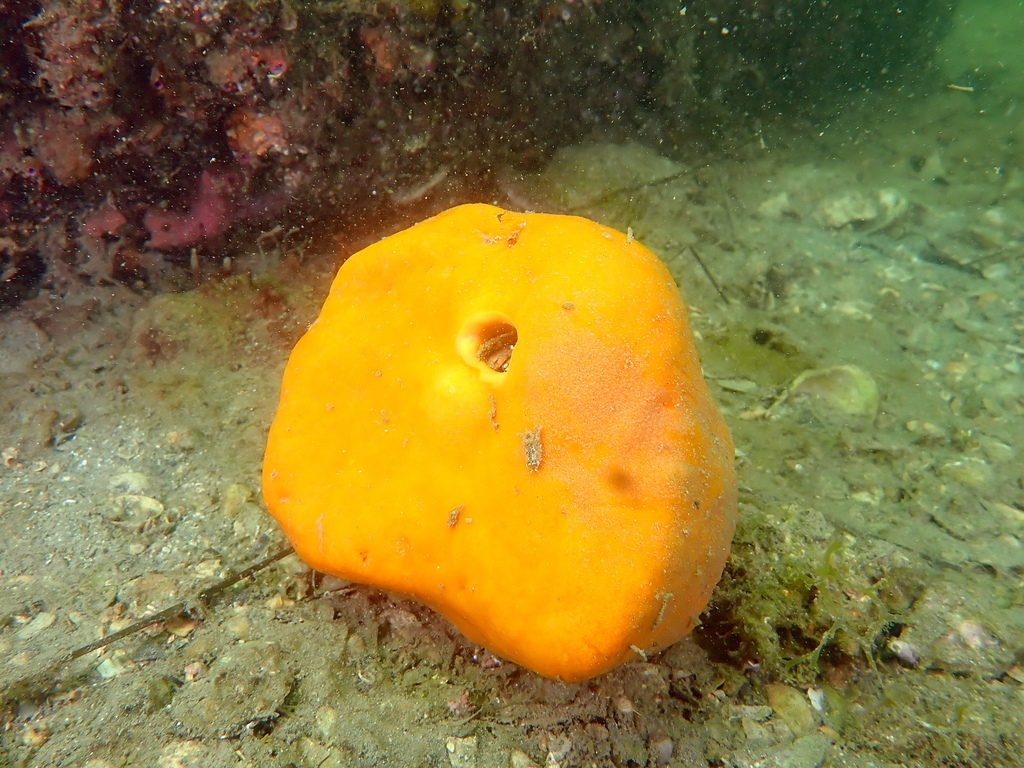
Suberites domuncula is a species of sea sponge belonging to the family Suberitidae.
- Kingdom
- Animalia
- Phylum
- Porifera
- Class
- Demospongiae
- Order
- Suberitida
- Family
- Suberitidae
- Genus
- Suberites
- Species
- Suberites domuncula
Description
Suberites domuncula is a species of sea sponge belonging to the family Suberitidae. This species contains suberitine, a neurotoxin that can cause fatal hemolytic hemorrhaging in various animals. While it is highly toxic to fish, it is known to be preyed upon by the hawksbill turtle, Eretmochelys imbricata. There are currently two accepted subspecies of this taxon: Suberites domuncula domuncula and S. domuncula latus. In 1893, Lambe described a new sponge species as Suberites latus. This was later determined to be a junior synonym of S. domuncula and merged into the species as a subspecies under the scientific name S. domuncula latus. S. domuncula is well known for colonizing gastropod shells occupied by hermit crabs. At least 13 species of hermit crabs have been found associated with this sponge. It has also been recorded attached to the shells of live gastropods and the carapace of other crustaceans.
Ajouter des photos
Partagez vos photos de cette espèce (jusqu'à 20 à la fois) : elles sont vérifiées automatiquement, puis publiées.
Répartition
Occurrences observées (données GBIF). Les zones hors aire d'origine peuvent indiquer une présence introduite ou invasive.
Sources et crédits
Informations provenant de plusieurs sources vérifiées. Dernière mise à jour : .
Crédits photos (1)
- Photo : Adrien Lowenstein - Anaïs Berry (@adrien_anais) · CC BY-NC 4.0 · via iNaturalist
Mentions de licence
Texte disponible sous licence CC BY-SA 4.0. Il adapte notamment Wikipedia (CC BY-SA) : Suberites domuncula (Wikipédia, auteurs dans l’historique de l’article).
- Taxonomie : GBIF Backbone Taxonomy (CC BY 4.0)
- Carte : occurrences GBIF, fond © contributeurs OpenStreetMap (ODbL)
Détail : Sources et licences.
Discussion (0)
Aucun message pour l’instant. Lancez la discussion sur cette fiche (sources, précisions, débats éditoriaux).
Connectez-vous pour participer à la discussion.