
Portuguese man o' war
Physalia physalis
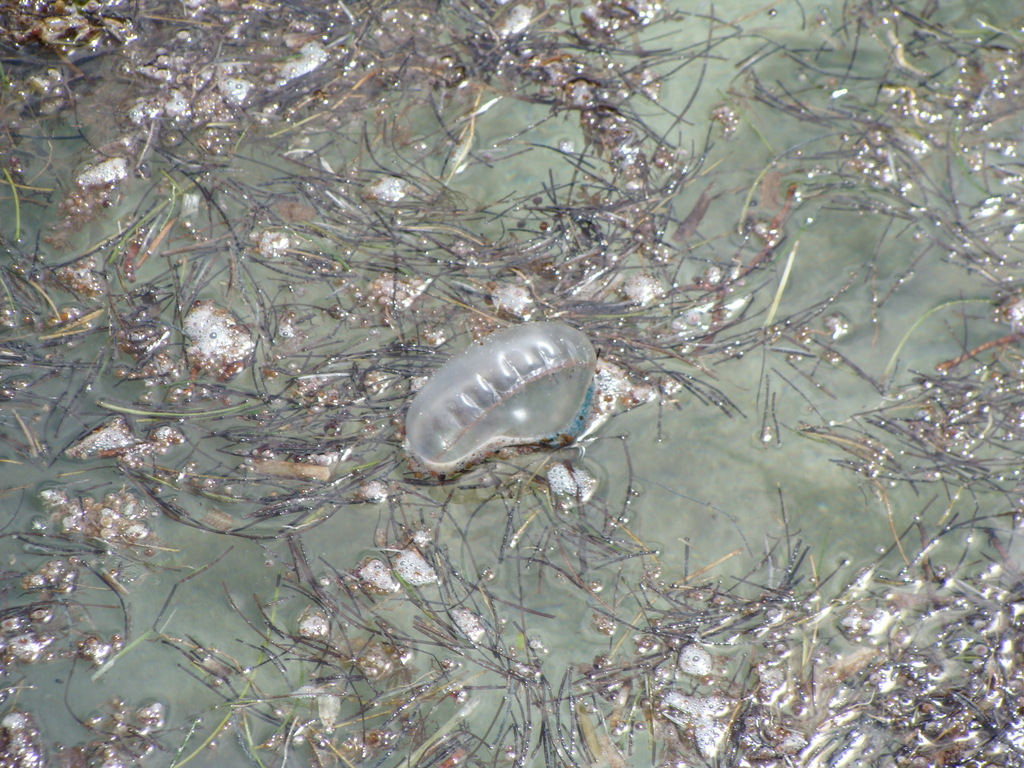
The Portuguese man o' war (Physalia physalis), also known as the man-of-war, bluebottle, or sometimes called Caravela Portuguesa (a name of Portuguese origin), is a marine hydrozoan found in the Atlantic, Indian, and Pacific oceans.
- Kingdom
- Animalia
- Phylum
- Cnidaria
- Class
- Hydrozoa
- Order
- Siphonophorae
- Family
- Physaliidae
- Genus
- Physalia
- Species
- Physalia physalis
Description
The Portuguese man o' war (Physalia physalis), also known as the man-of-war, bluebottle, or sometimes called Caravela Portuguesa (a name of Portuguese origin), is a marine hydrozoan found in the Atlantic, Indian, and Pacific oceans. While it is typically considered the only species in its genus, Physalia, and family, Physaliidae, genetic evidence suggests there may be more. Although it superficially resembles a jellyfish, the Portuguese man o' war is in fact a siphonophore. Like all siphonophores, it is a colonial organism, made up of many smaller units called zooids. Although they are morphologically quite different, all of the zooids in a single specimen are genetically identical. These different types of zooids fulfill specialized functions, such as hunting, digestion, and reproduction, and together they allow the colony to operate as a single individual. The man o' war is part of the neuston, organisms that live on the surface of the water. A gas-filled bladder called the pneumatophore provides buoyancy that lets the animal stay afloat on the surface of the water while its tentacles, which can be up to 30 m (100 ft) long, hang below the surface, containing venomous cnidocytes that help capture prey. The cnidocytes can deliver a sting powerful enough to kill fish, crustaceans, and in some cases, humans. A sail on the pneumatophore propels it about the sea, sometimes in groups as large as 1,000 individuals. The sail may be left or right-handed, being so assigned on the basis of the direction in which the wind catches it.
Ajouter des photos
Partagez vos photos de cette espèce (jusqu'à 20 à la fois) : elles sont vérifiées automatiquement, puis publiées.
Répartition
Occurrences observées (données GBIF). Les zones hors aire d'origine peuvent indiquer une présence introduite ou invasive.
Sources et crédits
Informations provenant de plusieurs sources vérifiées. Dernière mise à jour : .
Crédits photos (1)
- Photo : @markk178 · CC BY-NC 4.0 · via iNaturalist
Mentions de licence
Texte disponible sous licence CC BY-SA 4.0. Il adapte notamment Wikipedia (CC BY-SA) : Portuguese man o' war (Wikipédia, auteurs dans l’historique de l’article).
- Taxonomie : GBIF Backbone Taxonomy (CC BY 4.0)
- Carte : occurrences GBIF, fond © contributeurs OpenStreetMap (ODbL)
Détail : Sources et licences.
Discussion (0)
Aucun message pour l’instant. Lancez la discussion sur cette fiche (sources, précisions, débats éditoriaux).
Connectez-vous pour participer à la discussion.