
Cyanea fulva
Cyanea fulva
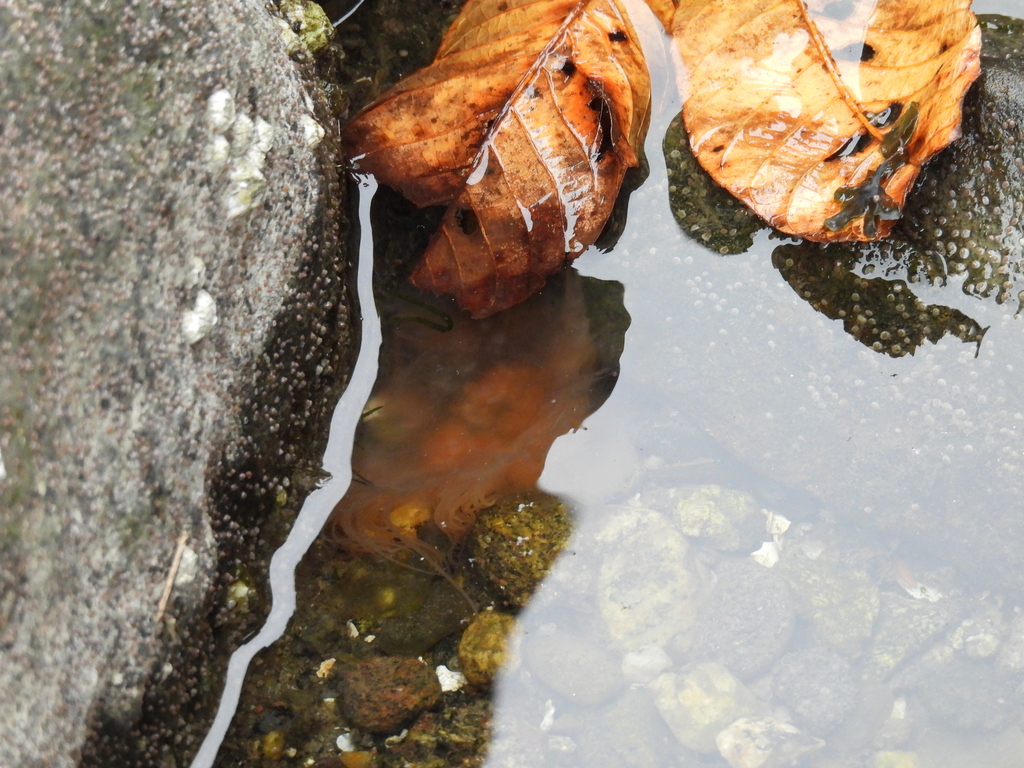
Cyanea fulva, the Atlantic lion's mane jellyfish, is a species of jellyfish found along the Mid-Atlantic coastal region of the United States.
- Kingdom
- Animalia
- Phylum
- Cnidaria
- Class
- Scyphozoa
- Order
- Semaeostomeae
- Family
- Cyaneidae
- Genus
- Cyanea
- Species
- Cyanea fulva
Description
Cyanea fulva, the Atlantic lion's mane jellyfish, is a species of jellyfish found along the Mid-Atlantic coastal region of the United States. C. fulva are commonly noted as being about two inches in diameter and smaller than C. capillata, however, larger than C. versicolor, a co-occurring close species. One distinctive feature present in mature C. fulva populations is their four mouth-part tentacles, containing a cinnamon color with the center of the main cavity being darker. At a young age, these jellyfish can have three appendages but often gain a fourth at more developed life cycle stages. C. fulva are also known for having less folds compared to C. arctica but more folds compared to C. versicolor. These folds are described as being remarkably thin and deciduous. Their distribution is commonly associated with regions south of Cape Cod and in the Long Island Sound. C. fulva demonstrate a peak in their population during the middle of summer and populations are typically found in shallower water. Likewise, cyanea polyps have a decreased chance of survival in ocean temperatures over 25°C. Their sting is generally considered only moderately painful to humans. The free amino acid composition (FAA) of C. fulva is also known to have a more uniform distribution throughout the spectrum of its composition compared to Aurelia aurita and Chrysaora quinquecirrha scyphozoan polyps. One study found that Cyanea populations have the greatest variety of nematocyst types such as a-isorhizas, A-isorhizas, 𝛼-isorhizas, heterotrichous anisorhizas, and heterotrichous microbasic euryteles. The euryteles were found to have a larger average length compared to Aurelia aurita, Chrysaora quinquecirrha, and Rhopilema verrilli populations. Their representation is often classified as a variety of C. capillata. Although its distribution is more local, the general appearance and habits of C. fulva is very similarly aligned with C. capillata. In fact, this species may soon be called the "little brown brother" of the more widely known C. capillata var. arctica.
Gallery
Ajouter des photos
Partagez vos photos de cette espèce (jusqu'à 20 à la fois) : elles sont vérifiées automatiquement, puis publiées.
Répartition
Occurrences observées (données GBIF). Les zones hors aire d'origine peuvent indiquer une présence introduite ou invasive.
Sources et crédits
Informations provenant de plusieurs sources vérifiées. Dernière mise à jour : .
Crédits photos (2)
- Photo : Mikhail Favorov (@mikhailfavorov) · CC BY-NC 4.0 · via iNaturalist
- Photo : Benji Beluga (@ben_springer) · CC BY-NC 4.0 · via iNaturalist
Mentions de licence
Texte disponible sous licence CC BY-SA 4.0. Il adapte notamment Wikipedia (CC BY-SA) : Cyanea fulva (Wikipédia, auteurs dans l’historique de l’article).
- Taxonomie : GBIF Backbone Taxonomy (CC BY 4.0)
- Carte : occurrences GBIF, fond © contributeurs OpenStreetMap (ODbL)
Détail : Sources et licences.
Discussion (0)
Aucun message pour l’instant. Lancez la discussion sur cette fiche (sources, précisions, débats éditoriaux).
Connectez-vous pour participer à la discussion.