
Lion's Mane Jellyfish
Cyanea capillata
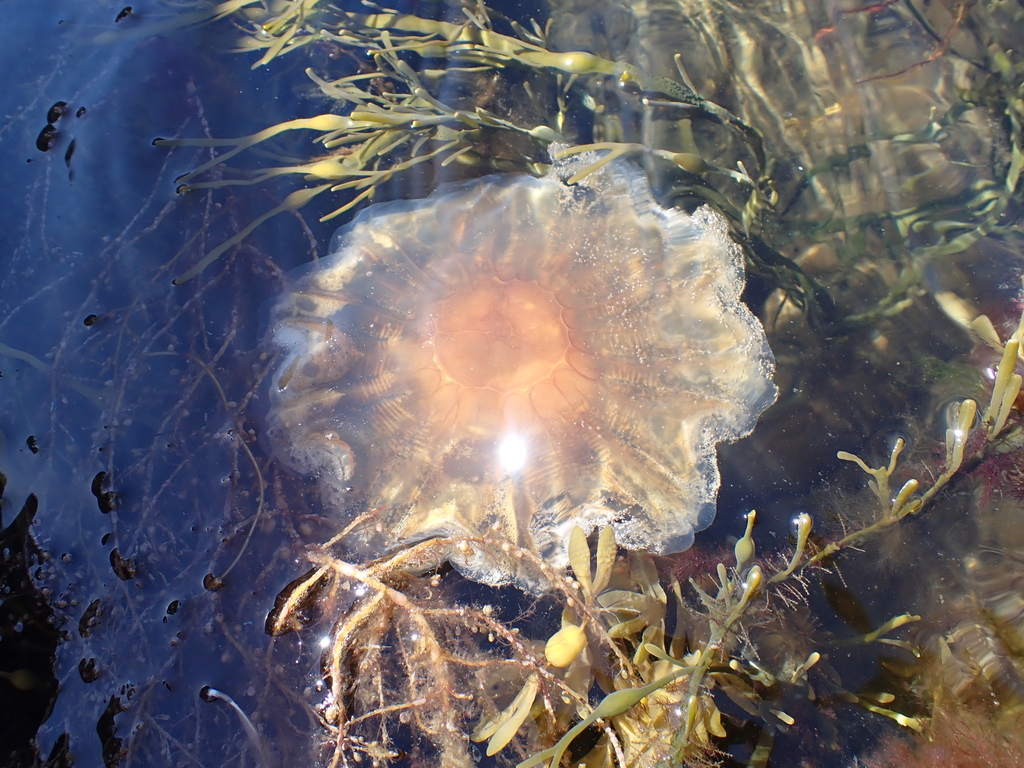
The lion's mane jellyfish (Cyanea capillata) is one of the largest known species of jellyfish.
- Kingdom
- Animalia
- Phylum
- Cnidaria
- Class
- Scyphozoa
- Order
- Semaeostomeae
- Family
- Cyaneidae
- Genus
- Cyanea
- Species
- Cyanea capillata
Description
The lion's mane jellyfish (Cyanea capillata) is one of the largest known species of jellyfish. Its range is confined to cold, boreal waters of the Arctic, northern Atlantic, and northern Pacific Oceans. It is common in the English Channel, Irish Sea, North Sea, and in western Scandinavian waters south to Kattegat and Øresund. Some may also drift outside of their usual perimeters during periods of increased warming, including into the southwestern part of the Baltic Sea (where it cannot breed due to the low salinity). Similar jellyfish – which may be the same species – are known to inhabit seas near Australia and New Zealand. The largest recorded specimen was measured off the coast of Massachusetts in 1865 and had a bell with a diameter of 210 centimetres (7 feet) and tentacles around 36.6 m (120 ft) long. Lion's mane jellyfish have been observed below 42°N latitude for some time in the larger bays of the East Coast of the United States.
Ajouter des photos
Partagez vos photos de cette espèce (jusqu'à 20 à la fois) : elles sont vérifiées automatiquement, puis publiées.
Répartition
Occurrences observées (données GBIF). Les zones hors aire d'origine peuvent indiquer une présence introduite ou invasive.
Sources et crédits
Informations provenant de plusieurs sources vérifiées. Dernière mise à jour : .
Crédits photos (1)
- Photo : @luluchouette · CC BY 4.0 · via iNaturalist
Mentions de licence
Texte disponible sous licence CC BY-SA 4.0. Il adapte notamment Wikipedia (CC BY-SA) : Lion's mane jellyfish (Wikipédia, auteurs dans l’historique de l’article).
- Taxonomie : GBIF Backbone Taxonomy (CC BY 4.0)
- Carte : occurrences GBIF, fond © contributeurs OpenStreetMap (ODbL)
Détail : Sources et licences.
Discussion (0)
Aucun message pour l’instant. Lancez la discussion sur cette fiche (sources, précisions, débats éditoriaux).
Connectez-vous pour participer à la discussion.