
Tetragnatha versicolor
Tetragnatha versicolor
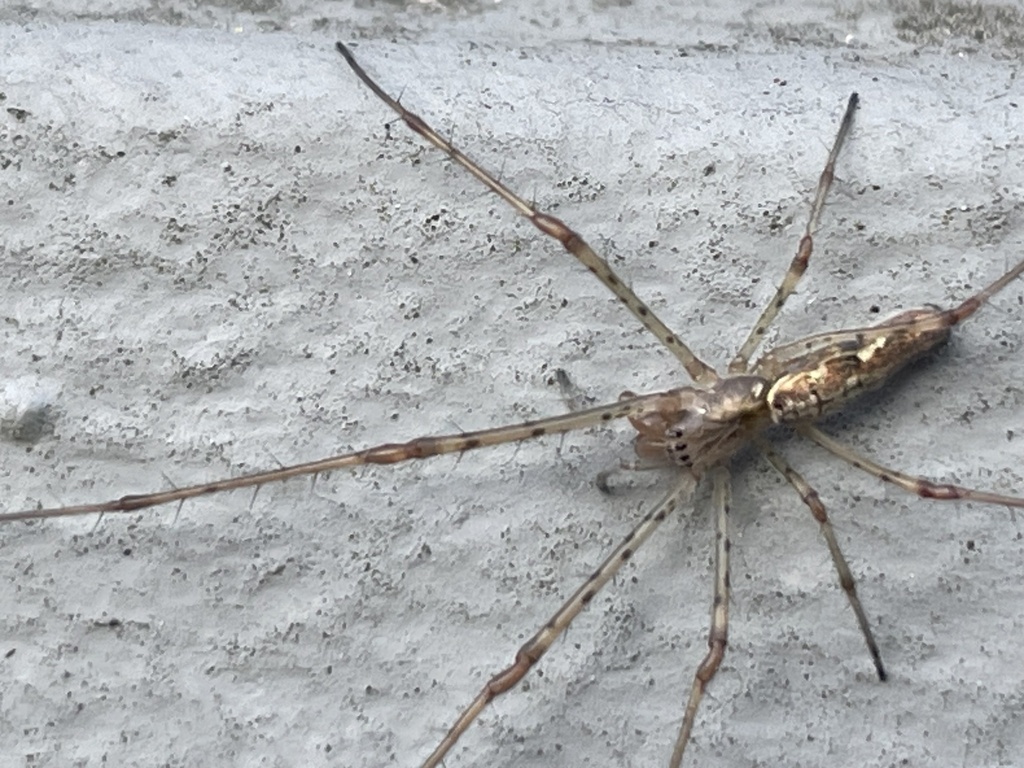
Tetragnatha versicolor is a species of long-jawed orb weaver in the spider family Tetragnathidae.
- Kingdom
- Animalia
- Phylum
- Arthropoda
- Class
- Arachnida
- Order
- Araneae
- Family
- Tetragnathidae
- Genus
- Tetragnatha
- Species
- Tetragnatha versicolor
Description
Tetragnatha versicolor is a species of long-jawed orb weaver in the spider family Tetragnathidae. It is found throughout North America, Canada, Central America, and Cuba, but are most common in the United States. T. versicolor is heavily concentrated in New England and the west coast in states like California and Washington. T. versicolor is considered a habitat generalist, and can thrive in many different environments. While they can be found in places like Grasslands, Wetlands, Forests, etc., they prefer dryer areas like normal trees and shrubs. Unlike other spiders in the genus Tetragnatha, T. versicolor will rarely reside near aquatic environments. T. versicolor will typically be colored dark yellow or pale orange and average around 5 mm for males and 6.5 mm for females in length, which is very small for a spider. They are much longer than they are wide, making them very distinct. In addition, T. versicolor can be distinguished from other spiders in Tetragnatha by the distinct separation of the anterior/posterior eyes and the appearance of their reproductive organs. As an orb weaver spider, T. versicolor creates a web to hunt for prey. It will wait at night for prey to stumble into its web and use vibrational signals throughout the web to sense trapped prey. In terms of mating behavior, T. versicolor lacks a distinct courting ritual and will mate with any others in the proximity. Mating behavior is heavily affected by female mating history. In terms of interactions with humans, the bite of T. versicolor is venomous, but not known to cause significant harm.
Gallery
Ajouter des photos
Partagez vos photos de cette espèce (jusqu'à 20 à la fois) : elles sont vérifiées automatiquement, puis publiées.
Répartition
Occurrences observées (données GBIF). Les zones hors aire d'origine peuvent indiquer une présence introduite ou invasive.
Sources et crédits
Informations provenant de plusieurs sources vérifiées. Dernière mise à jour : .
Crédits photos (8)
- Photo : Robert Riedl (@robertriedl) · CC BY-NC 4.0 · via iNaturalist
- Photo : @greymstreet · CC BY-NC 4.0 · via iNaturalist
- Photo : Deniz Wilson (@dgwdoesthings) · CC0 (domaine public) · via iNaturalist
- Photo : @greymstreet · CC BY-NC 4.0 · via iNaturalist
- Photo : @wildnettle · CC BY-NC 4.0 · via iNaturalist
- Photo : Ken-ichi Ueda (@kueda) · CC BY 4.0 · via iNaturalist
- Photo : RJ Baltierra (@rjbaltierra) · CC BY 4.0 · via iNaturalist
- Photo : Victor Burgett (@victorb23) · CC BY-NC 4.0 · via iNaturalist
Mentions de licence
Texte disponible sous licence CC BY-SA 4.0. Il adapte notamment Wikipedia (CC BY-SA) : Tetragnatha versicolor (Wikipédia, auteurs dans l’historique de l’article).
- Taxonomie : GBIF Backbone Taxonomy (CC BY 4.0)
- Carte : occurrences GBIF, fond © contributeurs OpenStreetMap (ODbL)
Détail : Sources et licences.
Discussion (0)
Aucun message pour l’instant. Lancez la discussion sur cette fiche (sources, précisions, débats éditoriaux).
Connectez-vous pour participer à la discussion.