
Schizocosa ocreata
Schizocosa ocreata
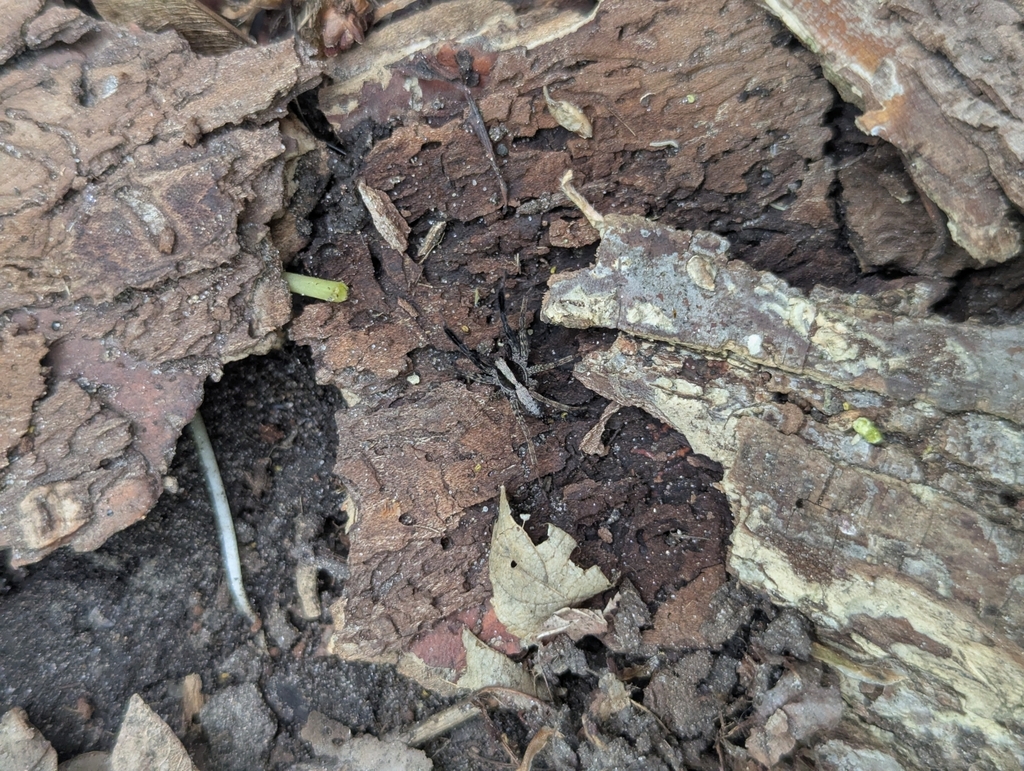
Schizocosa ocreata is a species of wolf spider in the family Lycosidae that is found in North America.
- Kingdom
- Animalia
- Phylum
- Arthropoda
- Class
- Arachnida
- Order
- Araneae
- Family
- Lycosidae
- Genus
- Schizocosa
- Species
- Schizocosa ocreata
Description
Schizocosa ocreata is a species of wolf spider in the family Lycosidae that is found in North America. The Schizocosa ocreata is a spider that is most commonly known as the “brush-legged wolf spider” because of the distinct dark-colored fur-like coverings around the front legs of males. The S. ocreata are commonly found in North American states, usually in the middle and eastern United States. They are predated, typically in areas of large forestry, by many organisms that are visually acute such as various birds, the American toad (Anaxyrus americanus), and other large organisms. Similarly to other species, these spiders do not actually produce webs, but depend on their other acute senses, such as vision, to still exhibit elements of exploitative competition. Some interesting aspects of the S. ocreata are the female and male dynamics during mating and post-copulation. Females will frequently aggressively try to kill the males after mating and cause the males to use their venom as a mechanism of defense. Effects of early juvenile infection on the immunity of these spiders as adults are also currently being studied. Males that were exposed to P. aeruginosa as a juvenile were more likely to have higher adult encapsulation rates as well as have an increased density of melanization. The process of melanization is a key element in immunity because this process produces melanin and aids in wound healing by activating prophenoloxidase. The only spiders that are currently classified as “venomous spiders” by the Mayo Clinic include the black widow spider and the brown recluse spider; however, S. ocreata spiders are not definitively harmless. Hence, it is important to seek medical attention if you are unsure of the kind of spider bite you have, feel respiratory distress, or are in severe pain.
Gallery
Ajouter des photos
Partagez vos photos de cette espèce (jusqu'à 20 à la fois) : elles sont vérifiées automatiquement, puis publiées.
Répartition
Occurrences observées (données GBIF). Les zones hors aire d'origine peuvent indiquer une présence introduite ou invasive.
Sources et crédits
Informations provenant de plusieurs sources vérifiées. Dernière mise à jour : .
Crédits photos (8)
- Photo : @ilikeisopods · CC BY-NC 4.0 · via iNaturalist
- Photo : @artsyaxolotl · CC BY-NC 4.0 · via iNaturalist
- Photo : @gpete · CC BY 4.0 · via iNaturalist
- Photo : @jsatler · CC BY-NC 4.0 · via iNaturalist
- Photo : @mikephelps · CC BY-NC 4.0 · via iNaturalist
- Photo : @mycelium72 · CC BY-NC 4.0 · via iNaturalist
- Photo : Sully Hogan (@jellies1981) · CC BY-NC 4.0 · via iNaturalist
- Photo : @mi-wanderer · CC BY-NC 4.0 · via iNaturalist
Mentions de licence
Texte disponible sous licence CC BY-SA 4.0. Il adapte notamment Wikipedia (CC BY-SA) : Schizocosa ocreata (Wikipédia, auteurs dans l’historique de l’article).
- Taxonomie : GBIF Backbone Taxonomy (CC BY 4.0)
- Carte : occurrences GBIF, fond © contributeurs OpenStreetMap (ODbL)
Détail : Sources et licences.
Discussion (0)
Aucun message pour l’instant. Lancez la discussion sur cette fiche (sources, précisions, débats éditoriaux).
Connectez-vous pour participer à la discussion.