
Rhipicephalus microplus
Rhipicephalus microplus
The Asian blue tick (Rhipicephalus (Boophilus) microplus, Rhipicephalus microplus, or Boophilus microplus) is an economically important tick that parasitises a variety of livestock and wild mammal species, especially cattle, on which it…
- Kingdom
- Animalia
- Phylum
- Arthropoda
- Class
- Arachnida
- Order
- Ixodida
- Family
- Ixodidae
- Genus
- Rhipicephalus
- Species
- Rhipicephalus microplus
Description
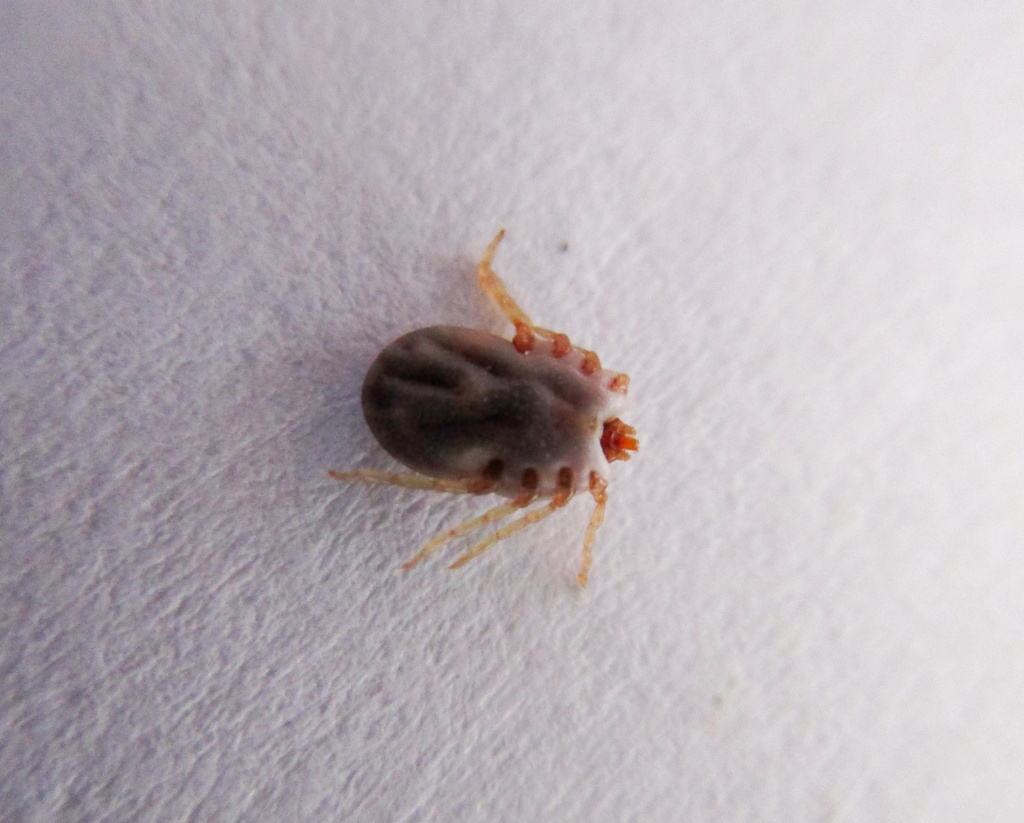
The Asian blue tick (Rhipicephalus (Boophilus) microplus, Rhipicephalus microplus, or Boophilus microplus) is an economically important tick that parasitises a variety of livestock and wild mammal species, especially cattle, on which it is the most economically significant ectoparasite in the world. It is known as the Australian cattle tick, southern cattle tick, Cuban tick, Madagascar blue tick, and Puerto Rican Texas fever tick. It is classified as a hard tick in the family Ixodidae. It is a small teardrop-shaped arachnid with a hardened plate called the scutum covering its head. Males are entirely covered in scutum on their backs with additional plates called festoons along their sides. The body can be brown or pale in nymphs and darkens as the tick matures. Adults have eight cream-colored legs. In R. microplus the hypostome has a hexagonal base (basis capitulum) which can be used as an identifying characteristic. Ticks may be identified by the arrangement of hair-like structures called setae. In R. microplus the setae are arranged in rows of two or three along the tick's body behind the scutum.
Gallery
Ajouter des photos
Partagez vos photos de cette espèce (jusqu'à 20 à la fois) : elles sont vérifiées automatiquement, puis publiées.
Répartition
Occurrences observées (données GBIF). Les zones hors aire d'origine peuvent indiquer une présence introduite ou invasive.
Sources et crédits
Informations provenant de plusieurs sources vérifiées. Dernière mise à jour : .
Crédits photos (6)
- Photo : Mariana Amado Costa (@mananaamadocosta) · CC BY-NC 4.0 · via iNaturalist
- Photo : @gustavo-peretti · CC BY-NC 4.0 · via iNaturalist
- Photo : José Edilson Espitia Barrera (@jespitia) · CC BY-NC 4.0 · via iNaturalist
- Photo : Jorge J. Rodríguez Rojas (@biojorgerdz) · CC BY-NC 4.0 · via iNaturalist
- Photo : @of_lia · CC BY-NC 4.0 · via iNaturalist
- Photo : Marisol (@sol66) · CC BY-NC 4.0 · via iNaturalist
Mentions de licence
Texte disponible sous licence CC BY-SA 4.0. Il adapte notamment Wikipedia (CC BY-SA) : Rhipicephalus microplus (Wikipédia, auteurs dans l’historique de l’article).
- Taxonomie : GBIF Backbone Taxonomy (CC BY 4.0)
- Carte : occurrences GBIF, fond © contributeurs OpenStreetMap (ODbL)
Détail : Sources et licences.
Discussion (0)
Aucun message pour l’instant. Lancez la discussion sur cette fiche (sources, précisions, débats éditoriaux).
Connectez-vous pour participer à la discussion.