
Nursery Web Spider
Pisaurina mira
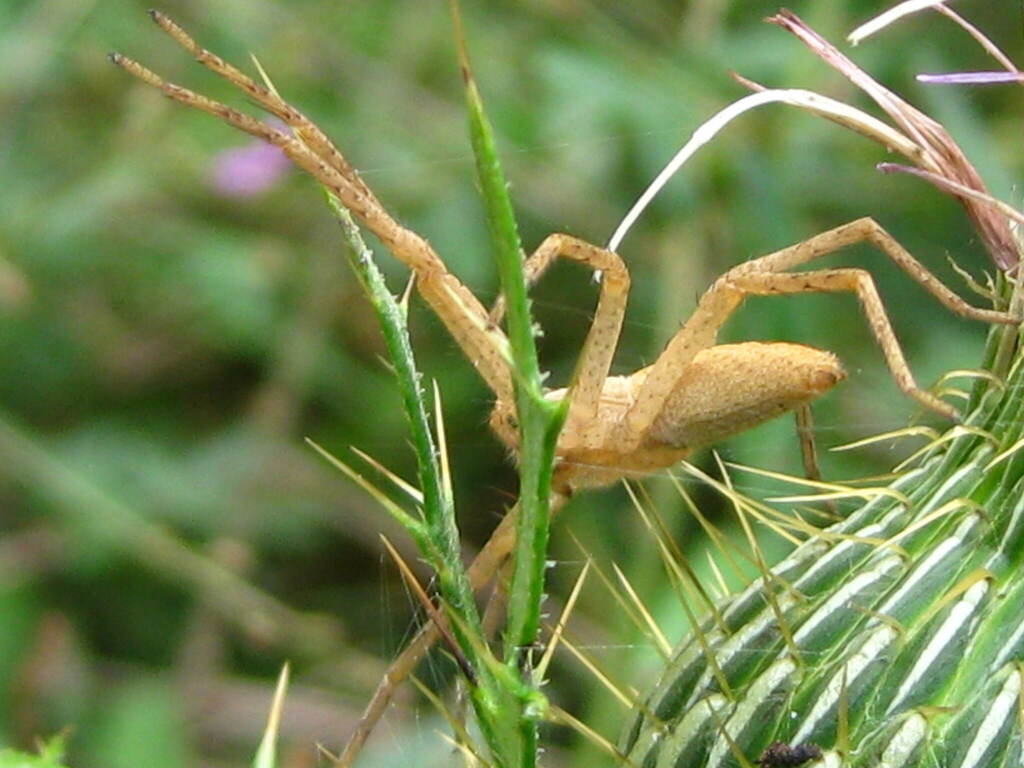
Pisaurina mira, also known as the American nursery web spider, due to the web it raises young in, is a species of spider in the family Pisauridae.
- Kingdom
- Animalia
- Phylum
- Arthropoda
- Class
- Arachnida
- Order
- Araneae
- Family
- Pisauridae
- Genus
- Pisaurina
- Species
- Pisaurina mira
Description
Pisaurina mira, also known as the American nursery web spider, due to the web it raises young in, is a species of spider in the family Pisauridae. They are often mistaken for wolf spiders (Lycosidae) due to their physical resemblance. P. mira is distinguished by its unique eye arrangement of two rows. P. mira is known for its wide distribution across eastern North America and tend to inhabit high weeds or low shrubs in ecotonal areas. It is categorized as a "sit-and-wait ambush predator" that waits for prey to come within reach and snatches them using its chelicerae (clawlike pincers). P. mira is most well known for its sexually cannibalistic behavior and extensive use of silk web in mating. Prior to copulation, the male binds the female's legs with his silk to avoid being consumed by the female. This silk use for survival has been found to increase P. mira males' reproductive fitness, as they typically engage in mating with multiple females when not manipulated. Like other members of the Pisauridae, P. mira carries its eggs along with it in a sac that is secured both by a thread of silk linking it to the spider's spinnerets and by being held by the spider's chelicerae. When the eggs are nearly ready to hatch the mother builds a nursery web within which the egg sac is then hung. After they hatch, and until their first molt, the infant spiders inhabit the rather large volume enclosed by this nursery web. The mother spider stations herself nearby to defend the nursery. The responsibility of parental care is upheld solely by the female, as males who survive the sexually cannibalistic female during mating depart to mate with more females. Although the venom of P. mira is enough to kill its prey, which are usually small insects, it is insufficient for any lethal damage to bigger animals or humans.
Gallery
Ajouter des photos
Partagez vos photos de cette espèce (jusqu'à 20 à la fois) : elles sont vérifiées automatiquement, puis publiées.
Répartition
Occurrences observées (données GBIF). Les zones hors aire d'origine peuvent indiquer une présence introduite ou invasive.
Sources et crédits
Informations provenant de plusieurs sources vérifiées. Dernière mise à jour : .
Crédits photos (8)
- Photo : Ben Jesup (@benjesup) · CC BY-NC 4.0 · via iNaturalist
- Photo : Dawn VanDeman (@frogdawn) · CC0 (domaine public) · via iNaturalist
- Photo : Claire O'Neill (@akilee) · CC BY-NC 4.0 · via iNaturalist
- Photo : A (@the_little_elephant) · CC BY-NC 4.0 · via iNaturalist
- Photo : @pumpkinspleen · CC BY-NC 4.0 · via iNaturalist
- Photo : @julezmittens · CC BY-NC 4.0 · via iNaturalist
- Photo : Joshua Ebright (@jnemoebright) · CC BY 4.0 · via iNaturalist
- Photo : @custudios · CC BY-NC 4.0 · via iNaturalist
Mentions de licence
Texte disponible sous licence CC BY-SA 4.0. Il adapte notamment Wikipedia (CC BY-SA) : Pisaurina mira (Wikipédia, auteurs dans l’historique de l’article).
- Taxonomie : GBIF Backbone Taxonomy (CC BY 4.0)
- Carte : occurrences GBIF, fond © contributeurs OpenStreetMap (ODbL)
Détail : Sources et licences.
Discussion (0)
Aucun message pour l’instant. Lancez la discussion sur cette fiche (sources, précisions, débats éditoriaux).
Connectez-vous pour participer à la discussion.