
Long-bodied Cellar Spider
Pholcus phalangioides
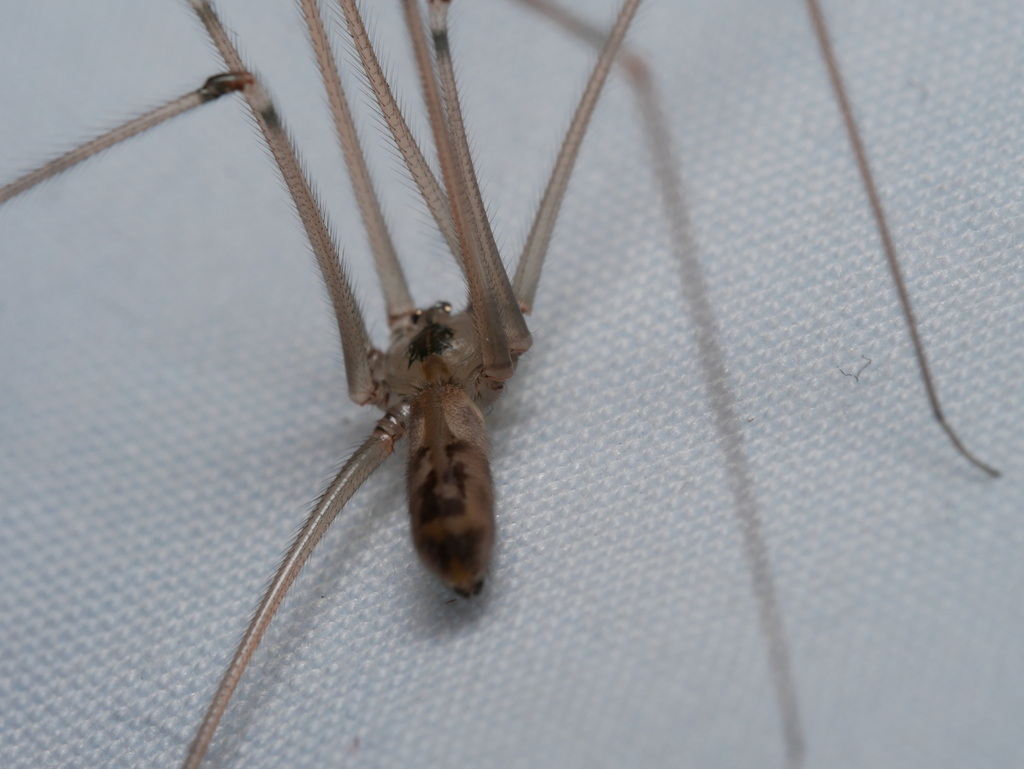
Pholcus phalangioides, commonly known as the cosmopolitan cellar spider, long-bodied cellar spider, or one of various types called a daddy long-legs spider, is a spider of the family Pholcidae.
- Kingdom
- Animalia
- Phylum
- Arthropoda
- Class
- Arachnida
- Order
- Araneae
- Family
- Pholcidae
- Genus
- Pholcus
- Species
- Pholcus phalangioides
Description
Pholcus phalangioides, commonly known as the cosmopolitan cellar spider, long-bodied cellar spider, or one of various types called a daddy long-legs spider, is a spider of the family Pholcidae. It was first described in 1775 by the Swiss entomologist Johann Kaspar Füssli (his surname is also spelled Fuesslin) as Aranea phalangoides. Its common name of "daddy long-legs" should not be confused with a different arachnid group with the same common name, the harvestman (Opiliones), or the crane flies of the superfamily Tipuloidea. Females have a body length of about 8 mm while males tend to be slightly smaller. The length of the spider's legs are on average 5 or 6 times the length of its body. Pholcus phalangioides has a habit of living on the ceilings of rooms, caves, garages or cellars. This spider species is considered beneficial in parts of the world because it preys on other spiders, including species considered dangerous such as redback spiders. Pholcus phalangioides is known to be harmless to humans and a potential for the medicinal use of their silk has been reported.
Gallery
Ajouter des photos
Partagez vos photos de cette espèce (jusqu'à 20 à la fois) : elles sont vérifiées automatiquement, puis publiées.
Répartition
Occurrences observées (données GBIF). Les zones hors aire d'origine peuvent indiquer une présence introduite ou invasive.
Sources et crédits
Informations provenant de plusieurs sources vérifiées. Dernière mise à jour : .
Crédits photos (8)
- Photo : Keegan Tinsel (@kee09) · CC BY-NC 4.0 · via iNaturalist
- Photo : Kim Sinclair (@ozlady) · CC BY-NC 4.0 · via iNaturalist
- Photo : @potatosoup · CC0 (domaine public) · via iNaturalist
- Photo : 05gi02el03 (@giel_photography) · CC BY-NC 4.0 · via iNaturalist
- Photo : Cody Chapman (@sandwich) · CC BY-NC 4.0 · via iNaturalist
- Photo : Javier A. Canteros (@jacanteros) · CC BY-NC 4.0 · via iNaturalist
- Photo : Walter Renwick (@wrenwick) · CC BY-NC 4.0 · via iNaturalist
- Photo : @spirula · CC BY-NC 4.0 · via iNaturalist
Mentions de licence
Texte disponible sous licence CC BY-SA 4.0. Il adapte notamment Wikipedia (CC BY-SA) : Pholcus phalangioides (Wikipédia, auteurs dans l’historique de l’article).
- Taxonomie : GBIF Backbone Taxonomy (CC BY 4.0)
- Carte : occurrences GBIF, fond © contributeurs OpenStreetMap (ODbL)
Détail : Sources et licences.
Discussion (0)
Aucun message pour l’instant. Lancez la discussion sur cette fiche (sources, précisions, débats éditoriaux).
Connectez-vous pour participer à la discussion.