
Western Black Widow
Latrodectus hesperus
Latrodectus hesperus, the western black widow spider or western widow, is a venomous spider species found in western regions of North America.
- Kingdom
- Animalia
- Phylum
- Arthropoda
- Class
- Arachnida
- Order
- Araneae
- Family
- Theridiidae
- Genus
- Latrodectus
- Species
- Latrodectus hesperus
Description
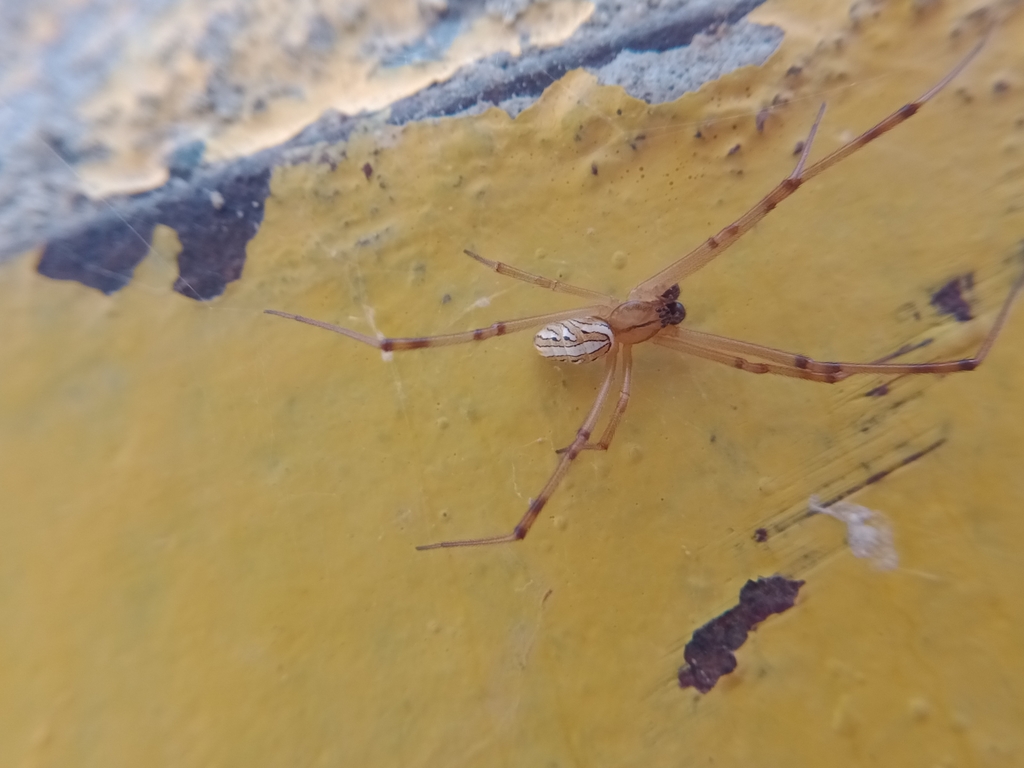
Latrodectus hesperus, the western black widow spider or western widow, is a venomous spider species found in western regions of North America. The female's body is 14–16 mm (1/2 in) in length and is black, often with an hourglass-shaped red mark on the lower abdomen. This "hourglass" mark can be red, yellow, and on rare occasions, white. The male of the species is around half this length, and generally a beige color with lighter striping on the abdomen. The population was previously described as a subspecies of Latrodectus mactans, and it is closely related to the northern species Latrodectus variolus. The species, as with others of the genus, build irregular or tangled webs. Unlike the spiral webs or the funnel-shaped webs of some other spiders, the strands of a Latrodectus' web have no obvious overall organization. Female black widows have potent venom containing a neurotoxin (α-latrotoxin) active against a range of organisms. In humans, symptoms of this venom include pain, nausea, vomiting, goosebumps, and localized sweating. In historical literature, fatalities were reported at anywhere between 0.5% and 12%, but studies within the past several decades have been unable to confirm any fatalities from any of the U.S. species of Latrodectus (e.g. zero fatalities among 23,409 documented Latrodectus bites from 2000 through 2008). The female's consumption of the male after courtship, a cannibalistic and suicidal behavior observed in Latrodectus hasseltii, is rare in this species. Male western widows may breed several times during their relatively short lifespans. Males are known to show preference for mating with well-fed females over starved ones, taking cues from the females' webs.
Gallery
Ajouter des photos
Partagez vos photos de cette espèce (jusqu'à 20 à la fois) : elles sont vérifiées automatiquement, puis publiées.
Répartition
Occurrences observées (données GBIF). Les zones hors aire d'origine peuvent indiquer une présence introduite ou invasive.
Sources et crédits
Informations provenant de plusieurs sources vérifiées. Dernière mise à jour : .
Crédits photos (8)
- Photo : Abigail Skoda (@abigail_skoda) · CC BY-NC 4.0 · via iNaturalist
- Photo : @abilxey · CC BY-NC 4.0 · via iNaturalist
- Photo : Kat Halsey (@yetikat) · CC BY-NC 4.0 · via iNaturalist
- Photo : Ben Hayden (@westboundwarbler) · CC BY 4.0 · via iNaturalist
- Photo : Darin J McGuire (@darinjm7) · CC BY 4.0 · via iNaturalist
- Photo : Estivaliz Alvarado (@estivaliz_alvarado) · CC BY-NC 4.0 · via iNaturalist
- Photo : Christina Turpin (@hiphikersadventureclub) · CC BY-NC 4.0 · via iNaturalist
- Photo : Leonardo Hernández Escudero (@leonardohe) · CC BY-NC 4.0 · via iNaturalist
Mentions de licence
Texte disponible sous licence CC BY-SA 4.0. Il adapte notamment Wikipedia (CC BY-SA) : Latrodectus hesperus (Wikipédia, auteurs dans l’historique de l’article).
- Taxonomie : GBIF Backbone Taxonomy (CC BY 4.0)
- Carte : occurrences GBIF, fond © contributeurs OpenStreetMap (ODbL)
Détail : Sources et licences.
Discussion (0)
Aucun message pour l’instant. Lancez la discussion sur cette fiche (sources, précisions, débats éditoriaux).
Connectez-vous pour participer à la discussion.