
Gray Cross Spider
Larinioides sclopetarius
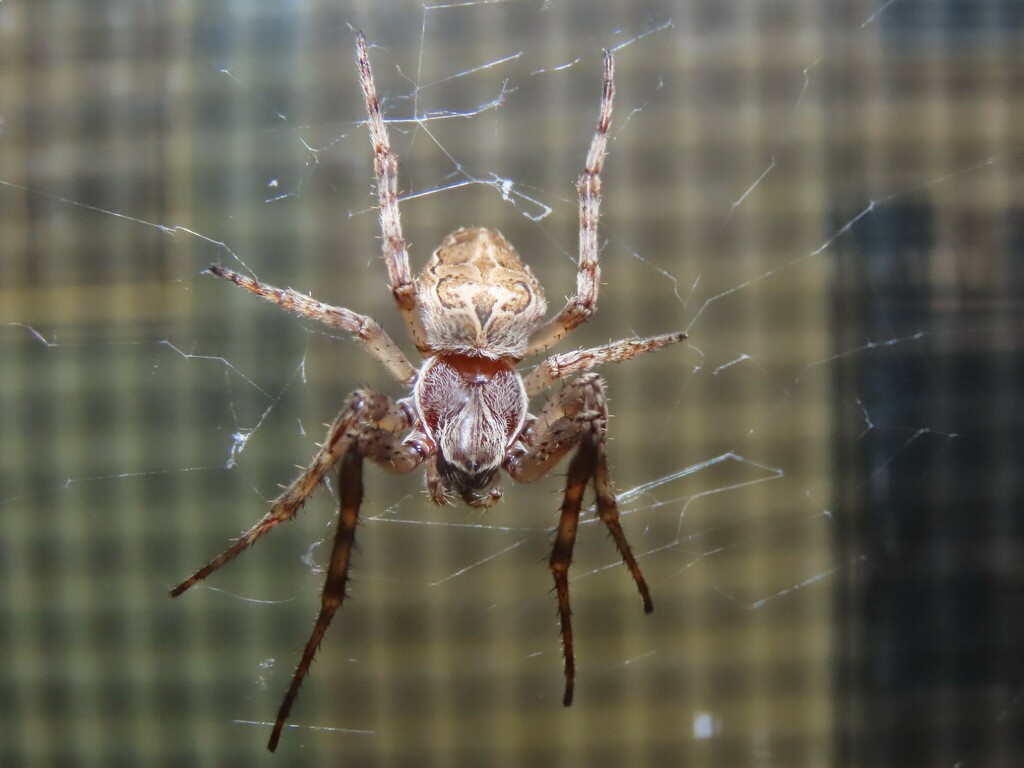
Larinioides sclopetarius, commonly called bridge-spider or gray cross-spider, is a relatively large orb-weaver spider with Holarctic distribution.
- Kingdom
- Animalia
- Phylum
- Arthropoda
- Class
- Arachnida
- Order
- Araneae
- Family
- Araneidae
- Genus
- Larinioides
- Species
- Larinioides sclopetarius
Description
Larinioides sclopetarius, commonly called bridge-spider or gray cross-spider, is a relatively large orb-weaver spider with Holarctic distribution. These spiders originated in Europe, have been observed as south as the Mediterranean Coast and as north as Finland, and have been introduced to North America. They are often found on bridges, especially near light and over water. The species tends to live on steel objects and is seldom seen on vegetation. Females reach a body length of 10–14 mm, and males 8–9 mm. Their orb webs can have diameters of up to 70 cm. L. sclopetarius is attracted to light. Spiders found near light sources may be in better condition and have greater reproductive success than spiders living in unlit areas. Most of these lighted areas are found in cities or other metropolitan areas. As a result, many urban areas have become saturated with these spiders. As many as 100 of these spiders can be found in a square meter in optimal feeding locations. L. sclopetarius often hide during the day and wait for prey in the center of their web at night. In high-density populations, spiders may remain sedentary to protect their territories. Mature females and juvenile spiders will often build webs. However, adult males generally inhabit adult female webs. Males can be found mostly during summer, while females are active until November in Central Europe.
Gallery
Ajouter des photos
Partagez vos photos de cette espèce (jusqu'à 20 à la fois) : elles sont vérifiées automatiquement, puis publiées.
Répartition
Occurrences observées (données GBIF). Les zones hors aire d'origine peuvent indiquer une présence introduite ou invasive.
Sources et crédits
Informations provenant de plusieurs sources vérifiées. Dernière mise à jour : .
Crédits photos (8)
- Photo : @geosesarma · CC BY 4.0 · via iNaturalist
- Photo : Gordo Laidlaw (@odrog) · CC BY-NC 4.0 · via iNaturalist
- Photo : @jacobshumansscreamingcowbird · CC BY-NC 4.0 · via iNaturalist
- Photo : Sarah Lou H (@greenbottleblue) · CC BY-NC 4.0 · via iNaturalist
- Photo : 05gi02el03 (@giel_photography) · CC BY-NC 4.0 · via iNaturalist
- Photo : Dan Trnka (@dantrn) · CC BY-NC 4.0 · via iNaturalist
- Photo : @cpu · CC BY-NC 4.0 · via iNaturalist
- Photo : Jakob Fahr (@jakob) · CC BY-NC 4.0 · via iNaturalist
Mentions de licence
Texte disponible sous licence CC BY-SA 4.0. Il adapte notamment Wikipedia (CC BY-SA) : Larinioides sclopetarius (Wikipédia, auteurs dans l’historique de l’article).
- Taxonomie : GBIF Backbone Taxonomy (CC BY 4.0)
- Carte : occurrences GBIF, fond © contributeurs OpenStreetMap (ODbL)
Détail : Sources et licences.
Discussion (0)
Aucun message pour l’instant. Lancez la discussion sur cette fiche (sources, précisions, débats éditoriaux).
Connectez-vous pour participer à la discussion.