
Amblyomma cajennense
Amblyomma cajennense
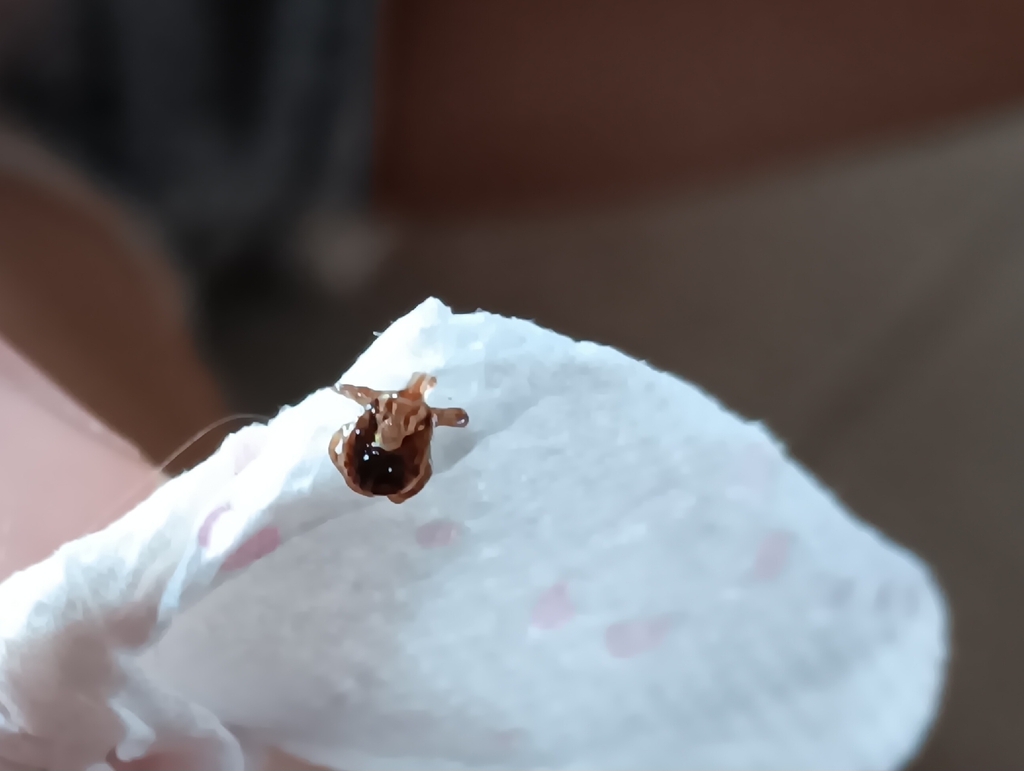
Amblyomma cajennense or Cayenne tick is a species of tick found in a range from the southern part of the United States to northern Argentina, through Central America and some of the Caribbean.
- Kingdom
- Animalia
- Phylum
- Arthropoda
- Class
- Arachnida
- Order
- Ixodida
- Family
- Ixodidae
- Genus
- Amblyomma
- Species
- Amblyomma cajennense
Description
Amblyomma cajennense or Cayenne tick is a species of tick found in a range from the southern part of the United States to northern Argentina, through Central America and some of the Caribbean. As a consequence, the species has adapted to a wide range of environmental conditions. There are also major geographic barriers such as large rivers and the Andes mountain range. Debate exists over whether A. cajennense is a single species or a complex of species. In the 1930s, Maria Tonelli-Rondelli proposed that the morphological variation within the species indicated that it was a complex, while in the 1950s, this variation was proposed to be due to normal variation between individuals of one species. Molecular biological analyses have indicated that A. cajennense is a complex of species. A 2014 study asserts that Amblyomma cajennense s.s. is found only in the Amazonian region of South America, whereas the species reported from the northern part of the Inter-Andean valley of Peru is A. interandinum, the species present from Texas to western Ecuador is A. mixtum, the species that occurs in the Eastern Cordillera of Colombia is A. patinoi, the species associated with the dry areas of the Chaco region spanning from central-northern Argentina to Bolivia and Paraguay is A. tonelliae, and the species distributed from the humid areas of northern Argentina to the contiguous regions of Bolivia and Paraguay and the coastal and central-western states of Brazil is A. sculptum.
Gallery
Ajouter des photos
Partagez vos photos de cette espèce (jusqu'à 20 à la fois) : elles sont vérifiées automatiquement, puis publiées.
Répartition
Occurrences observées (données GBIF). Les zones hors aire d'origine peuvent indiquer une présence introduite ou invasive.
Sources et crédits
Informations provenant de plusieurs sources vérifiées. Dernière mise à jour : .
Crédits photos (8)
- Photo : @j_fournier · CC BY-NC 4.0 · via iNaturalist
- Photo : AGNALDO CORREA DE ASSIS (@agnaldo_correa) · CC BY-NC 4.0 · via iNaturalist
- Photo : Nicole (@pineten) · CC BY 4.0 · via iNaturalist
- Photo : Donald Pendleton (@toucan55) · CC BY-NC 4.0 · via iNaturalist
- Photo : Cody Limber (@codylimber) · CC BY-NC 4.0 · via iNaturalist
- Photo : Joshua Siu (@xnqrrator) · CC BY-NC 4.0 · via iNaturalist
- Photo : @flavioubaid · CC BY-NC 4.0 · via iNaturalist
- Photo : Jeremy Collison (@crx2aj3) · CC BY-NC 4.0 · via iNaturalist
Mentions de licence
Texte disponible sous licence CC BY-SA 4.0. Il adapte notamment Wikipedia (CC BY-SA) : Amblyomma cajennense (Wikipédia, auteurs dans l’historique de l’article).
- Taxonomie : GBIF Backbone Taxonomy (CC BY 4.0)
- Carte : occurrences GBIF, fond © contributeurs OpenStreetMap (ODbL)
Détail : Sources et licences.
Discussion (0)
Aucun message pour l’instant. Lancez la discussion sur cette fiche (sources, précisions, débats éditoriaux).
Connectez-vous pour participer à la discussion.