
Sierra Nevada yellow-legged frog
Rana sierrae
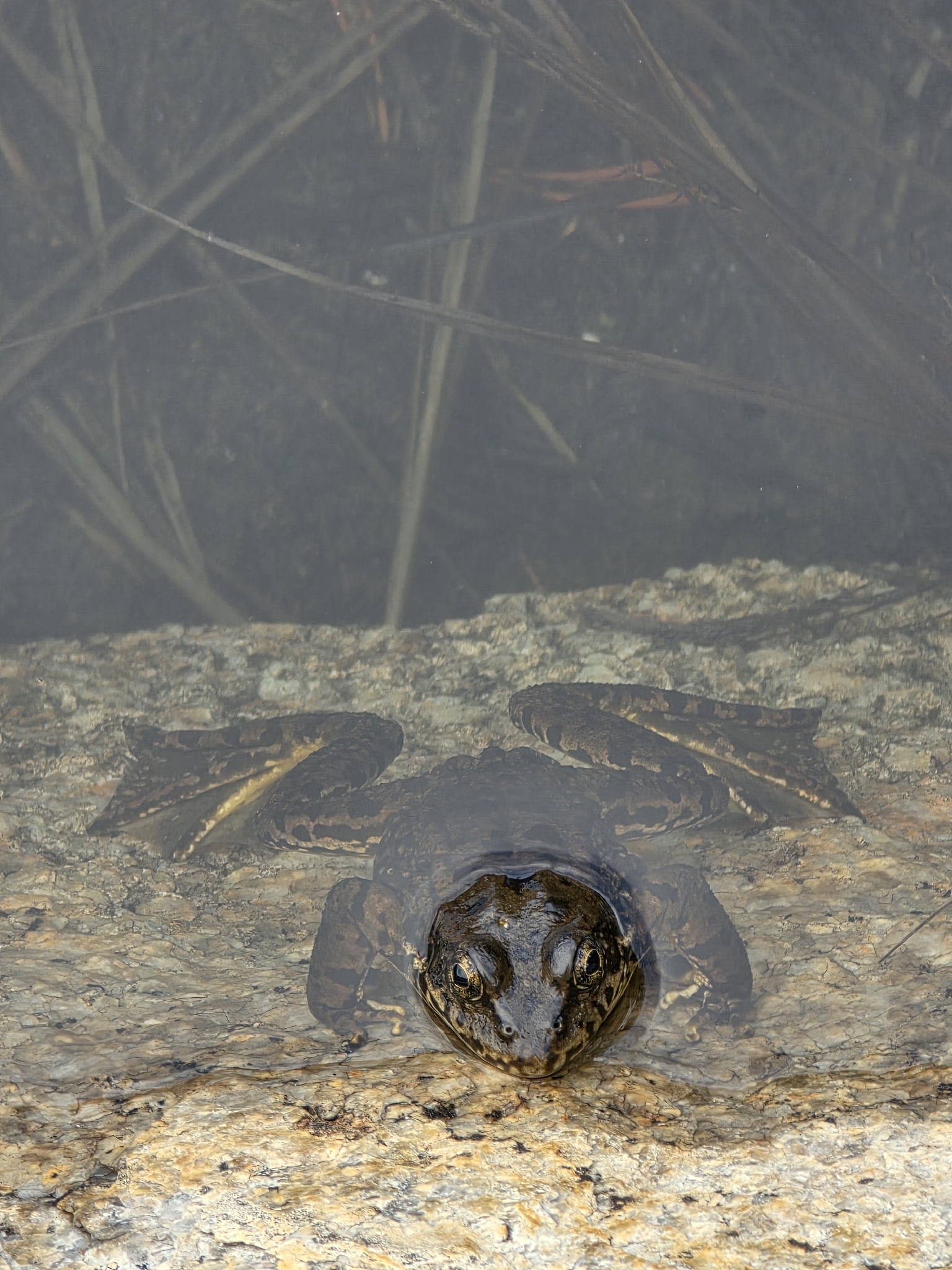
The Sierra Nevada yellow-legged frog (Rana sierrae) is a true frog endemic to the Sierra Nevada of California and Nevada in the United States.
- Kingdom
- Animalia
- Phylum
- Chordata
- Class
- Amphibia
- Order
- Anura
- Family
- Ranidae
- Genus
- Rana
- Species
- Rana sierrae
Description
The Sierra Nevada yellow-legged frog (Rana sierrae) is a true frog endemic to the Sierra Nevada of California and Nevada in the United States. R. sierrae was formerly considered R. muscosa, until a 2007 study identified populations north of the Middle Fork Kings River (north of the Monarch Divide and Mather Pass in Kings Canyon National Park) as R. sierrae, with R. muscosa then confined to the southern Sierra Nevada, south of the Middle Fork Kings River and west of the Sierra Crest, and within the transverse ranges of southern California. Once abundant in the Sierra Nevada, some estimates suggest populations of R. sierrae have declined over 90% (although other agency estimates suggest the declines for R. sierrae may have been around 70%, when comparing historic vs occupied localities, as of 2011). The potential ecological effects of these declines are not fully known, but the species was once highly abundant in the Sierra Nevada, and is therefore likely important for nutrient and energy cycling in alpine aquatic and terrestrial ecosystems. Despite historic declines, long term monitoring work in Yosemite National Park suggests a trend toward recovery, in part due to cessation of fish stocking in remote wilderness areas and physical removal of non-native trout, plus reduced susceptibility over time among some populations to the fungal pathogen Batrachochytrium dendrobatidis (Bd), which causes the amphibian disease chytridiomycosis. This research found an overall sevenfold increase in abundance of R. sierrae in Yosemite during the ~20-year study period (an 11% per year increase). Additionally, direct management actions, including translocation of adult frogs from populations that are persisting with Bd, and captive-rearing at zoos, have shown great promise for helping recover these imperiled populations.
Gallery
Ajouter des photos
Partagez vos photos de cette espèce (jusqu'à 20 à la fois) : elles sont vérifiées automatiquement, puis publiées.
Répartition
Occurrences observées (données GBIF). Les zones hors aire d'origine peuvent indiquer une présence introduite ou invasive.
Sources et crédits
Informations provenant de plusieurs sources vérifiées. Dernière mise à jour : .
Crédits photos (6)
- Photo : Doug · CC BY-NC 4.0 · via GBIF
- Photo : Tim Giller (@nicetim) · CC BY-NC 4.0 · via iNaturalist
- Photo : Sam McNally (@biosam) · CC BY-NC 4.0 · via iNaturalist
- Photo : @jprbelli · CC BY-NC 4.0 · via iNaturalist
- Photo : Peter Johnston (@popebabylon) · CC BY-NC 4.0 · via iNaturalist
- Photo : Ken-ichi Ueda (@kueda) · CC BY 4.0 · via iNaturalist
Mentions de licence
Texte disponible sous licence CC BY-SA 4.0. Il adapte notamment Wikipedia (CC BY-SA) : Sierra Nevada yellow-legged frog (Wikipédia, auteurs dans l’historique de l’article).
- Taxonomie : GBIF Backbone Taxonomy (CC BY 4.0)
- Carte : occurrences GBIF, fond © contributeurs OpenStreetMap (ODbL)
- Statut de conservation : Liste rouge de l'UICN, via Wikidata (CC0)
Détail : Sources et licences.
Discussion (0)
Aucun message pour l’instant. Lancez la discussion sur cette fiche (sources, précisions, débats éditoriaux).
Connectez-vous pour participer à la discussion.