
Moor frog
Rana arvalis
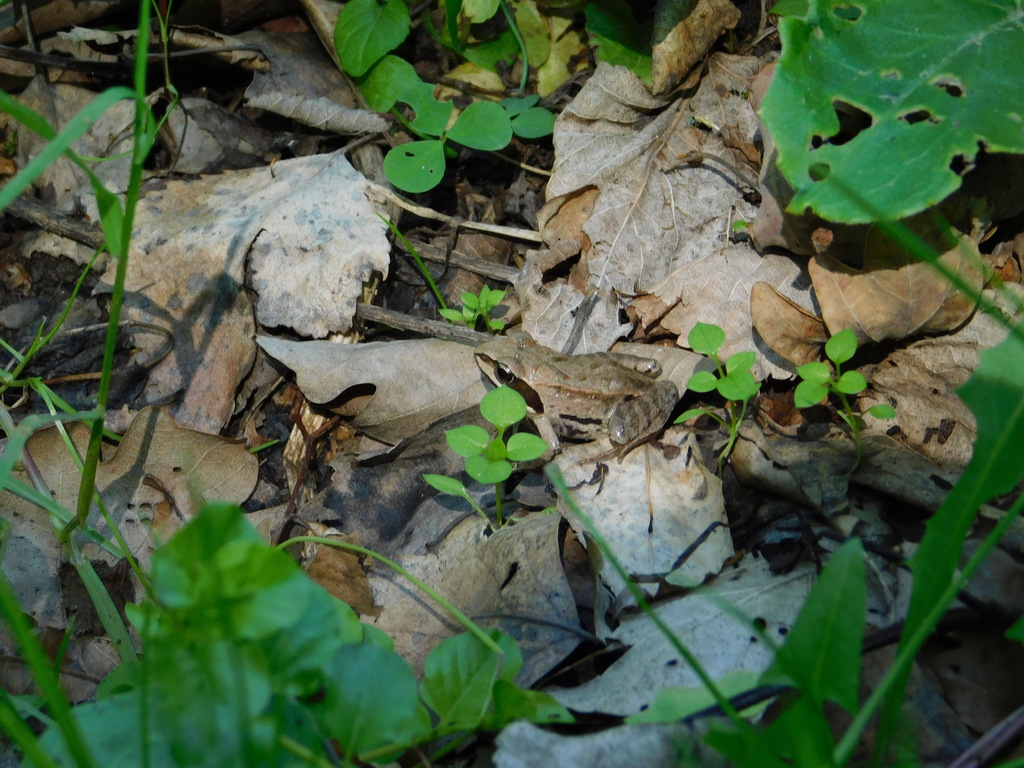
The moor frog (Rana arvalis) is a slim, reddish-brown, semiaquatic amphibian native to Europe and Asia.
- Kingdom
- Animalia
- Phylum
- Chordata
- Class
- Amphibia
- Order
- Anura
- Family
- Ranidae
- Genus
- Rana
- Species
- Rana arvalis
Description
The moor frog (Rana arvalis) is a slim, reddish-brown, semiaquatic amphibian native to Europe and Asia. Moor frogs are known for their ability to freeze solid and survive thawing. The frog makes use of various cryoprotectants i.e. antifreeze that decrease its internal freezing temperature. The species is distributed over a large range, covering a significant portion of Eurasia. Male moor frogs are known to turn blue temporarily during the height of mating season. This coloration is assumed to signal a mate's fitness. Moor frogs typically mate through multimale amplexus, a form of polyandry. The moor frog spawns its eggs in large batches in still bodies of acidic waters. Human-caused pollution is causing excessive acidification of habitat which harms egg health. The moor frog's habitat is also under destruction due to a variety of other anthropogenic means. The species has an IUCN listing of Least Concern. However, a majority of European states independently consider the conservation status of the moor frog to be unfavorable. The moor frog, like other members of Rana, is omnivorous and will consume anything that it can physically ingest.
Gallery
Ajouter des photos
Partagez vos photos de cette espèce (jusqu'à 20 à la fois) : elles sont vérifiées automatiquement, puis publiées.
Répartition
Occurrences observées (données GBIF). Les zones hors aire d'origine peuvent indiquer une présence introduite ou invasive.
Sources et crédits
Informations provenant de plusieurs sources vérifiées. Dernière mise à jour : .
Crédits photos (8)
- Photo : Damir Yumagulov / Дамир Юмагулов (@domir) · CC BY-NC 4.0 · via iNaturalist
- Photo : Pavel Borodin (@pavel100) · CC BY 4.0 · via iNaturalist
- Photo : Майя Синичкина (@sinimaya) · CC BY-NC 4.0 · via iNaturalist
- Photo : Татьяна Владимировна Фомичева (@tatiana-fomicheva) · CC BY-NC 4.0 · via iNaturalist
- Photo : Szabolcs Márton (@szabolcsmarton) · CC BY-NC 4.0 · via iNaturalist
- Photo : Valentin Kosterin (@valentin_kosterin) · CC BY 4.0 · via iNaturalist
- Photo : @leonova_o · CC BY-NC 4.0 · via iNaturalist
- Photo : Lomaka Nikita (@nikita60155) · CC BY-NC 4.0 · via iNaturalist
Mentions de licence
Texte disponible sous licence CC BY-SA 4.0. Il adapte notamment Wikipedia (CC BY-SA) : Moor frog (Wikipédia, auteurs dans l’historique de l’article).
- Taxonomie : GBIF Backbone Taxonomy (CC BY 4.0)
- Carte : occurrences GBIF, fond © contributeurs OpenStreetMap (ODbL)
- Statut de conservation : Liste rouge de l'UICN, via Wikidata (CC0)
Détail : Sources et licences.
Discussion (0)
Aucun message pour l’instant. Lancez la discussion sur cette fiche (sources, précisions, débats éditoriaux).
Connectez-vous pour participer à la discussion.