
Van Dyke's Salamander
Plethodon vandykei
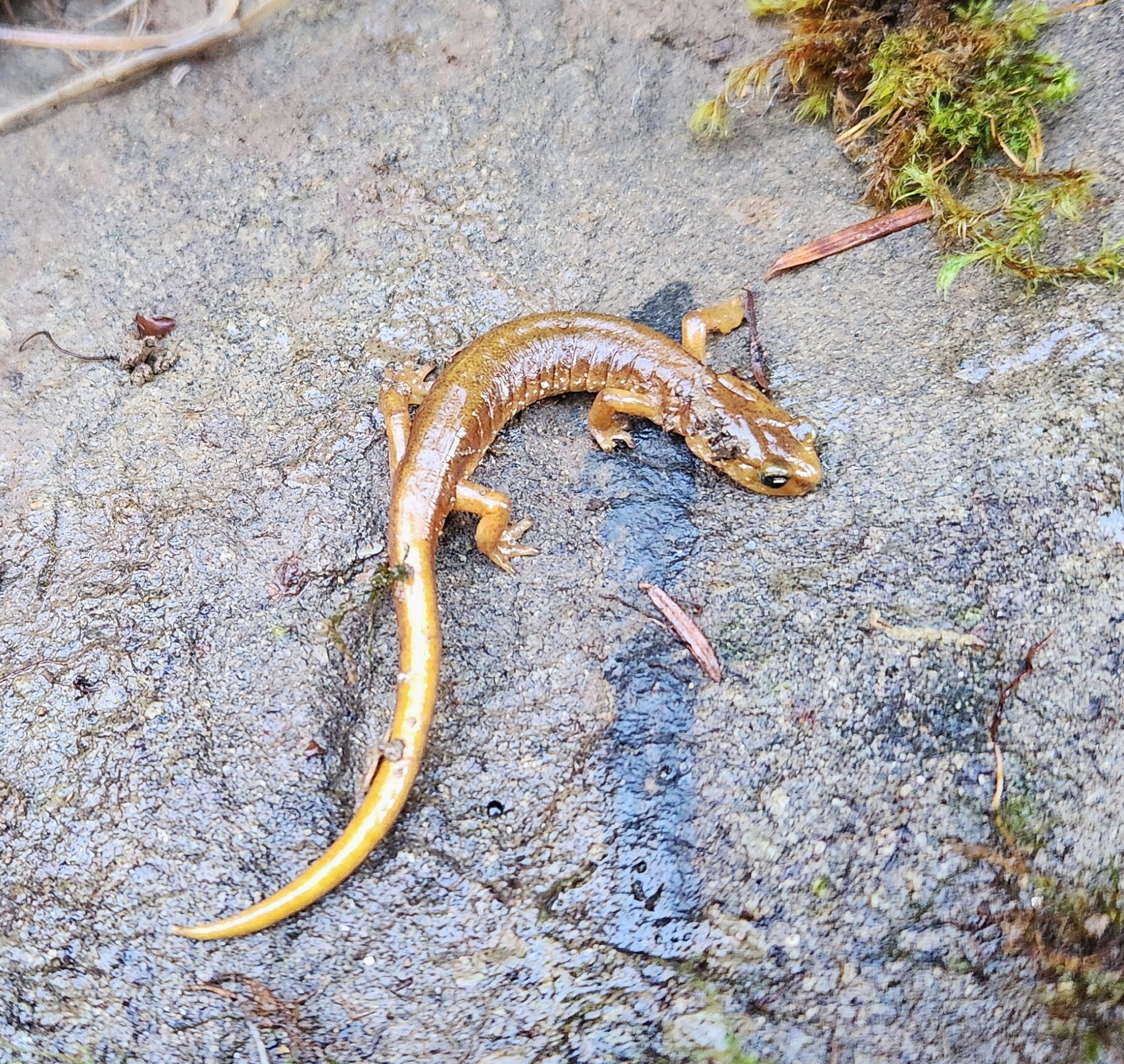
Van Dyke's salamander (Plethodon vandykei) is a small woodland salamander in the family Plethodontidae, the lungless salamanders.
- Kingdom
- Animalia
- Phylum
- Chordata
- Class
- Amphibia
- Order
- Caudata
- Family
- Plethodontidae
- Genus
- Plethodon
- Species
- Plethodon vandykei
Description
Van Dyke's salamander (Plethodon vandykei) is a small woodland salamander in the family Plethodontidae, the lungless salamanders. These animals breathe through their skin and are largely terrestrial. Compared to other salamanders in Plethodon it is relatively stocky with long legs. Usually associated with streams, seepages, and rock outcrops, it is endemic to Washington where it is found in a limited number of small, isolated populations.
Gallery
Ajouter des photos
Partagez vos photos de cette espèce (jusqu'à 20 à la fois) : elles sont vérifiées automatiquement, puis publiées.
Répartition
Occurrences observées (données GBIF). Les zones hors aire d'origine peuvent indiquer une présence introduite ou invasive.
Sources et crédits
Informations provenant de plusieurs sources vérifiées. Dernière mise à jour : .
Crédits photos (6)
- Photo : Keith Brady · CC BY-NC 4.0 · via GBIF
- Photo : Keith Brady (@keithbrady) · CC BY-NC 4.0 · via iNaturalist
- Photo : @chac · CC BY-NC 4.0 · via iNaturalist
- Photo : Lucas Green (@lukezeri) · CC BY-NC 4.0 · via iNaturalist
- Photo : @hupholland11 · CC BY-NC 4.0 · via iNaturalist
- Photo : Keith Brady (@keithbrady) · CC BY-NC 4.0 · via iNaturalist
Mentions de licence
Texte disponible sous licence CC BY-SA 4.0. Il adapte notamment Wikipedia (CC BY-SA) : Van Dyke's salamander (Wikipédia, auteurs dans l’historique de l’article).
- Taxonomie : GBIF Backbone Taxonomy (CC BY 4.0)
- Carte : occurrences GBIF, fond © contributeurs OpenStreetMap (ODbL)
- Statut de conservation : Liste rouge de l'UICN, via Wikidata (CC0)
Détail : Sources et licences.
Discussion (0)
Aucun message pour l’instant. Lancez la discussion sur cette fiche (sources, précisions, débats éditoriaux).
Connectez-vous pour participer à la discussion.